Complete Beginner Guide to 3-Gun Competition: Equipment, Divisions, Stage Design & New Shooter Preparation
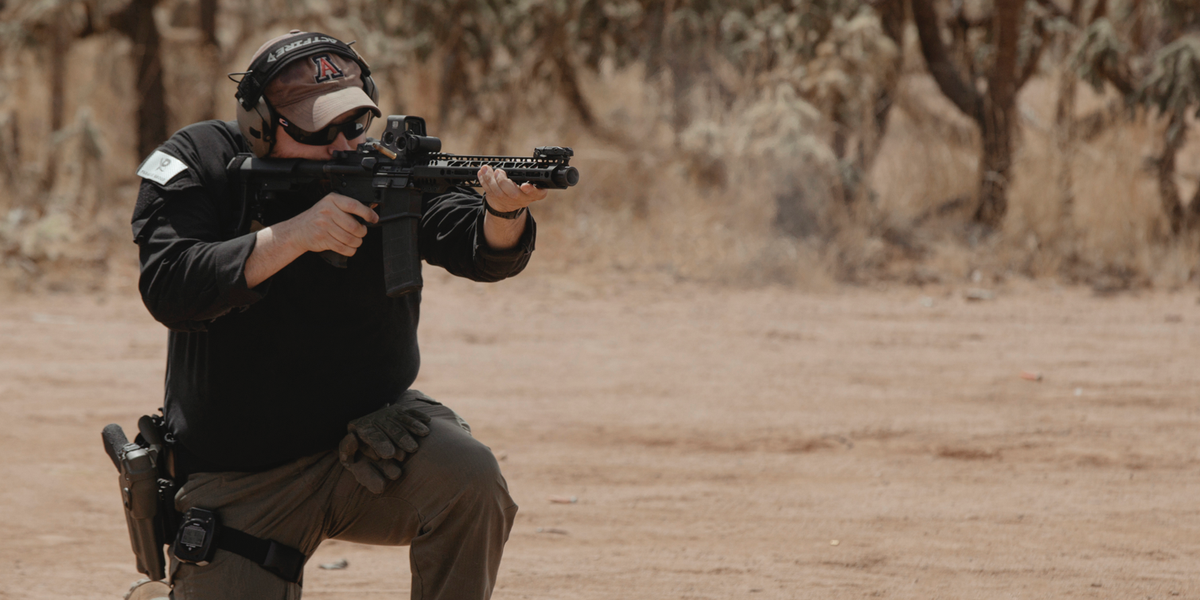
What is 3-Gun Competition?
If USPSA and IPSC are the premier arenas for handgun competition, then 3-Gun is the ultimate test in the shooting sports world. As the name suggests, 3-Gun requires competitors to use three different firearms — a pistol, a rifle, and a shotgun — to engage various targets across complex, dynamic courses of fire.
The allure of 3-Gun lies in its diversity. In a single stage, you might start by knocking down steel targets and breaking clays with your shotgun, transition to your rifle for 200-yard precision shots, then draw your pistol to clean up close-range paper targets. Every stage is a comprehensive test of weapons handling, transition speed, shooting accuracy, and physical fitness.
This sport is enormously popular in North America, governed by multiple organizations including 3-Gun Nation (3GN), USPSA Multi-Gun, and UML (United Multigun League). Whether you’re a seasoned USPSA or IDPA competitor looking to expand your shooting horizons, or a complete newcomer to competitive shooting, 3-Gun offers a truly unique shooting experience.
This Guide Will Cover
- Core concepts and match format of 3-Gun
- Equipment selection guide for all three firearm platforms
- Complete division breakdown and selection advice
- Stage design, target types, and scoring systems
- Gun transition and shotgun loading techniques
- Complete preparation checklist for your first match
- Shot Timer training methods and skill development
💡 Further Reading: If you’re more interested in pure handgun competition, check out our USPSA Complete Beginner Guide, IPSC Complete Training Guide, and Steel Challenge Complete Beginner Guide.
The Three Firearm Platforms: Equipment Selection Guide
The defining feature of 3-Gun is the simultaneous use of three different firearms. For beginners, this is also the biggest challenge — you need to prepare appropriate equipment for each platform. The good news is that you don’t need top-tier equipment to start; many newcomers compete with what they already own.
Pistol
The pistol is the platform most shooters are already familiar with. 3-Gun pistol requirements are similar to USPSA/IPSC.
Basic Requirements:
- Minimum 9mm caliber (centerfire)
- Semi-automatic pistol
- Reliable holster and belt system required
Recommended Beginner Pistols:
| Pistol | Price Range | Features | Rating |
|---|---|---|---|
| Glock 34 | $550-650 | Extreme reliability, abundant aftermarket | ★★★★★ |
| CZ Shadow 2 | $900-1,100 | Excellent trigger, low bore axis | ★★★★★ |
| S&W M&P 2.0 | $400-550 | Great value, excellent ergonomics | ★★★★☆ |
| Canik Rival-S | $500-600 | Outstanding trigger, competition-oriented | ★★★★☆ |
| SIG P320 X-Five | $800-1,000 | Modular design, great feel | ★★★★☆ |
💡 If you already have a USPSA or IDPA pistol, use it for 3-Gun. For more on equipment selection, see IPSC Beginner Pistol Selection Guide.
Rifle
The rifle is the most iconic platform in 3-Gun. The AR-15 platform completely dominates this sport, with .223/5.56mm being the most common caliber.
Basic Requirements:
- Semi-automatic rifle (most divisions)
- .223/5.56mm caliber (Limited and Tactical divisions) or larger (Heavy Metal)
- Optics required (red dot or magnified scope, depending on division)
Recommended Beginner Rifles:
| Rifle | Price Range | Features | Rating |
|---|---|---|---|
| S&W M&P15 Sport II | $650-750 | Best entry-level AR-15 | ★★★★★ |
| Ruger AR-556 | $600-700 | Highly reliable, affordable | ★★★★☆ |
| Aero Precision M4E1 | $700-900 | Excellent quality, great upgrade path | ★★★★☆ |
| PSA PA-15 | $500-600 | Lowest budget option | ★★★☆☆ |
| BCM Recce 16 | $1,200-1,400 | Mid-tier advanced choice | ★★★★★ |
Rifle Configuration Tips:
- Barrel length: 16-18 inches (balances velocity and maneuverability)
- Optics: 1-6x LPVO (Low Power Variable Optic) or red dot sight
- Magazines: At least 4-5 30-round magazines
- Muzzle device: Flash hider or compensator (depends on division rules)
- Grip and stock: Configure for your personal ergonomics
Shotgun
The shotgun is the most unique and challenging platform in 3-Gun. It must engage multiple target types — from close-range steel to flying clay targets — and requires frequent reloading.
Basic Requirements:
- 12 gauge most common, 20 gauge also accepted
- Semi-automatic or pump-action (semi-auto strongly recommended for competition)
- Extended magazine tube
- Must use both birdshot and slugs
Recommended Beginner Shotguns:
| Shotgun | Price Range | Features | Rating |
|---|---|---|---|
| Stoeger M3K | $550-650 | Purpose-built for 3-Gun, excellent value | ★★★★★ |
| Beretta 1301 Comp | $1,100-1,300 | Ultra-fast cycling speed | ★★★★★ |
| Benelli M2 | $1,200-1,500 | Legendary reliability, lightweight | ★★★★☆ |
| Mossberg 930 JM Pro | $700-850 | Jerry Miculek signature, versatile | ★★★★☆ |
| Remington 870 | $350-450 | Pump-action entry, lowest budget | ★★★☆☆ |
Key Shotgun Modifications:
- Extended magazine tube: Expand from standard 4+1 to 8+1 or more
- Enlarged loading port: Enables faster reloading
- Improved carrier/lifter: Ensures smooth shell feeding
- Adjustable sights: Critical for slug accuracy
💡 Shotgun loading speed is the single biggest differentiator in 3-Gun. Time spent practicing loading technique pays far greater dividends than buying a more expensive gun.
Total Equipment Budget Estimates
| Budget Level | Pistol | Rifle | Shotgun | Accessories | Total |
|---|---|---|---|---|---|
| Entry Level | $400-600 | $500-700 | $550-700 | $300-500 | $1,750-2,500 |
| Mid-Range | $700-1,000 | $800-1,200 | $800-1,300 | $500-800 | $2,800-4,300 |
| Advanced | $1,000-2,000 | $1,500-3,000 | $1,300-2,500 | $800-1,500 | $4,600-9,000 |
3-Gun Division Breakdown
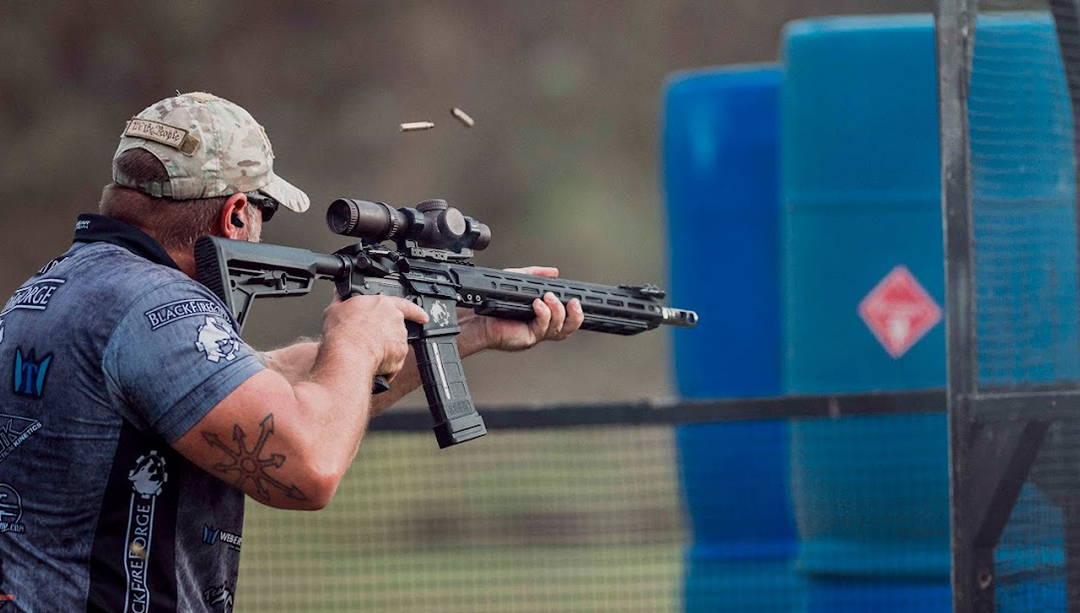
3-Gun divisions are primarily distinguished by equipment modification levels. Different governing organizations (3GN, USPSA Multi-Gun, UML) use different division names, but the core concepts are similar. Here are the most common divisions.
Limited — Best for Beginners
Limited has the lowest entry barrier with the strictest equipment restrictions, ensuring a relatively level playing field.
Key Rules:
- Rifle: Only unmagnified optics (red dot or holographic), no bipods
- Shotgun: Iron sights only, no muzzle brake; semi-auto or pump allowed, magazine capacity limited to 8+1
- Pistol: Iron sights, no compensator
- No detachable shotgun magazines
Best for: First-time 3-Gun competitors who can compete with basic equipment.
Tactical — Most Popular
Tactical is the most popular 3-Gun division, adding magnified rifle optics to the Limited framework.
Key Rules:
- Rifle: Magnified optics allowed (e.g., 1-6x LPVO), no bipods
- Shotgun: Same rules as Limited
- Pistol: Same rules as Limited
- Small compensators allowed
Best for: Shooters who want to use an LPVO scope — this is the most competitive mainstream division.
Open — Maximum Equipment Freedom
Open has virtually no equipment restrictions and is the domain of top-tier competitors and gear enthusiasts.
Key Rules:
- Rifle: No restrictions — any optics, bipods, large compensators allowed
- Shotgun: Optics, speed loaders, and detachable magazines allowed
- Pistol: Red dot sights, compensators, magwells allowed
- Magazine length limited to 171.25mm
Best for: Experienced competitors with substantial budgets.
Heavy Metal — The Iron Man Challenge
Heavy Metal tests both equipment capability and shooter endurance, requiring larger caliber weapons.
Key Rules:
- Rifle: Must be .308 Winchester (7.62×51) or larger, iron sights only
- Shotgun: Must be 12 gauge pump-action, iron sights only, no muzzle brake
- Pistol: Must be .45 ACP or larger, iron sights only
- No optics, no compensators
Best for: Shooters who enjoy the challenge of heavy recoil, or 1911 .45 ACP enthusiasts.
Division Comparison Table
| Division | Rifle Optics | Rifle Caliber | Shotgun Type | Pistol Optics | Beginner Rating | Investment |
|---|---|---|---|---|---|---|
| Limited | Red dot/Holo | .223 | Semi/Pump, 8+1 | Iron | ★★★★★ | Low |
| Tactical | LPVO/Magnified | .223 | Semi/Pump, 8+1 | Iron | ★★★★☆ | Medium |
| Open | Unrestricted | Any | Unrestricted | Red dot | ★★☆☆☆ | High |
| Heavy Metal | Iron | .308+ | 12GA Pump | Iron | ★★☆☆☆ | Med-High |
Stage Design and Target Types
Stage design is the most exciting aspect of 3-Gun. Unlike USPSA or IDPA, 3-Gun stages have no fixed standards — each match director can freely design stages, creating endlessly varied shooting challenges.
Typical Match Structure
- A local match typically has 4-6 stages
- Major matches may have 8-12 stages
- Each stage may use one, two, or all three firearms
- Shooting distances range from 1 yard to 600 yards
Target Types
Paper Targets:
- Standard USPSA/IPSC paper targets (A/C/D zone scoring)
- Typically engaged with pistol and rifle
- Sometimes include No-Shoot penalty targets
Steel Targets:
- Various sizes of steel plates and poppers
- Must be knocked down or hit to score
- Engaged with pistol, rifle, and shotgun
Clay Targets (Sporting Clays):
- Fixed on stands or launched by trap machines
- Broken with shotgun birdshot
- One of the most spectacular elements of 3-Gun
Specialty Targets:
- Long-range steel (200-600 yards, rifle only)
- Moving targets (Texas Star, spinners, etc.)
- Slug-specific targets (engaging distant targets with shotgun slugs)
Scoring System
The primary scoring method in 3-Gun is Time Plus:
Scoring Formula: Final Score = Completion Time + Penalty Seconds
Common penalties:
- Paper target miss (Mike): +5 seconds
- No-Shoot hit: +5 seconds
- Steel target left standing: +5 seconds
- Clay target not broken: +5 seconds
- Procedural violation: +10 seconds
This scoring system is intuitive: the shortest time wins.
💡 Different organizations and matches may use different scoring methods. Some matches use Hit Factor scoring (same as USPSA). Always confirm the scoring rules before your match.
Gun Transitions: The Core Skill of 3-Gun
Gun transitions are the most unique technical requirement in 3-Gun. Within a single stage, you must safely set down one firearm and pick up another to continue shooting. The speed and safety of this process directly impacts your score.
Basic Transition Concepts
Dump Barrel:
- Matches provide large containers (typically trash can-sized barrels) for grounding rifles and shotguns
- Smaller buckets or racks are used for pistols
- Muzzle must point downward when placed in the barrel
Firearm Grounding Conditions: When grounding a firearm, two conditions are acceptable:
- Completely empty: Magazine removed, chamber cleared, safety engaged
- Loaded grounding: Safety engaged (if manual safety available), muzzle pointed in safe direction
Common Transition Sequences
Rifle → Pistol:
- Complete rifle targets
- Safely place rifle in dump barrel (muzzle down)
- Or sling rifle on shoulder (if rules allow)
- Draw pistol and continue shooting
Shotgun → Rifle:
- Complete shotgun targets
- Place shotgun in dump barrel
- Pick up rifle from rack or another dump barrel
- Chamber a round and continue shooting
Transition Safety Points
- Never let the muzzle break the 180-degree safety plane
- Finger must be outside the trigger guard during transitions
- Confirm safety status before grounding any firearm
- Unsafe transitions result in immediate DQ (Disqualification)
💡 Transition speed is the biggest gap between experienced 3-Gun competitors and newcomers. Practice safe, smooth transitions extensively during training.
Shotgun Loading Techniques: The Winning Edge in 3-Gun
Shotgun loading is one of the most technically demanding skills in 3-Gun. Since most divisions prohibit detachable shotgun magazines, competitors must manually feed shells one by one into the magazine tube during the match. The speed difference between loading methods is enormous.
Single Load (Basic)
The most basic method — loading one shell at a time. Slowest but most reliable, ideal for beginners.
Technique:
- Retrieve one shell from caddy with support hand
- Flip shotgun to expose loading port (upward or sideways)
- Push shell into loading port
- Repeat until full
Load 2 (Twins)
Grab two shells from the caddy at once and load them in rapid succession. This is the standard method for intermediate competitors.
Advantages:
- Twice as fast as single loading
- Relatively low fumble rate
- Moderate learning curve
Technique:
- Grab two shells simultaneously with support hand
- Pin shotgun under strong arm with loading port facing up
- Rapidly push both shells into loading port in sequence
Quad Load
The technique used by top-tier competitors — grabbing four shells at once and loading them in two sets of two.
Technique:
- Grab four shells simultaneously (requires special caddy arrangement)
- Pin shotgun under armpit with loading port facing up
- Split fingers to separate four shells into two groups
- Push in bottom two shells first, immediately followed by top two
- Top competitors can complete a quad load in approximately 3 seconds
Learning Advice:
- Master single and twin loading fluency first
- Only attempt quad loading after your basic technique is consistent
- Practice extensively with dummy rounds in dry fire
- Loading port modifications (enlarged port, polished edges) significantly help loading speed
Shell Carrying Systems
| Carry Method | Capacity | Speed | Loading Style | Price |
|---|---|---|---|---|
| Belt Caddy | 8-12 rounds | ★★★★ | Twins/Quad | $30-80 |
| Chest Rig Caddy | 12-24 rounds | ★★★☆ | Twins/Quad | $40-100 |
| Shell Belt | 25+ rounds | ★★☆☆ | Single | $20-40 |
| Side Saddle | 4-6 rounds | ★★★☆ | Twins | $20-50 |
Your First 3-Gun Match: Complete Preparation Guide
Essential Equipment Checklist
Firearms:
| Equipment | Description | Estimated Cost |
|---|---|---|
| Pistol | 9mm+ semi-automatic pistol | $400-800 |
| Rifle | AR-15 or similar semi-automatic rifle | $500-1,200 |
| Shotgun | 12GA semi-auto (strongly recommended) or pump | $350-1,300 |
Accessories:
| Equipment | Description | Estimated Cost |
|---|---|---|
| Pistol holster | Kydex belt holster | $40-80 |
| Pistol mag pouches | At least 2 | $30-60 |
| Rifle mag pouches | At least 1-2 | $20-50 |
| Shell carrying system | Caddy or belt-mounted | $30-80 |
| Competition belt | Dual-layer competition belt | $50-120 |
| Eye protection | ANSI Z87.1 rated | $15-40 |
| Electronic ear muffs | Hearing protection while hearing commands | $40-100 |
| Chamber flags | Three (one per gun) to show unloaded status | $5-15 |
| Gun bags/cases | For transporting rifle and shotgun | $50-150 |
Ammunition:
| Ammo Type | Suggested Quantity | Estimated Cost |
|---|---|---|
| 9mm FMJ | 200-300 rounds | $50-80 |
| 5.56/.223 FMJ | 150-200 rounds | $60-100 |
| 12GA Birdshot | 100-150 rounds | $40-60 |
| 12GA Slugs | 25-50 rounds | $15-30 |
Pre-Match Preparation
Registration & Membership:
- Most local matches don’t require membership, but joining an organization is recommended
- Register at Practiscore and sign up for matches
- Consider attending a match as a spectator first to observe the process
Equipment Check (One Week Before):
- Confirm all three firearms are zeroed and functioning properly
- Test all magazines for reliable feeding
- Verify smooth pistol draw from holster
- Test shell caddy extraction fluency
- Prepare three chamber flags
- Prepare sufficient ammunition (bring 20% extra)
10 Tips for Match Day
Before the Match:
- Arrive early: 30-45 minutes before registration — 3-Gun requires more setup time
- Identify as a new shooter: The Match Director and ROs will provide extra guidance
- Listen carefully to the safety briefing: 3-Gun safety rules are more complex than single-gun matches
During the Match:
- Safety first: The 180-degree rule applies to all three firearms — pay special attention to muzzle direction during transitions
- Don’t rush transitions: A safe slow transition beats an unsafe fast one every time
- Manage your ammunition: Know which targets require which ammo type (birdshot vs. slugs)
- Pay attention to stage briefings: Note gun transition points, target designations, and dump barrel locations
Mindset:
- Your goal is to finish safely: Your first match isn’t about placement
- Embrace the variety: The beauty of 3-Gun is that every stage is different
- Help out: Paste targets, reset steel, pick up brass — it’s the best way to join the community
💡 Familiarize yourself with competition safety rules. See Complete Shooting Safety Rules Guide for fundamental safety requirements, especially the 180-degree rule and DQ conditions.
Shot Timer and 3-Gun Training
The Shot Timer plays an even more critical role in 3-Gun training than in any other shooting sport. Because you need to simultaneously improve skills across three platforms, systematic timed training is the key to progress.
Baseline Times Across Three Platforms
Pistol Skill Benchmarks:
| Skill | Beginner | Intermediate | Advanced |
|---|---|---|---|
| Draw to first shot | 2.0+ sec | 1.3-1.5 sec | < 1.2 sec |
| Split time (7m) | 0.30+ sec | 0.20-0.25 sec | < 0.18 sec |
| Reload | 3.0+ sec | 1.5-2.0 sec | < 1.5 sec |
Rifle Skill Benchmarks:
| Skill | Beginner | Intermediate | Advanced |
|---|---|---|---|
| Ready to first shot | 2.0+ sec | 1.0-1.5 sec | < 1.0 sec |
| Close-range splits (25m) | 0.30+ sec | 0.18-0.25 sec | < 0.15 sec |
| Long-range single (100m) | 3.0+ sec | 1.5-2.0 sec | < 1.5 sec |
| Rifle reload | 3.0+ sec | 1.5-2.0 sec | < 1.5 sec |
Shotgun Skill Benchmarks:
| Skill | Beginner | Intermediate | Advanced |
|---|---|---|---|
| Single load (per shell) | 2.0+ sec | 1.0-1.5 sec | < 0.8 sec |
| Twin load (2 shells) | 3.0+ sec | 1.5-2.0 sec | < 1.2 sec |
| Quad load (4 shells) | — | 3.0-4.0 sec | < 3.0 sec |
| Steel target splits | 1.0+ sec | 0.5-0.8 sec | < 0.5 sec |
Core Training Drills
Pistol Training (1-2 times per week):
- Bill Drill: 7 yards, draw and fire 6 rounds — trains draw speed and split times
- El Presidente: Turn, shoot, reload — simulates match pressure
- Multi-target transitions: 3 targets, 2 rounds each — trains target transition speed
Rifle Training (Once per week):
- Close-range speed: 25 yards, 6 rounds in A-zone — builds basic speed
- Near-far alternating: Alternate between 25-yard and 100-yard targets — trains distance judgment
- Shooting on the move: Engage multiple targets while moving — essential 3-Gun skill
Shotgun Training (Once per week):
- Loading practice: Dedicated loading technique drill — the biggest differentiator in 3-Gun
- Slug accuracy: 25-50 yard slug shooting — verify slug point-of-impact offset
- Mixed target transitions: Steel and clay targets combined — practice switching between ammo types
Shot Timer Training Tips
- Record times every session: Establish baselines and track progress for each platform
- Set PAR times: Create pressure, gradually reducing PAR times
- Practice transitions: Use the Shot Timer to record the time from grounding one firearm to first shot with the next
- Dry fire training: 15 minutes daily rotating across all three platforms
💡 The Shot Timer App is an excellent tool for 3-Gun practice, especially for at-home dry fire training. See Shot Timer App Complete Guide for details.
3-Gun vs. Other Competitive Shooting Sports
| Category | 3-Gun | USPSA | IPSC | IDPA | Steel Challenge |
|---|---|---|---|---|---|
| Firearms Used | Pistol+Rifle+Shotgun | Pistol only | Pistol only | Pistol only | Pistol or Rifle |
| Stage Design | Varies per match | Varies per match | Varies per match | Varies per match | 8 fixed stages |
| Scoring | Time Plus (primary) | Hit Factor | Hit Factor | Time Plus | Pure time |
| Equipment Investment | Highest | Medium | Medium | Lower | Lowest |
| Technical Diversity | Highest | High | High | Medium | Focused on speed |
| Beginner Friendliness | ★★★☆☆ | ★★★★☆ | ★★★★☆ | ★★★★★ | ★★★★★ |
| Physical Demands | Highest | Medium | Medium | Medium | Lowest |
| Match Duration | 4-8 hours | 3-5 hours | 3-5 hours | 3-5 hours | 2-4 hours |
Frequently Asked Questions (FAQ)
Q1: I only own a pistol. Can I compete in 3-Gun?
No, 3-Gun requires all three firearms. However, you can start with USPSA or IDPA pistol-only matches to gain experience while gradually acquiring a rifle and shotgun. Many shooters transition from handgun matches to 3-Gun. Alternatively, look for local 2-Gun matches that require only a pistol and rifle.
Q2: How much budget do I need to start 3-Gun?
The minimum entry budget is approximately $1,750-2,500 (including all three guns and basic accessories). If you already own a pistol, you can add an entry-level rifle and shotgun for $1,000-1,500. Remember, competing with what you have now is better than waiting until you assemble the perfect setup.
Q3: Should I use a semi-auto or pump shotgun?
Semi-auto is strongly recommended. While pump-action shotguns are cheaper and required in the Heavy Metal division, semi-autos have massive advantages in shooting speed and loading efficiency. The Stoeger M3K is the best value 3-Gun entry shotgun.
Q4: What kind of rifle scope do I need?
Depends on your division:
- Limited: Red dot sight (e.g., Holosun, Vortex Crossfire Red Dot)
- Tactical/Open: A 1-6x LPVO (e.g., Vortex Strike Eagle, Primary Arms 1-6x) is the most practical choice — use it as a red dot at close range with magnification for distance
Q5: How much ammunition do I need for a 3-Gun match?
For a typical local match, bring:
- Pistol: 200-300 rounds
- Rifle: 150-200 rounds
- Shotgun birdshot: 100-150 rounds
- Shotgun slugs: 25-50 rounds Bring 20% extra just in case.
Q6: Are 3-Gun DQ conditions the same as USPSA?
Basic safety rules are similar — the 180-degree rule, trigger finger discipline, and accidental discharges all result in DQ. However, 3-Gun has additional considerations:
- Muzzle direction during gun transitions is especially critical
- Firearms must be in a safe condition when placed in dump barrels
- Muzzle direction must be maintained when picking up pre-staged firearms
Q7: Can I practice 3-Gun skills with airsoft equipment?
You can practice basic concepts. Airsoft GBB pistols and AEG rifles can help you practice gun transitions, shooting on the move, and target transition flow. Combined with the Shot Timer App, you can even track your times. However, actual shotgun loading techniques and recoil management require live-fire practice.
Q8: What’s the biggest challenge transitioning from USPSA/IPSC to 3-Gun?
The biggest challenges are typically:
- Shotgun handling: Most pistol shooters are unfamiliar with shotguns; loading techniques require extensive practice
- Gun transitions: Safe and fast transitions between three firearms need deliberate practice
- Physical demands: Carrying more gear, running longer courses of fire
- Equipment management: Maintaining three complete setups and managing them on match day
Conclusion
3-Gun is the most comprehensive, thrilling, and challenging competitive format in the shooting sports. It demands mastery across three different firearm platforms, quick decision-making through complex and varied courses of fire, all while maintaining the highest safety standards. While the entry barrier is higher than pistol-only competitions, the enjoyment and sense of achievement are multiplied.
If you already have a handgun competition foundation from USPSA or IPSC, 3-Gun is a natural next step. Your pistol skills transfer directly — you just need time to develop rifle and shotgun proficiency. If you’re a complete beginner, we recommend starting with USPSA or Steel Challenge to build handgun fundamentals, then gradually stepping into the world of 3-Gun.
Regardless of your starting point, remember: every 3-Gun Grand Master was once a nervous newcomer standing at the start line of their first match with three guns, a mountain of ammo, and a heart full of excitement.
Recommended Related Articles
Competitive Shooting Series:
- USPSA Complete Beginner Guide
- IPSC Complete Training Guide
- IDPA Complete Training Guide
- Steel Challenge Complete Beginner Guide
- IPSC Match Procedure and Preparation Guide
Shooting Skill Development:
- Pistol Draw Technique Complete Guide
- Magazine Reload Technique Complete Guide
- Classic Shooting Drills Complete Guide
- Shooting Mental Game Complete Guide
Equipment Guides:
- IPSC Beginner Pistol Selection Guide
- Handgun Ammunition and Caliber Selection Guide
- Competition Holster Selection Guide
- Shot Timer App Complete Guide
- 3-Gun
- Multi-Gun
- Competitive Shooting
- AR-15
- Shotgun
- Pistol
- USPSA
- 3-Gun Nation
- Shot Timer
- Shooting Competition