Airsoft CQB Tactics Complete Guide: Room Clearing, Indoor Combat & Gear Setup
CQB, short for Close Quarters Battle, is the most intense and fast-paced game mode in airsoft. Locking eyes with an opponent in a narrow hallway, making split-second decisions around a corner, the adrenaline rush of breaching through a doorway—these are the unique experiences that CQB delivers to players.
However, CQB isn’t just about rushing into rooms and spraying BBs. True CQB masters know how to exploit angles, control the pace of engagement, and coordinate with teammates to clear threats in the shortest time possible. Whether you’re playing pickup games at a warehouse venue or participating in MilSim building assaults, mastering fundamental CQB tactics will significantly elevate your game.
This guide will take you from the ground up through the core concepts of CQB, teach you practical room clearing techniques and team tactics, and help you choose the optimal CQB gear loadout.
What is CQB? From Military Concept to Airsoft
CQB originates from military and law enforcement domains, referring to combat within buildings, rooms, hallways, and other enclosed spaces. In this environment, engagement distances are typically under 30 meters, and shooters need to react within extremely short timeframes. Unlike open terrain combat, the core challenge of CQB lies in limited sightlines, multiple threat directions, and virtually no room for retreat.
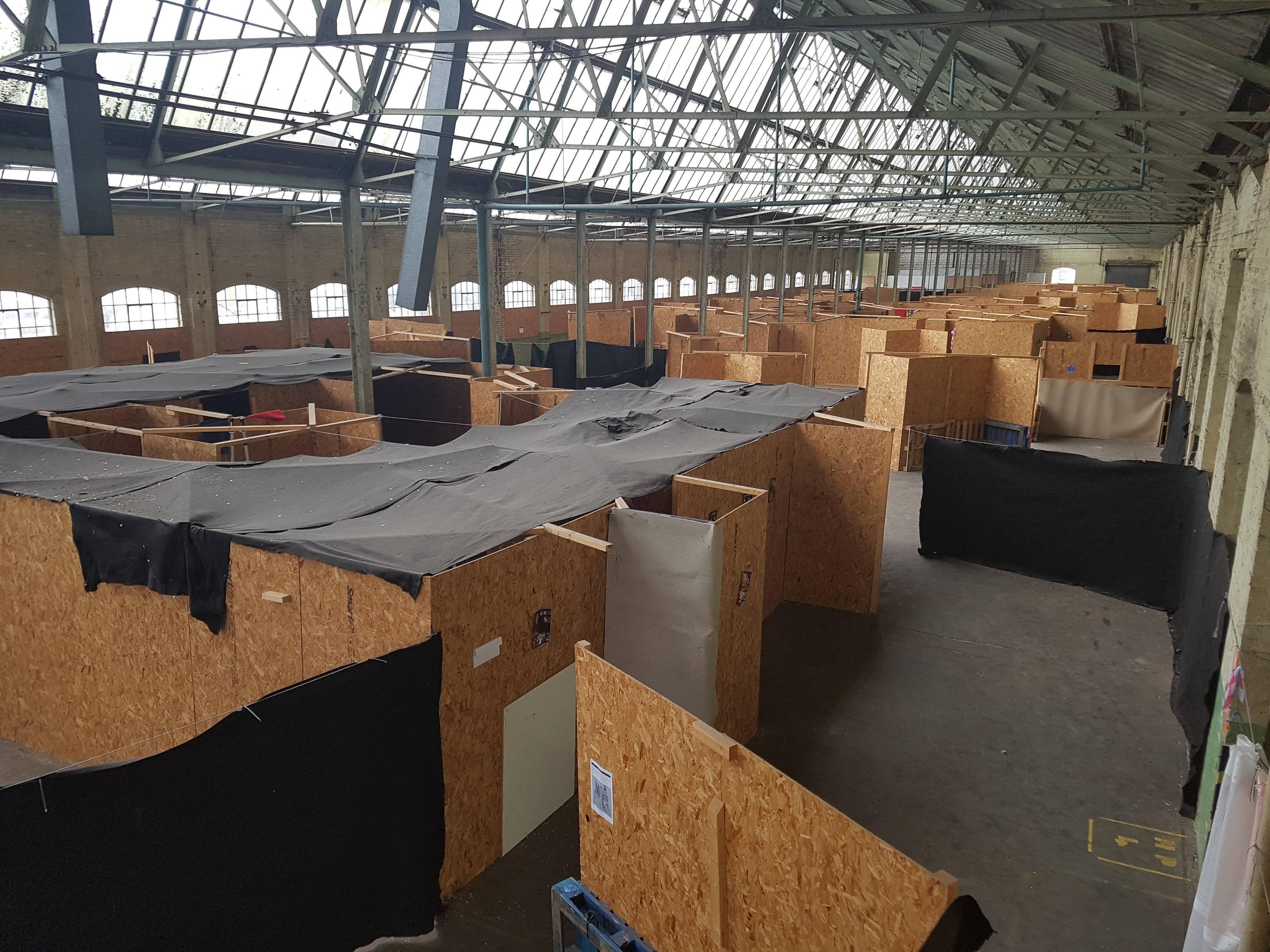
In the airsoft world, CQB preserves these core characteristics while transforming lethal real combat into a safe competitive experience. Indoor CQB venues are typically set up in converted warehouses or purpose-built facilities, filled with simulated rooms, corridors, stairways, and obstacles. FPS limits are stricter than outdoor fields, usually between 280-350 FPS, ensuring that close-range hits don’t cause serious injuries.
What makes CQB so appealing is how it condenses the best elements of airsoft into one package: fast reactions, precise shooting, and decisive decision-making. A single CQB round might only last five to ten minutes, but those minutes deliver more intensity and excitement than a half-hour outdoor firefight. For players looking to rapidly improve their shooting skills and reaction speed, CQB is the most efficient training ground.
Slice the Pie: The Most Important Room Clearing Technique
If you could only learn one CQB technique, it would have to be Slice the Pie. The name comes from a visual metaphor—imagine standing at a doorway, with the room as a circular pie that you need to examine one thin slice at a time.
Specifically, Slice the Pie is a technique for gradually clearing blind spots from a doorway or corner. Instead of rushing straight into a room, you use the door frame or wall edge as a pivot point, slowly moving your body to expand your field of view one small section at a time, exposing minimal body surface area each time. Throughout this process, your muzzle stays trained on the newly revealed area, ready to engage any threat immediately.
There are several key points when practicing Slice the Pie. First is distance—you should maintain roughly two arm’s lengths from the door frame or wall corner, rather than hugging tight against it. The farther away you are, the smaller the angle you expose with each movement, and the more precise your visual sweep becomes. Second is body alignment—your toes, hips, and muzzle should always point in the same direction, forming a straight line. Finally, there’s speed control—too fast and you’ll miss details, too slow and you give opponents too much reaction time. It’s generally recommended to slow down during practice to nail the mechanics, then gradually increase speed as you become proficient.
In airsoft, Slice the Pie has incredibly wide applications. Whether you’re preparing to enter a room, navigating a T-intersection, or rounding a wall, this technique helps you gather maximum visual information while exposing minimum body surface area. Many beginners get eliminated at CQB venues simply because they walk straight to a doorway or corner, exposing their entire body to an unknown area all at once.
Breaching and Entry: Don’t Stop in the Doorway
If Slice the Pie is the technique for the outside of a room, then room entry is another critical skill. There’s a famous CQB saying: the doorway is the Fatal Funnel. The narrow channel formed by the door frame perfectly frames your body silhouette, making it easy for anyone inside the room to take aim. Therefore, the first rule of room entry is: don’t stop in the doorway.
When clearing a room solo, you should first use Slice the Pie from outside to clear as many angles as possible. After confirming there are no immediate threats, move decisively and swiftly into the room, immediately relocating to the nearest corner or covered position. The entry motion should be seamless—there should be no hesitation or pause between crossing the threshold and reaching your cover position. Your muzzle should point toward areas of the room that haven’t been cleared yet, particularly dead zones that couldn’t be seen during the Slice the Pie phase.
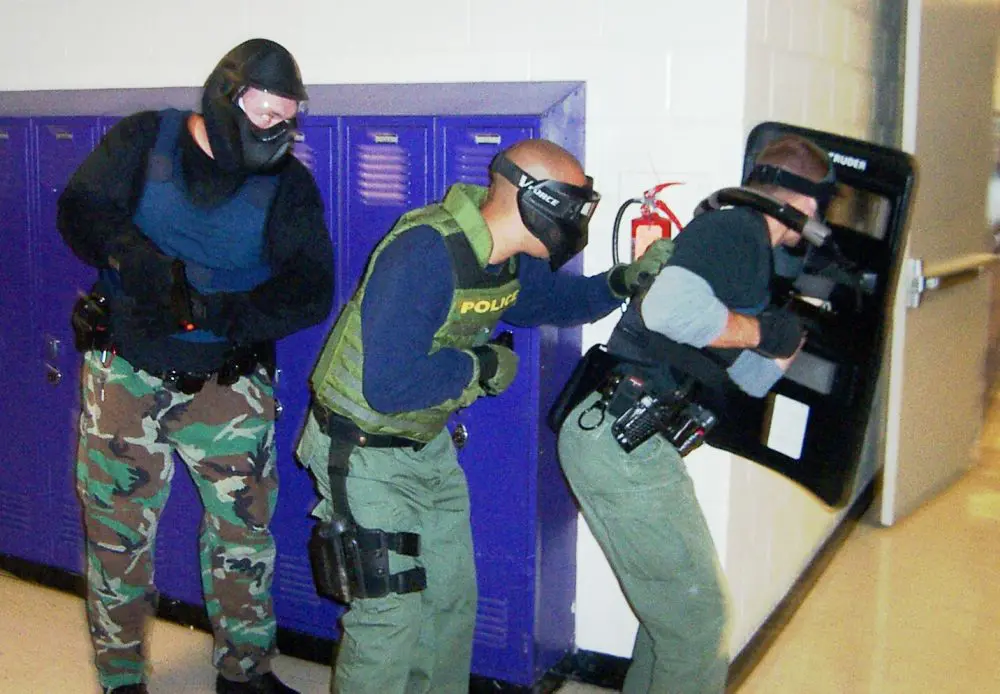
Team room clearing follows similar principles but adds the concept of role division. Typically, the first two members enter the room nearly simultaneously—the first person moves to the left side, the second to the right (or vice versa)—each responsible for clearing threats on their respective side. Subsequent members handle pushing deeper into the room or confirming the safety of already-cleared areas. This kind of teamwork requires pre-established communication and mutual understanding—everyone must know where they’re going the moment they step through the door.
In airsoft scenarios, executing perfect room clearing every time is nearly impossible. Venue layouts vary, opponent positions are unpredictable, and in pickup games, teammates often haven’t coordinated beforehand. But even just mastering the two basic principles of “don’t stop in the doorway” and “find cover immediately after entry” will dramatically improve your survival rate.
Corridor and Corner Movement
The most common spaces in a CQB venue aren’t rooms—they’re corridors and corners. These seemingly simple passages are actually death traps in disguise—long corridors offer no cover to use, and the other side of a corner might have someone waiting for you at any moment. Learning to move safely through these spaces is fundamental CQB skill.
When moving through corridors, avoid walking dead center. Staying close to one wall reduces your risk of being attacked from multiple directions simultaneously and gives you quicker access to door frames or protrusions as cover when needed. Movement speed should vary based on the situation: if the corridor appears clear, move quickly to minimize exposure time; if there are doors or corners ahead, slow down and prepare to handle potential threats.
Corner handling applies the same Slice the Pie principles, but pay attention to your positioning. A common mistake many players make is sticking their head directly around a corner to look—this essentially serves up your most vulnerable body part to the opponent. The correct approach is to maintain distance from the corner, allowing your body and weapon to appear in the opponent’s field of view simultaneously—this way you’re ready to fire the moment you spot them, rather than peeking your head out first and then scrambling to raise your gun.
Footstep noise is also significant in CQB. Walking heavily in combat boots on concrete floors is essentially broadcasting your position to everyone nearby. Try to keep your footsteps light, landing on the balls of your feet rather than your heels, and pay special attention to reducing noise when approaching danger zones. Of course, deliberately making noise can also be a tactical choice—such as using footsteps to bait opponents into revealing their positions.
Team Communication: Hand Signals, Callouts & Radios
The most underrated skill in CQB is communication. Even the best individual skills can be severely diminished in team engagements without effective coordination with teammates. The noisy, fast-paced CQB environment makes clear communication methods essential for team cohesion.
The three most commonly used communication methods each have their advantages and drawbacks. Hand signals are the quietest option, keeping your position concealed, but they require teammates to have direct line of sight to your hands, and both parties need to understand the same signal set. Basic hand signals include “stop” (raised fist), “move forward” (palm-forward wave), “enemy” (pointing in the direction with a shooting gesture), and using fingers to communicate numbers or directional information.
Radio communication excels when team members are spread across different positions without line-of-sight contact. However, indoor environments can cause radio reception to suffer from interference by walls and structural elements. When using radios, develop the habit of keeping transmissions brief and clear—state the recipient’s callsign before the message, and avoid lengthy descriptions.
Verbal communication is the most intuitive and easiest method, but it’s also the most likely to give away your position. In CQB environments, when you’ve already been spotted by opponents or the situation is urgent, calling out is the fastest option. Common callouts include “Clear” (area secured), “Contact” (enemy spotted), “Moving” (I’m about to reposition), and “Cover me” (provide covering fire).
In pickup CQB games, you typically won’t have trained, dedicated teammates. This is where simple verbal communication becomes especially important—telling the people near you what you’ve spotted and where you plan to move can dramatically reduce friendly fire incidents and redundant exposure.
Best CQB Gear Setup
CQB environments demand completely different gear than outdoor fields. In tight spaces, long barrels catch on walls and door frames, and heavy equipment makes you clumsy during rapid movement. The core principle of CQB gear is: short, lightweight, and fast.
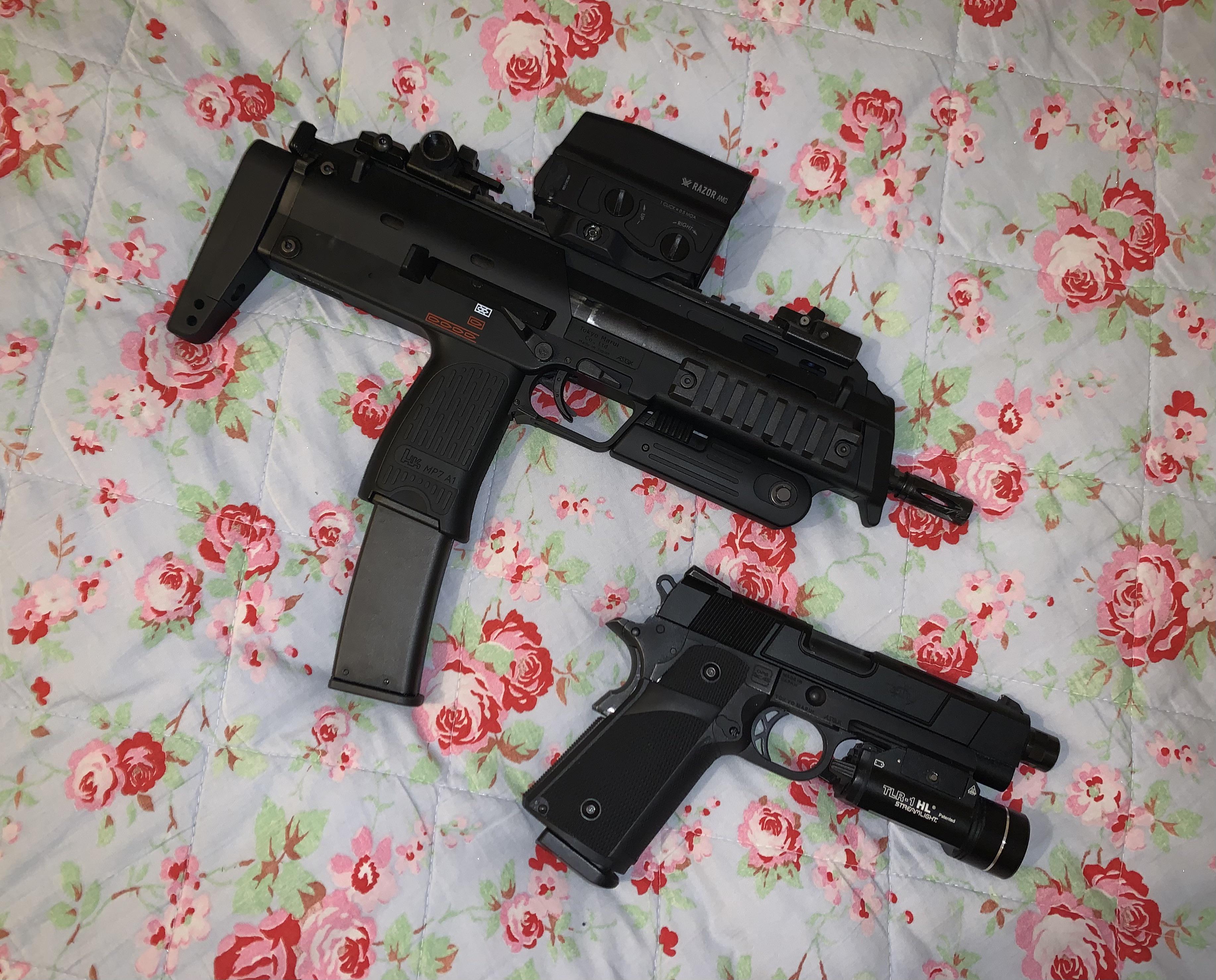
For weapon selection, SMGs (submachine guns) and short-barreled rifles are ideal choices for CQB. Compact AEGs like the MP5, MP7, and ARP9 offer short profiles that are easy to maneuver in tight spaces while maintaining adequate firepower and accuracy. Pistols are also excellent CQB weapons, especially around corners and in doorways where quick target acquisition is needed—pistol agility is unmatched by any rifle. If you prefer using a rifle, at minimum choose a CQB short-barrel variant or attach a foldable stock to reduce overall length.
For sighting systems, red dot optics are practically standard equipment for CQB. Indoor venues typically have worse lighting conditions than outdoor fields, and red dot sights let you quickly acquire targets even in low-light environments. Any magnified scope is a liability in CQB, as engagement distances are usually within 10-20 meters where magnification is completely unnecessary. A simple open red dot or holographic sight is more than sufficient for any indoor scenario.
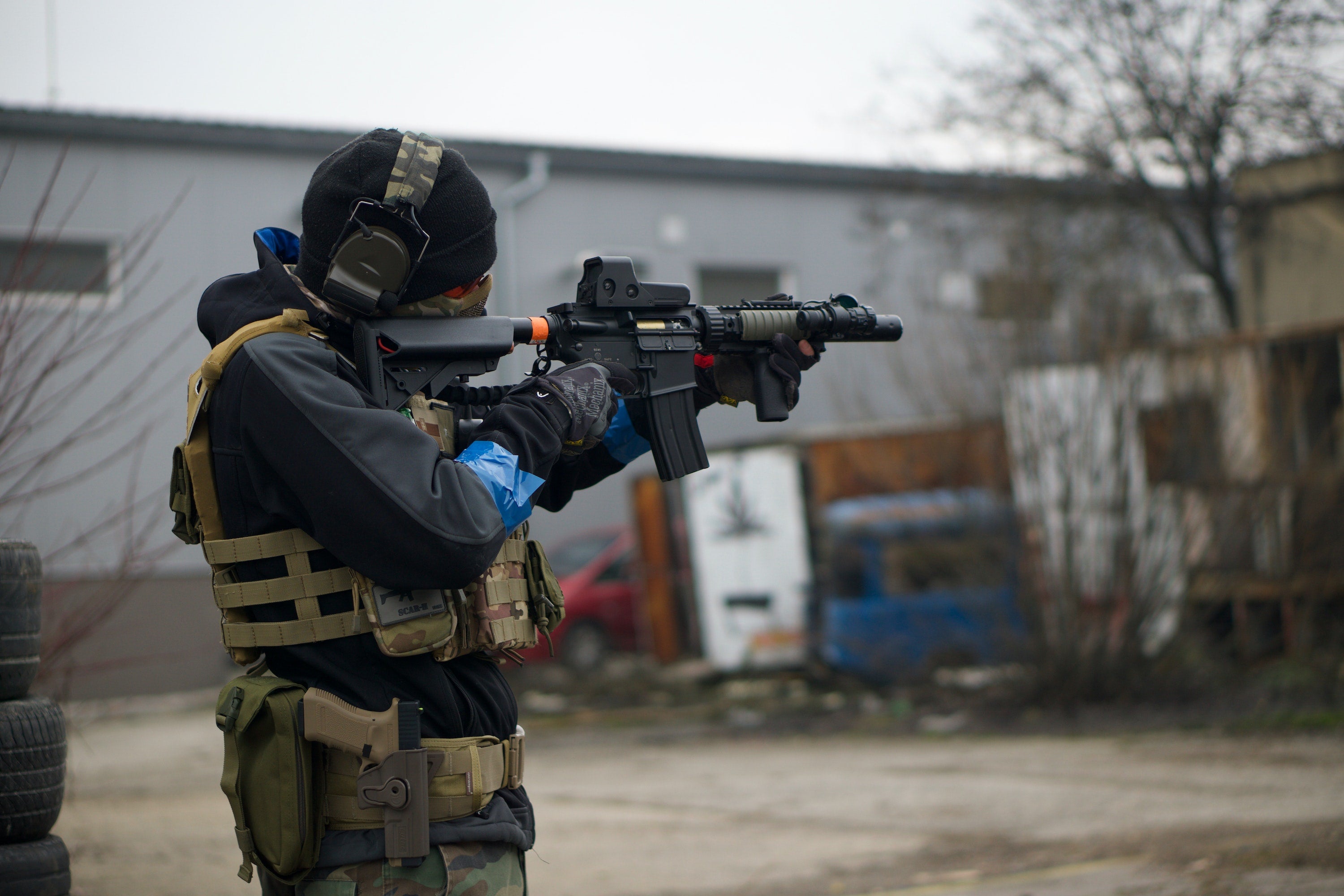
Tactical gear selection should follow the same lightweight principle. CQB doesn’t require a bulky plate carrier—a lightweight chest rig can carry enough magazines and essential equipment. Magazine count doesn’t need to be excessive either—CQB rounds are short, and three to four spare magazines are typically plenty. If using high-capacity magazines, you might only need one or two spares. Trading excess weight for better mobility is always a worthwhile exchange in CQB.
For protective gear, CQB’s close-range engagements mean harder BB impacts, making good protection particularly important. A full-face mask or at minimum a lower face guard is strongly recommended, as close-range BB strikes to the teeth are both common and painful. Gloves protect against collisions in tight spaces and BB hits to the fingers.
Five Common CQB Mistakes Beginners Make
Even with knowledge of basic tactics, many players still make common mistakes in practice. Recognizing these mistakes helps you consciously avoid them.
The first mistake is over-relying on cover without observing. Many beginners find a covered position and refuse to move from behind it, thinking that staying hidden equals staying safe. The problem is that without continuous battlefield awareness, you can’t track enemy movement, and when opponents flank you from the side, you’re completely caught off guard. The correct approach is to periodically quick-peek from behind cover to maintain awareness of the changing situation around you.
The second mistake is leading with your barrel. Many players extend their barrel around corners before their eyes, essentially announcing where they’re about to appear. Your barrel should never be exposed before your line of sight—the ideal scenario is spotting the opponent at the same time your muzzle is already aimed at them.
The third mistake is standing still. In CQB, stationary targets are the easiest to hit. Even behind cover, you should alternate between different observation angles and firing positions. If you peek from the same spot every time, opponents will quickly predict your movements and pre-aim that location.
The fourth mistake is ignoring footstep noise. In quiet indoor environments, running sounds carry far. Many beginners habitually sprint through spaces, only to find they’ve been pre-aimed by opponents who heard their footsteps before they even arrived. Learn to slow down when necessary, using quiet movement to approach objectives.
The fifth mistake is going solo. CQB is a team sport, and even in pickup games you should try to coordinate with nearby teammates. Solo room clearing carries far more risk than two or three people working together. At minimum, tell the people around you what you intend to do, or follow experienced players’ lead.
Using a Shot Timer to Improve CQB Skills
The core abilities in CQB—fast reactions, quick target acquisition, and accurate first shots—can all be systematically improved through timed training. The AirsoftShotTimer is the most practical tool for this purpose.
Draw-to-first-shot time is one of the most critical metrics in CQB. When encountering opponents around corners or in doorways, whoever can get their gun up faster gains the advantage. Using the Shot Timer’s PAR time mode, set a target time (beginners should aim for 2.0 seconds, experienced players can challenge sub-1.5 seconds), and practice the complete motion from ready position to raising and firing your weapon. Record your time each session and track your improvement curve.
Target transition speed is equally important. CQB environments frequently present multiple targets in quick succession, and your ability to quickly switch from one target to the next determines whether you can eliminate opponents before they react. Set up two to three virtual target points at home, and use the Shot Timer to record total time from first target engagement to last, along with split times for each transition.
Dry fire practice is also tremendously helpful for CQB skill development. Practicing quick weapon presentation at home, aiming at marked points on the wall, and simulating corner engagement motions all require zero BB consumption. The Shot Timer’s random delay feature can simulate sudden enemy encounters—you don’t know when the buzzer will sound and must complete the action as fast as possible after hearing it, closely mirroring the dynamic of CQB corner encounters.
Frequently Asked Questions (FAQ)
Q1: Is CQB more dangerous than outdoor airsoft?
CQB engagement distances are closer, so BB hits do sting a bit more than outdoors. However, proper CQB venues enforce stricter FPS limits (typically 280-350 FPS), and combined with mandatory protective gear requirements, overall safety is well-maintained. Wearing long sleeves, long pants, and full-face protection significantly reduces any discomfort.
Q2: Is CQB suitable for beginners?
Absolutely. CQB venues are typically smaller with simpler rules and shorter round times, allowing beginners to gain substantial combat experience in a very short period. CQB also doesn’t require high-end gear—an entry-level short-barrel AEG plus basic protection is all you need to get on the field.
Q3: What’s the best gun for CQB?
Short-barrel rifles, SMGs, and pistols are all excellent CQB choices. If you can only pick one, a compact AEG like the ARP9, MP5, or short-barrel M4 is recommended. On a tight budget, a reliable gas blowback pistol can also perform brilliantly in CQB.
Q4: Can I practice CQB techniques at home?
Yes. Many CQB techniques can be practiced at home through dry fire training. Corner engagement motions can be simulated using door frames, and draw and presentation speed can be timed with a Shot Timer. However, true spatial awareness and pressure response can only be experienced at an actual venue.
Q5: Is a pistol or rifle better in CQB?
Each has its advantages. Pistols are more agile, ideal for extremely tight spaces and quick cornering; rifles offer more firepower, longer range, and greater magazine capacity. Many experienced CQB players carry both a rifle and a pistol, using the rifle in open areas and switching to the pistol in confined spaces.
Q6: What do I need for my first CQB game?
At minimum: eye protection (ANSI Z87.1+ rated), full-face mask or lower face guard, long sleeves, long pants, and gloves. Most venues offer gun and magazine rentals. Bring extra water and a towel as well—CQB is more physically demanding than you might expect.
Q7: Is Slice the Pie or rushing into the room more effective?
In most situations, Slice the Pie is both safer and more effective. It lets you gather substantial information before entering a room, reducing the risk of ambush. However, in specific circumstances—such as under heavy time pressure or when you’re certain there are only one or two opponents at known positions—a dynamic entry may be the better choice.
Q8: How do I find a good CQB venue?
Google searching your city name plus “CQB” or “indoor airsoft” is the most direct approach. You can also ask for recommendations in local airsoft communities on Facebook or Discord. Good CQB venues should have clear safety rules, regularly maintained facilities, friendly staff, and reasonable FPS limits. For more venue selection advice, check out our Airsoft Field Guide.
Conclusion
CQB is the most technically demanding and most addictive game mode in airsoft. It concentrates shooting skills, tactical thinking, and team coordination into a high-pressure indoor environment, making every game a dense learning experience.
Master the fundamentals of Slice the Pie, understand the danger of the Fatal Funnel, learn basic team communication, and choose appropriate lightweight gear—do these things and you’ll already be better prepared than most players at any CQB venue. The rest is about getting to the field consistently and accumulating experience through each encounter.
Don’t be afraid to make mistakes—every CQB veteran started by getting eliminated. What matters is reflecting after each game on what you did well and where you can improve. If you want to systematically track your progress, use the AirsoftShotTimer App to record your draw speed and reaction times, letting the data show exactly how much you’ve improved.
Grab your compact gun, gear up with your protection, and step into that world of corridors and rooms. The CQB battlefield is waiting for you.
Related Articles
Airsoft Series
- Airsoft Beginner’s Complete Guide - Start your Airsoft journey from scratch
- Airsoft Field Selection Guide - Find the right battlefield for you
- Airsoft Gear Complete Guide - Full equipment selection guide
Shooting Techniques
- Pistol Draw Technique Complete Guide - Essential draw speed for CQB
- Shooting on the Move Complete Guide - Shoot while moving
- Pistol Aiming Technique Complete Guide - Fast and accurate aiming
Training Tools
- Shot Timer App Complete Guide - Improve reaction speed with a timer
- Classic Shooting Drills Complete Guide - Systematic training methods
- Dry Fire Training Complete Guide - Improve shooting skills at home
- Airsoft
- CQB
- Close Quarters Battle
- Indoor Tactics
- Room Clearing
- Slice the Pie
- Tactical Training
- Beginner Guide
- SMG