Airsoft vs Real Firearms Cross-Training Guide: How Airsoft Improves Your Shooting Skills
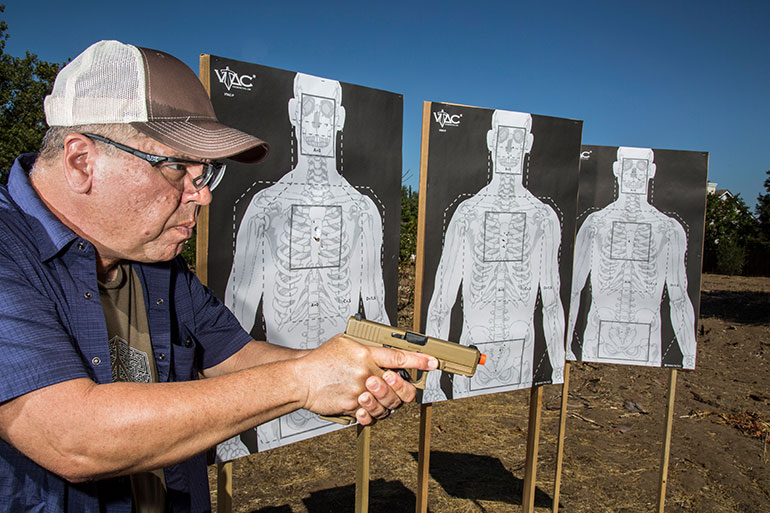
If you’re into both airsoft and real firearms, or you’re a fan of one and curious about the other, you’ve probably asked yourself this question: can airsoft experience help me become a better shooter? And conversely, can real firearms skills give me an edge in airsoft?
The answer is yes, but with important caveats. The skill transfer between airsoft and real firearms isn’t a perfect one-to-one copy. Some skills translate almost seamlessly, while certain critical differences can actually build bad habits if you’re not careful. More and more military units, law enforcement agencies, and professional competitive shooters around the world are incorporating airsoft into their training programs, and that’s no coincidence. They’ve recognized the unique training value that airsoft provides.
This guide takes a deep dive into which shooting skills transfer between airsoft and real firearms, which ones don’t, and how to build an effective cross-training plan that helps you improve in both disciplines.
Skills That Transfer Perfectly
Airsoft and real firearms share more fundamental skills than most people realize. These commonalities are concentrated in the actions that happen “before” and “between” shots, essentially everything that doesn’t involve recoil management.
Grip technique is the most directly transferable skill. Whether you’re holding a Tokyo Marui GBB pistol or an actual Glock 19, the correct two-handed grip (high and tight, thumbs forward, support hand wrapping around) is identical. Many people develop lazy one-handed shooting habits in airsoft, but real steel shooters who practice proper grip form on airsoft from the start can carry that muscle memory straight to the range.
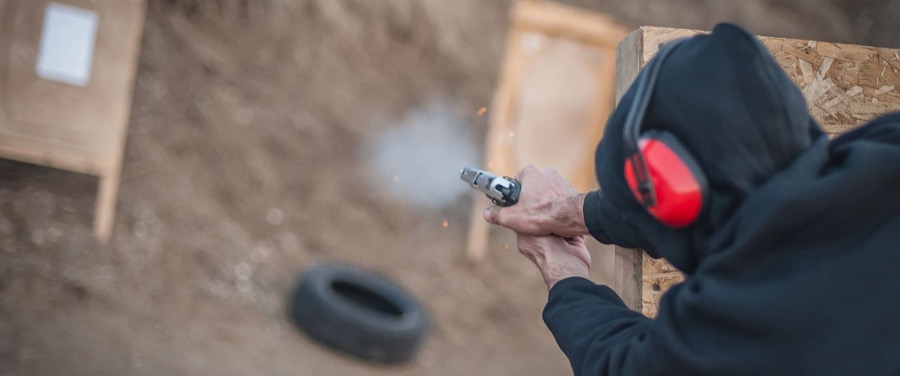
The draw stroke transfers perfectly as well. The four steps of drawing from a holster (grip, clear, join, extend) follow the same hand path and body coordination regardless of whether the gun is real or a replica. Many competitive shooters practice hundreds of draws at home using GBB pistols with their actual competition holsters, then bring that speed directly into matches. That’s because draw speed is bottlenecked by hand-eye coordination and muscle memory, not the slight weight difference between guns.
Magazine reload technique is also highly transferable. The magazine release button location, the motion of grabbing a spare magazine, inserting it, and releasing the slide all correspond directly between GBB pistols and real firearms. The ability to maintain reload speed under pressure is something that airsoft’s adversarial environment can actually simulate better than a static range.
Finally, tactical movement and body positioning represent one of airsoft’s greatest training contributions for real firearms shooters. At the range, you typically stand at a fixed position shooting at static targets. In airsoft, you must shoot while moving, use cover effectively, transition between targets, and communicate with teammates. The body control, spatial awareness, and decision-making skills developed in these dynamic shooting environments are extremely difficult to replicate at a conventional range.
Critical Differences That Don’t Transfer
Understanding what doesn’t transfer is just as important as knowing what does. Carrying certain airsoft habits directly into live fire isn’t just unhelpful; it can create serious safety issues or training setbacks.
Recoil management is the biggest gap. Even the best GBB pistols produce less than a tenth of the recoil force of real firearms. A real 9mm handgun’s recoil causes significant muzzle rise, and you need proper grip pressure and wrist control to recover quickly for follow-up shots. This process simply doesn’t exist in airsoft. A shooter who has only trained with airsoft will often struggle with flinching (an anticipatory reaction to recoil) the first time they pick up a real gun, and this issue can only be resolved through live fire practice.
Trigger control also feels significantly different. GBB pistol triggers are typically much lighter than real firearms, with completely different travel distance and break characteristics. In real firearms shooting, trigger control is the single most important factor affecting accuracy. You need to press smoothly through the break without disturbing your sight alignment. Airsoft triggers are too easy and may lead you to neglect this critical skill.
Ballistics and distance perception are entirely different worlds. BB pellets are affected far more by wind and gravity during flight than bullets, and their effective range is much shorter. In airsoft, you might get used to leading targets and accounting for BB drop, but these habits don’t apply to real firearms. A 9mm bullet flies essentially straight at distances under 50 yards with no need for holdover or lead.
Lastly, safety habits can diverge between the two activities. While legitimate airsoft fields enforce safety rules, some players develop habits during intense games like pointing in a teammate’s direction, touching the trigger in non-safe zones, or handling weapons without checking the chamber. These are minor violations in airsoft but potentially fatal in a live fire environment. Every time you switch from airsoft to real firearms, you must consciously recalibrate your safety awareness.
How Professional Shooters Use Airsoft for Training
You might be surprised to learn that military and law enforcement units worldwide have formally incorporated airsoft into their training programs. This isn’t because they lack resources for live fire training. It’s because airsoft provides something that live fire simply cannot.
In tactical training, airsoft’s greatest advantage is enabling force-on-force confrontation. At the range, you can only shoot paper or steel targets. In airsoft, your “targets” move, shoot back, and behave in ways you can’t predict. This dynamic adversarial environment is invaluable for training rapid decision-making, judgment under pressure, and team tactics, and it’s virtually impossible to safely replicate in a live fire setting.
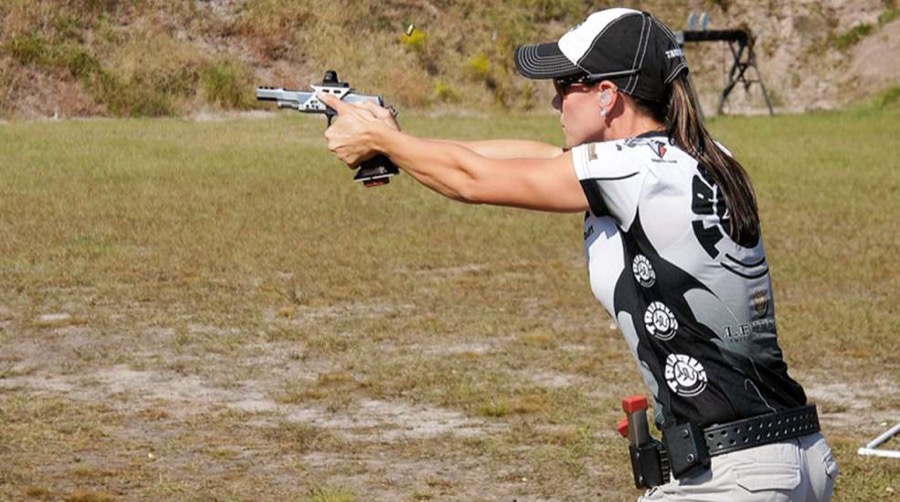
Many top firearms instructors now encourage students to include airsoft practice alongside their live fire and dry fire training. Their reasoning is straightforward: a shooter might visit the range once a week and fire 200 to 300 rounds. But that same shooter can practice 30 minutes every evening at home with a GBB pistol, working on draws, target transitions, and movement. Over the course of a week, the total practice volume far exceeds what happens at the range.
Competitive shooters are also increasingly using airsoft to supplement their training. In particular, during the walkthrough phase before a match, some shooters use airsoft pistols to physically rehearse their stage plans rather than relying on mental visualization alone. Some even build simplified IPSC stages in their backyards, running through shooting plans dozens of times with GBB pistols, then executing those well-practiced sequences with real guns on match day.
GBB Pistols: The Closest Training Tool to Real Firearms
Among all airsoft power systems, GBB (Gas Blowback) pistols are the closest training analog to real firearms. Their operation cycle (compressed gas driving the slide rearward, limited magazine capacity requiring reloads, and the ability to simulate malfunction clearing) makes them far better training tools than electric or spring-powered guns.
When choosing a GBB pistol for training, the most important consideration is selecting a replica that matches your real firearm. If your competition gun is a Glock 17, get a GBB Glock 17. If you shoot a CZ Shadow 2 in IPSC, there are corresponding GBB replicas available. This ensures the grip angle, control locations, and even holster compatibility are as close as possible, maximizing muscle memory transfer.
The most popular GBB training pistol brands include Tokyo Marui, Umarex (licensed Glock), KWA, and VFC. Tokyo Marui’s Glock series is known for excellent slide feel and reliability. Umarex licensed Glocks are dimensionally closer to real firearms. KWA has specifically launched an “At-Home Firearms Skills Training Kit” line emphasizing training use. Price-wise, a quality GBB training pistol costs approximately $120 to $250, far less than a real firearm, yet provides thousands of hours of practice opportunity.
Be aware that most GBB pistols aren’t dimensionally identical to their real counterparts. Tokyo Marui’s Glock series is slightly wider in the grip than an actual Glock, which means Kydex holsters made for real Glocks may not fit. If you plan to cross-train with the same holster, consider Umarex licensed models or use thermoformed holsters with some tolerance. Alternatively, brands like Amomax and Cytac offer holsters designed specifically for airsoft that are compatible with major GBB models.
IPSC Action Air: A Parallel World of Competitive Shooting
If you want to combine the best of airsoft and competitive shooting, IPSC Action Air was made for you. It’s an official discipline under the International Practical Shooting Confederation, using airsoft pistols while following rules and scoring systems nearly identical to real firearms IPSC.
IPSC Action Air course design closely mirrors real IPSC: there are paper targets, steel targets (with electronic sensors), obstacles, and cover. Shooters must complete stages in the shortest time possible while scoring as many A-zone hits as they can. Scoring uses Minor power factor with 5 points for A zone, 3 for C zone, and 1 for D zone, with final results calculated as Hit Factor (points divided by time). This is entirely consistent with real IPSC’s core philosophy: accuracy, power, and speed.
The sport is particularly popular in Asia, especially in Taiwan, Hong Kong, Japan, and South Korea, where civilian firearms ownership is restricted. IPSC Action Air provides a fully legal pathway to experience competitive shooting. Even in countries where firearms are legal, many live fire IPSC shooters participate in Action Air matches as additional training opportunities, since Action Air competitions are typically more frequent, less expensive, and can be held indoors year-round.
IPSC Action Air features multiple divisions including Open (allowing optical sights and compensators), Standard, Classic (limited to 1911-type pistols), and Production. The 2025 Action Air World Shoot was held in Iloilo City, Philippines, attracting competitors from around the globe. For anyone wanting to enter competitive shooting without committing to real firearms first, Action Air is an outstanding entry point.
Cost Comparison: The Savings Are Staggering
One of the most practical benefits of cross-training is cost. Let’s do the math and see how much money airsoft supplemental training can save you.
9mm training ammunition currently costs approximately $0.25 to $0.50 per round, depending on brand and quantity. A single range session burning through 200 rounds means $50 to $100 in ammo costs alone. Add range fees ($15 to $25) and targets, and a single training session easily exceeds $75. At one session per week, annual ammo costs alone surpass $3,000.
In contrast, a bag of 5,000 high-quality 0.20g BBs costs about $10, working out to roughly $0.002 per round, essentially negligible. GBB pistol gas costs about $10 to $15 per can, with each can lasting several hundred rounds. Even including gas costs, airsoft training costs less than one-tenth of live fire per session.
More importantly, airsoft training doesn’t require a range facility. You can run most training drills in your living room or backyard (draws, target transitions, reloads, movement drills) with no restrictions on location or time. This means you can increase training frequency from once per week to 15 to 30 minutes daily, and the increase in total training volume far outweighs any cost savings.
Of course, this doesn’t mean you can entirely replace live fire with airsoft. The ideal training mix is: daily GBB practice at home for draws, reloads, and dry fire technique (15 to 30 minutes), with range visits every two to four weeks focused specifically on recoil management, distance accuracy, and live-fire-specific skills. This way you maintain high-frequency skill practice without bankrupting yourself on ammunition.
Using a Shot Timer to Unify Your Cross-Training
Whether you’re training with airsoft or real firearms, AirsoftShotTimer App is the key tool for tracking progress and establishing training benchmarks. It gives your cross-training concrete data support rather than relying on guesswork.
Establishing consistent benchmark tests is the first step. Choose several standard drills that you can test with both your GBB pistol and real firearm, such as draw-to-first-shot time, Bill Drill (six shots on one target) total time, or El Presidente completion time. Record your performance on both platforms using the shot timer, creating two sets of baseline data. As you train, you can observe whether both sets of data improve in parallel, validating that your cross-training is actually working.
PAR time training is particularly useful for cross-training. During GBB practice, set the same PAR time targets as your live fire training. For example, if your range draw-to-first-shot time is 1.5 seconds, set a 1.5-second PAR time during GBB training. This ensures the speed standard you maintain at home matches your range performance, preventing the disconnect of “practicing fast but not performing fast.”
The shot timer’s random delay buzzer feature is especially valuable for reaction time training. Set a 2 to 5 second random delay, then complete the assigned action as quickly as possible after the beep. This drill works equally well with GBB or real firearms because reaction time is independent of gun type. Your nervous system’s signal-to-action speed is the same regardless of what you’re holding.
Split time analysis helps identify training weaknesses. If your GBB draw time is 1.2 seconds but your live fire draw takes 1.8 seconds, that 0.6-second gap likely comes from anticipatory flinching or unfamiliarity with the real gun’s weight. This data comparison precisely tells you where to focus your live fire practice, ensuring your range time addresses the areas that need it most.
Building Your Cross-Training Plan
All the theory in the world means nothing without a concrete training plan. Here’s a weekly cross-training framework that balances airsoft and real firearms, which you can adjust based on your time and resources.
Daily GBB home practice forms the plan’s foundation. Spend 15 to 20 minutes each day using an unloaded or GBB pistol to practice fundamentals: draws (20 reps), reloads (20 reps), and sight transitions (between two or three marked target points on a wall). Use the shot timer to record each attempt and review the data weekly to identify which skills are improving and which have plateaued.
Participate in airsoft games once a week or every two weeks. During games, consciously practice the skills you’ve been drilling at home. Use proper grip form, work on smooth reloads, and practice shooting while moving between cover positions. Don’t focus solely on winning. Treat each game as a dynamic shooting practice session.
Schedule range visits for live fire training every two to four weeks. Before going to the range, list the specific skills you want to validate. For example, if you’ve gotten your GBB draw down to 1.3 seconds, your goal for the day might be achieving sub-1.6 seconds with real ammo. Purposeful range training is far more effective than aimless plinking. Spend your precious live fire time on things only live fire can teach: recoil management, distance accuracy, and the subtle feel of trigger control.
If you have upcoming competitions, increase GBB practice intensity two weeks before the match, specifically targeting skills relevant to the competition. After the match, review your split time data, identify areas for improvement, and use GBB practice to focus on those weak points in the next training cycle.
Frequently Asked Questions
Q1: Can airsoft really help me become a better real firearms shooter? Yes, but with conditions. Airsoft’s greatest training value lies in tactical movement in dynamic environments, muscle memory for draws and reloads, and decision-making under pressure. However, it cannot replace live fire training for recoil management and trigger control. Treat airsoft as a training “supplement” rather than a “replacement” for best results.
Q2: GBB or electric pistol, which is better for training? For improving real firearms skills, GBB is far superior to electric pistols. GBB provides slide blowback feedback, has limited magazine capacity requiring reloads, and allows malfunction clearing drills (Type 1/2/3). Electric pistols are cheaper and more consistent but lack these features that mirror real firearm operation.
Q3: Should I buy a GBB pistol that matches my real gun? Absolutely. If your real gun is a Glock 19, get a GBB Glock 19. The matching grip angle, control placement, and operation logic maximize muscle memory transfer. Some shooters even ensure their GBB pistol works with the same holster and magazine pouches.
Q4: How accessible is IPSC Action Air? Very accessible, especially in Asia. Countries like Taiwan, Hong Kong, Japan, and South Korea have active IPSC Action Air communities with regular practice and official matches. All you need is a compliant GBB pistol, basic competition gear (holster, magazine pouches, belt), and eye protection. Even in countries with legal firearms, Action Air offers additional low-cost competitive shooting opportunities.
Q5: What’s the most common bad habit when transitioning from airsoft to real guns? The most common issue is flinching, an anticipatory reaction where you push the gun downward just before pulling the trigger, expecting recoil that doesn’t exist in airsoft. The second is insufficient grip pressure, since airsoft requires minimal grip strength to control. Third is relaxed safety awareness, as certain airsoft habits like casually flagging teammates should never carry over to live fire.
Q6: How much does airsoft training cost per month? Very affordable. A quality GBB pistol costs $150 to $250 (one-time investment), BBs run about $5 to $10 monthly, and gas costs $10 to $15 per month. Monthly expenses average roughly $15 to $25, while equivalent live fire training could easily exceed $200.
Q7: What should real firearms shooters know before trying airsoft? The most important thing is adjusting your expectations. BB ballistics, range, and hit feedback are completely different from real firearms, so don’t expect your range accuracy to translate directly into airsoft performance. Focus on practicing dynamic shooting skills and tactical movement rather than obsessing over hit rates. Also, make sure to follow field safety rules and FPS limits.
Q8: How long before I notice results from cross-training? Most shooters notice measurable improvement within four to six weeks of consistent cross-training, especially in draw speed and reload fluency. Shot timer data shows progress earliest, often within two to three weeks you’ll see improvement in your time measurements.
Conclusion
Airsoft and real firearms aren’t two mutually exclusive worlds. They’re two sides of the same coin, each offering unique training value that the other cannot provide. Airsoft delivers low-cost, high-frequency, dynamic adversarial practice environments. Real firearms provide authentic recoil management, trigger control refinement, and the psychological pressure of live fire. Combining both accelerates your overall shooting ability faster than focusing on either one alone.
The key is training with intention. Don’t just play airsoft casually or go to the range and plink without a plan. Set specific goals, use a Shot Timer to record data from every practice session, and regularly review and adjust your training plan. When you treat every airsoft session as an opportunity to improve your real firearms skills, you’ll find the rate of progress is genuinely surprising.
Whether you’re an airsoft veteran looking to enter the real firearms world, or a live fire shooter wanting to boost training efficiency with airsoft, now is the best time to start cross-training.
Related Articles
Airsoft Series
- Complete Airsoft Beginner’s Guide - Start your airsoft journey from scratch
- Airsoft Gear Selection Guide - GBB, AEG, and equipment choices
- Airsoft CQB Close Quarters Battle Guide - Indoor tactics and room clearing
Shooting Technique
- Pistol Draw Technique Complete Guide - Master your draw speed
- Magazine Reload Technique Guide - Reload process and training
- Dry Fire Training Complete Guide - The best way to improve shooting at home
Competitive Shooting
- IPSC Practical Shooting Training Guide - Competition shooting fundamentals
- IDPA Defensive Shooting Training Guide - Defensive shooting methods
- Shot Timer App Complete Guide - Track your training progress
- Airsoft
- Firearms Training
- GBB
- Gas Blowback
- IPSC Action Air
- Dry Fire
- Cross Training
- Shot Timer
- Glock
- Shooting Skills