Airsoft Tactical Headset Guide 2026: Earmor M32 Review & Helmet Setup
Why You’ll Eventually Need a Tactical Headset
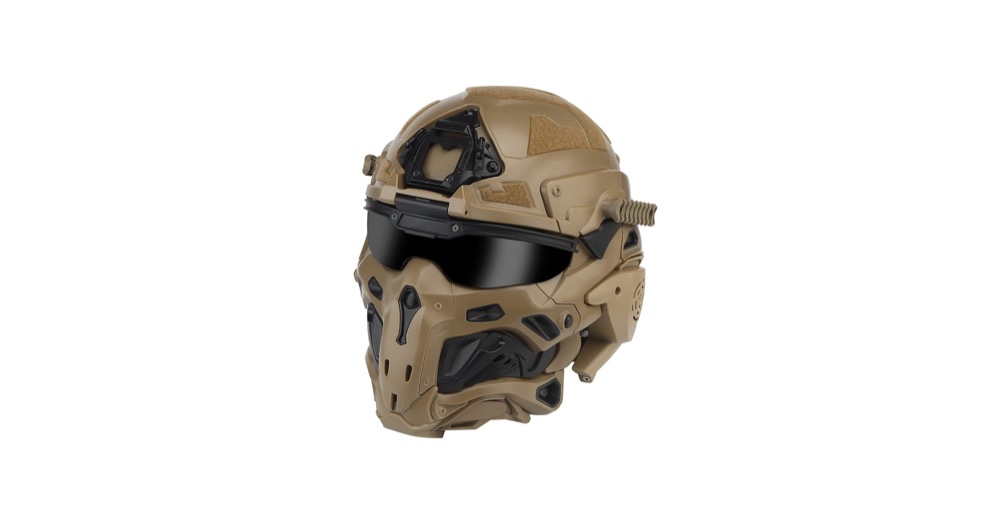
The first time you attend a MilSim event, you’ll probably notice something interesting: the squads with the best coordination barely raise their voices. Corner clearing, flanking maneuvers, building entries — it all seems like the result of years of teamwork. Then you look closer and realize every member has a tactical headset mounted on their helmet, relaying information in quiet whispers through their radios.
In airsoft, the gap in communication capability matters far more than the gap in gun performance. The practical difference between a mid-range AEG and a high-end AEG at typical engagement distances is marginal, but the difference between having real-time comms and not having them is night and day. Picture this: you’re holding a position on the second floor of a CQB building when your teammate downstairs spots enemies moving toward the stairwell. Without comms, by the time your teammate runs up to warn you, the enemy might already be at the top of the stairs. With a headset and radio, a quick “heads up, contact coming up the left stairwell” gives you time to pre-aim and wait.
Beyond communication, tactical headsets offer an often-overlooked benefit: electronic hearing protection. The cumulative noise from BBs hitting hard surfaces in indoor fields, thunder-B grenades going off, and even the cycling of GBB guns is more impactful on your hearing than you’d think. Electronic headsets instantly suppress sounds above a safe threshold while amplifying ambient sounds — letting you hear enemy footsteps while blocking harmful noise spikes. This “hear what you need, block what you don’t” capability is the true core value of a tactical headset.
The Earmor Lineup: M32, M31, and M20 Explained
When it comes to airsoft tactical headsets, Earmor has become almost synonymous with the category. They deliver near-military-grade functionality at a price point that airsoft players can actually afford, democratizing electronic hearing protection and communication integration that was once reserved for real-steel shooters. Earmor’s three most popular models each target different needs, and understanding the differences is the first step to choosing the right one.
Earmor M32 — The Full Communication Package
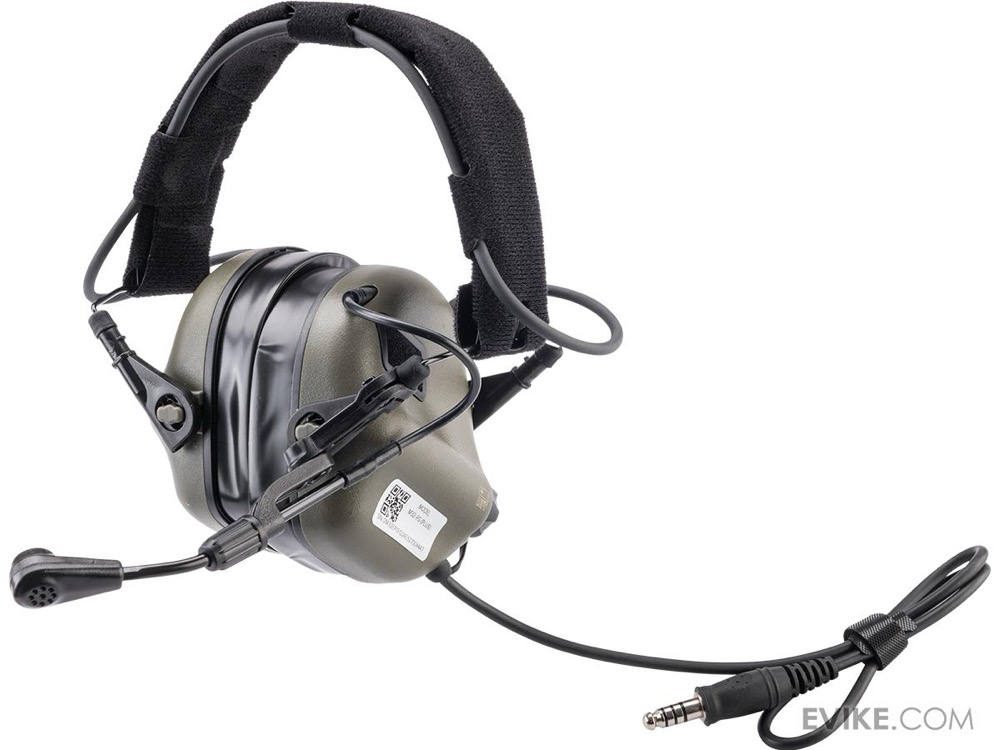
The M32 is the most feature-complete model in Earmor’s lineup and the go-to choice for MilSim players. Its defining feature is the integrated detachable boom microphone and communication port, allowing you to connect to a two-way radio via a PTT (Push-To-Talk) adapter for real-time voice communication. The microphone uses an adjustable boom arm that positions precisely near your mouth, delivering clear voice transmission even in noisy environments.
The first time you put on the M32, you’ll be pleasantly surprised by how light it feels. The ear cushions are thick and soft with excellent coverage, yet they don’t feel stuffy. They remain comfortable even with glasses on — a critical detail for airsoft players who need to wear eye protection. The headband padding distributes weight evenly, so even after hours of wear, you won’t feel pressure points on the top of your head.
The M32’s electronic noise reduction system runs on two AAA batteries (one per side), with an impressive rated battery life of 350 hours. Built-in pickup microphones continuously monitor ambient sound, amplifying anything below 82 dB to a comfortable listening level — you can clearly hear whispered callouts, distant footsteps, even rustling leaves. The moment noise exceeds 82 dB, the circuit cuts amplification within 0.5 seconds, protecting your hearing from sudden loud sounds.
For communications, the M32 uses a NATO-standard Nexus TP120 connector, compatible with Earmor’s M51 or M52 PTT adapters for connecting to various radio brands. One important note: the M32’s connector is not compatible with Z-Tactical or Element brand PTTs, so make sure you’re pairing it with the correct PTT model.
Earmor M31 — Pure Protection at a Lower Price
If you don’t need communication capabilities yet and just want electronic hearing protection with ambient sound amplification, the M31 is the more budget-friendly option. It shares the same noise reduction platform as the M32 with the same 22 dB NRR rating, and the electronic amplification and auto-cutoff features are identical. The difference is simply that the M31 lacks the boom microphone and communication port, giving it a cleaner profile.
The M31 does include a 3.5mm audio input jack for connecting your phone to listen to music or take calls. This comes in handy at the shooting range or during breaks — you can listen to music while maintaining environmental awareness. For players who primarily shoot at ranges and only occasionally play airsoft, the M31’s features are more than sufficient.
Price-wise, the M31 typically runs $20–30 less than the M32. If you’re not yet committed to investing in a radio system, starting with the M31 is a smart strategy — experience the benefits of electronic hearing protection first, then upgrade to the M32 with a full comms setup when you’re ready.
Earmor M20 — Ultra-Light In-Ear Option
The M20 is Earmor’s electronic earplug, taking a completely different approach. Its tiny form factor and negligible weight make it ideal for Speedsoft players who don’t want bulky over-ear headsets. The M20 features electronic noise reduction as well, though with a slightly lower NRR, offering less sound isolation than the over-ear M31/M32.
The M20’s biggest advantage is perfect helmet compatibility — since it sits entirely inside your ear canal, there’s zero conflict with helmet edges and no need for mounting hardware. For players using mid-cut or low-cut helmets like the MICH, the M20 eliminates the problem of over-ear headsets clashing with the helmet’s ear coverage. The trade-off is that long-wear comfort varies by individual, as ear canal shapes differ and not everyone finds in-ear designs comfortable for extended periods.
Brand Comparison: Earmor vs. Peltor Comtac vs. Howard Leight
When shopping for tactical headsets, you’ll see three brands repeatedly mentioned in forums and communities. Each targets a different audience and price point, and understanding the differences will help you make the best choice for your budget and needs.
The Peltor Comtac series is the gold standard in the military and law enforcement market — from U.S. special operations to counter-terrorism units worldwide. Genuine Comtacs deliver unmatched audio quality, noise reduction, and communication clarity — the ambient sound reproduction is so natural you almost forget you’re wearing headsets. But authentic Comtacs cost $500 and up, which is clearly excessive for airsoft. The market is flooded with replicas (usually labeled Comtac II/III clones) priced between $40–80. These clones nail the look, but electronic noise reduction quality varies wildly — some are essentially passive earmuffs with cosmetic additions. If you go the clone route, read actual user reviews of the specific model, not just product photos.
The Howard Leight Impact Sport is the most common electronic earmuff at shooting ranges, offering 22 dB NRR electronic protection for under $50. Its strengths are comfort and value — the slim profile doesn’t interfere with rifle stocks, and it remains comfortable during long sessions. However, the Howard Leight isn’t designed for tactical use: no communication capability, no helmet mounting options, and it doesn’t look the part. It’s better suited as dedicated range hearing protection rather than an airsoft tactical accessory.
Earmor fills the gap perfectly — priced similarly to Howard Leight (M31 around $50–60, M32 around $70–90) but with features and design fully oriented toward tactical use. Communication ports, helmet mounting kits, military aesthetics — these are clear advantages over Howard Leight. Compared to Peltor clones, Earmor is a legitimate brand with consistent quality control and actual warranty support. From a value perspective, Earmor is the most pragmatic choice for airsoft players.
Helmet Mounting: ARC Rail Installation Guide
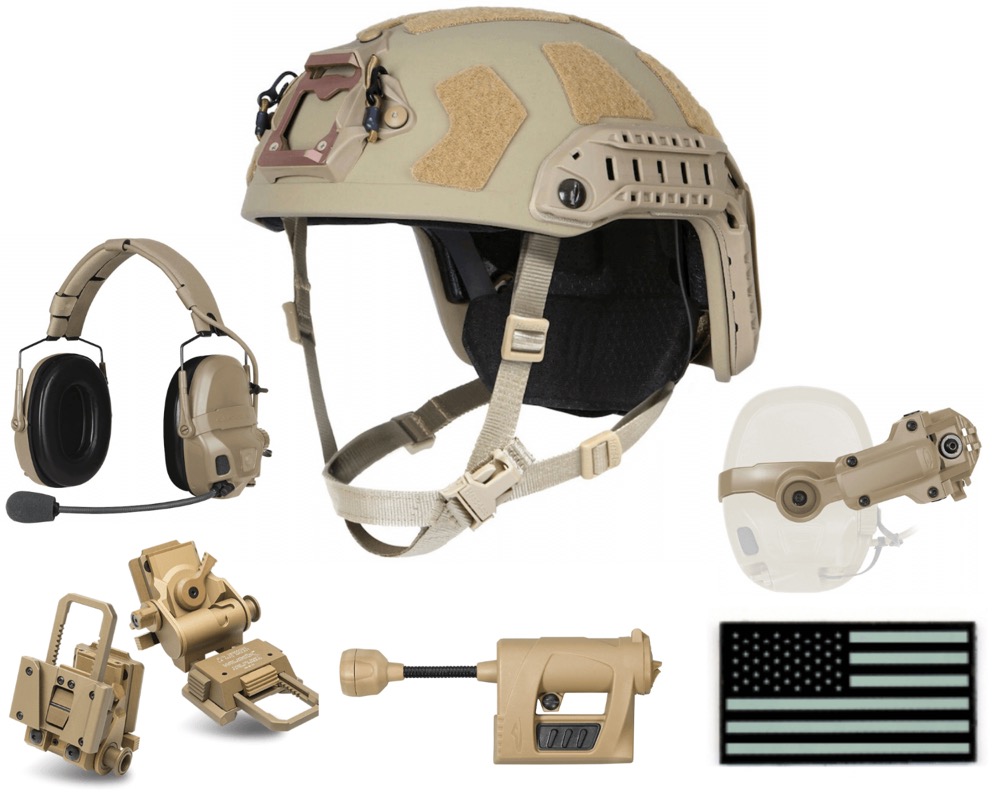
Mounting your headset on your helmet instead of using a headband is a significant upgrade in the tactical headset experience. Once helmet-mounted, the headset weight is distributed across the entire helmet rather than concentrated on the top of your head and above your ears, noticeably improving long-wear comfort. Even better, you can flip the ear cups up 90 degrees to temporarily move them off your ears — great for ventilation during breaks or face-to-face conversations without removing the entire headset.
The installation process is straightforward. Most FAST-series helmets feature standard ARC rails (Accessory Rail Connector) on the sides, and Earmor offers dedicated ARC rail adapter kits (sold separately). Installation simply requires removing the original headband, attaching the ARC mounting arms, and snapping them into the helmet rails. No tools needed, and the whole process takes just a few minutes. Earmor also offers pre-installed ARC-mounted versions (like the M32X) — if you know you’ll be pairing with a helmet, the integrated version is more convenient.
A few installation details worth noting. First, confirm your helmet’s rail specification — Ops-Core-style ARC rails and other brands’ rail systems aren’t always cross-compatible, so verify adapter compatibility before purchasing. Second, test that the ear cups seal completely around your ears without gaps after mounting, since helmet angle and individual head shape both affect the seal, and poor sealing reduces noise reduction effectiveness. Finally, if you’re also wearing goggles, make sure the goggle strap doesn’t conflict with the headset mounting arms — routing the strap above the ARC rail usually resolves this.
For players using MICH or other mid-cut/low-cut helmets, ARC rail mounting may not work well because the helmet’s lower edge interferes with the ear cups. In this case, stick with headband-style wear or consider the in-ear M20.
PTT and Radio: Building a Complete Comms System
Having an M32 headset is only part of the communication equation. To achieve real-time squad communication, you also need a PTT button and a radio. This might sound complicated, but assembling the complete system is more intuitive than you’d expect.
PTT stands for Push-To-Talk — it’s simply a button you press to transmit your voice. In tactical setups, the PTT is typically mounted on your chest rig or plate carrier, easily accessible with your index finger or thumb. Earmor’s official M51 PTT is the simplest pairing option, supporting the Kenwood two-pin connector that nearly all budget airsoft radios use. Connection is straightforward: plug the M32’s Nexus connector into the M51 PTT’s headset port, then plug the M51’s other end into your radio’s headset jack. Done.
For radios, the Baofeng UV-5R or similar dual-band handhelds are by far the most common in airsoft. These radios typically cost $20–40 and provide more than enough range for airsoft field communication. Before using one, check your local radio frequency regulations — in the US, FRS frequencies are license-free, while other bands may require a license. Many airsoft fields designate specific frequencies and channels, so just ask at check-in.
The total budget for a complete comms system breaks down roughly like this: M32 headset around $70–90, M51 PTT around $30–40, Baofeng radio around $25–35. All together, you’re looking at under $150 for a fully functional squad communication system. Compared to genuine military comms gear that costs well over a thousand dollars, this price point is incredibly accessible for airsoft players.
Choosing by Playstyle: MilSim, CQB, and Speedsoft
Different game styles have surprisingly different requirements for communication headsets. Thinking about which type of event you attend most often before buying can save you from the frustration of getting the wrong setup.
MilSim is where communication headsets deliver the most value. Extended missions, complex tactical operations, squad members spread across large maps — these conditions make real-time comms indispensable. MilSim events typically run four to eight hours or even overnight, making headset comfort and battery life critical factors. Recommended setup: Earmor M32 mounted on a FAST helmet, paired with M51 PTT and a handheld radio. If budget allows, carry two spare sets of AAA batteries — while the theoretical 350-hour battery life is generous, nobody wants to discover dead batteries mid-mission.
CQB fields are fast-paced and close-quarters, so communication needs are actually less pressing than in MilSim — your teammates are usually within line of sight, and a hand signal or quick shout gets the job done. But CQB fields tend to be the noisiest environments: BBs ricocheting off walls in enclosed spaces, GBB cycling sounds, thunder-B grenades echoing in hallways — it’s a constant assault on your hearing. Here, the hearing protection function matters more than communication. An Earmor M31 works perfectly — block harmful noise, amplify footsteps to help track enemy positions, no need for the extra comms investment.
Speedsoft demands maximum weight savings and agility. Bulky over-ear headsets add head weight and restrict the freedom of quick head turns, which contradicts the Speedsoft philosophy entirely. If you’re a Speedsoft player who still wants hearing protection, the Earmor M20 in-ear earplugs are currently the best compromise. Virtually zero weight and bulk, no interference with any gear, and basic electronic noise reduction functionality.
Usage and Maintenance Tips
Tactical headsets are electronic devices, and proper usage habits and maintenance can significantly extend their lifespan. Here are some practical tips accumulated from real-world use.
Battery management is the most commonly overlooked detail. The AAA batteries used in the M31/M32 are cheap, but if you forget to turn off the power before stowing the headset in your gear bag, you might find them completely dead next time. Build the habit of switching off after every game, or simply remove the batteries when storing. Standard alkaline batteries work fine — no need to buy lithium batteries when 350-hour battery life on alkalines is already more than sufficient.
Ear cushion pads are the first component to deteriorate. Sweat, sunscreen, and dust gradually degrade the foam material, causing it to harden, peel, or lose elasticity. Wipe the ear pad surfaces with a slightly damp cloth after each use and let them air dry before storage. Earmor sells replacement ear pad kits — swapping them every six months to a year is a reasonable schedule. When you install fresh pads, you’ll immediately notice the comfort and seal quality jump back to like-new levels.
Protecting the microphone and cables matters too. The M32’s boom microphone can get bent out of shape when stored carelessly, so consider using a small case or hard-shell pouch for protection. When connecting and disconnecting the PTT cable, pay attention to the angle and avoid yanking — while the Nexus connector itself is robust, the junction between cable and connector is the most vulnerable point.
Conclusion: Communication Is the Ultimate Force Multiplier
A good tactical headset doesn’t just change your personal game experience — it transforms how your entire squad operates. When your team can exchange battlefield information quietly, instantly, and precisely, your tactical execution takes a quantum leap forward. Those seamlessly coordinated assaults you’ve admired? They’re usually backed by nothing more than a brief radio callout.
If you’re still on the fence, my suggestion is to start with an Earmor M31 to experience electronic noise reduction. Once you find yourself increasingly drawn to team-based events that demand coordination, upgrade to the M32 with a full comms system. You don’t need to invest in everything at once — building your gear progressively based on actual needs and budget is the smartest approach.
Related Articles
Airsoft Gear
- Airsoft Helmet Complete Buying Guide
- Airsoft Loadout Complete Guide
- Airsoft Plate Carrier & Tactical Vest Guide
- Airsoft Mask & Goggle Complete Guide
- Airsoft Gear Buying Complete Guide
Airsoft Tactics
- Airsoft CQB Tactics Complete Guide
- Airsoft Team Tactics Complete Guide
- Airsoft Field Selection Guide
Shooting Training
Use AirsoftShotTimer to track your training progress!
- Airsoft Headset
- Airsoft
- Earmor M32
- Earmor M31
- Tactical Headset
- Airsoft Communication
- PTT
- ARC Rail
- Airsoft Gear
- MilSim
- CQB
- Airsoft Loadout
- Tactical Gear
- Hearing Protection
- Peltor Comtac
- Airsoft Helmet