Airsoft Tactics: The Complete Team Strategy Guide for Outdoor Fields
Why Individual Skill Alone Won’t Win Games
After a few days on the field, you’ll notice something: the players who dominate aren’t always the best shots — they’re the ones who work together. A group of talented lone wolves will lose to a coordinated squad eight times out of ten. That’s not because marksmanship doesn’t matter, but because airsoft is fundamentally a team sport.
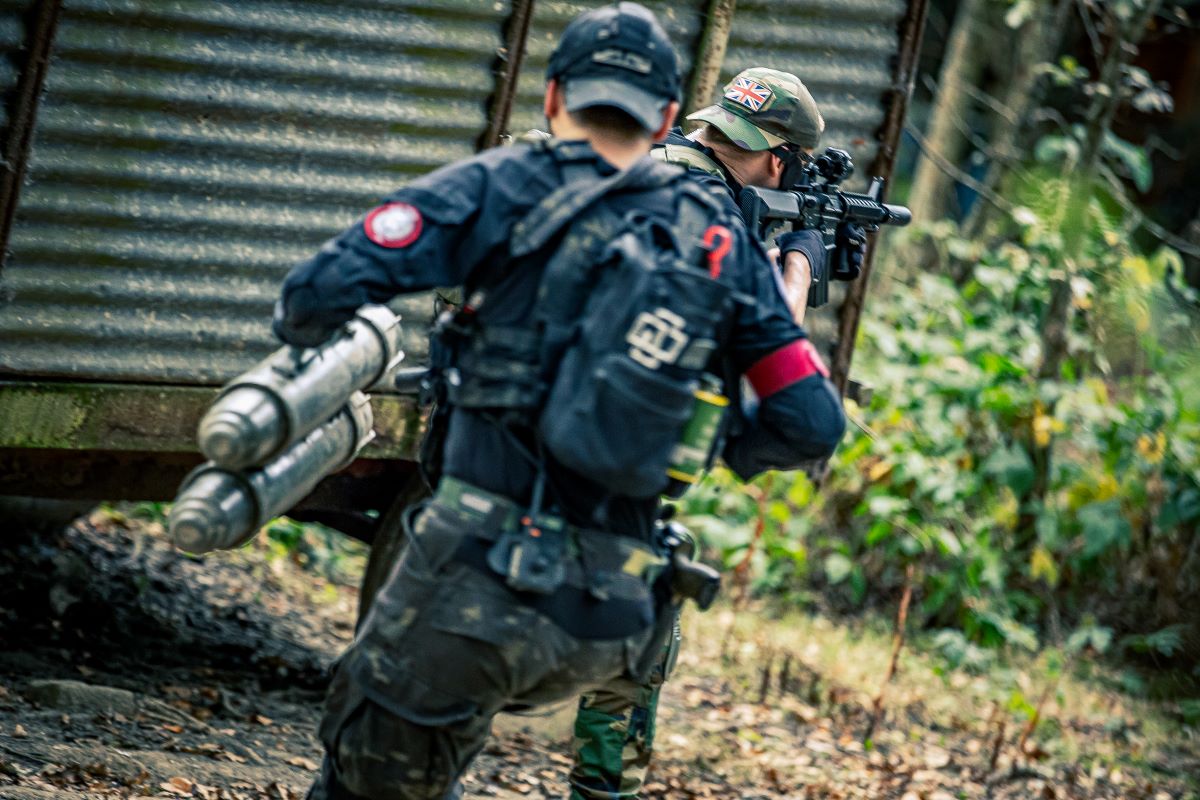
Picture this: you’re in a woodland field, and an enemy is posted up behind a tree, locking down the entire trail. If you rush him head-on, it doesn’t matter how fast or accurate you are — he just has to wait for you to peek. But if a teammate quietly loops through the bushes on his right while you keep his attention, that’s a basic flanking maneuver. It’s the simplest version of “one plus one equals more than two,” and it changes everything.
This guide isn’t about advanced military doctrine. We’re talking about the most practical team tactics for outdoor airsoft: how to divide roles, how to communicate, how to move, and the mistakes almost everyone makes. Whether you’re heading to a pickup game with friends or building a dedicated team, these fundamentals will take your experience to the next level.
Squad Roles: Everyone Has a Job
A lot of players think airsoft is just a mob of people running around shooting at each other. But an effective team needs clear roles. You don’t need a full military hierarchy — just a basic understanding of who’s responsible for what.
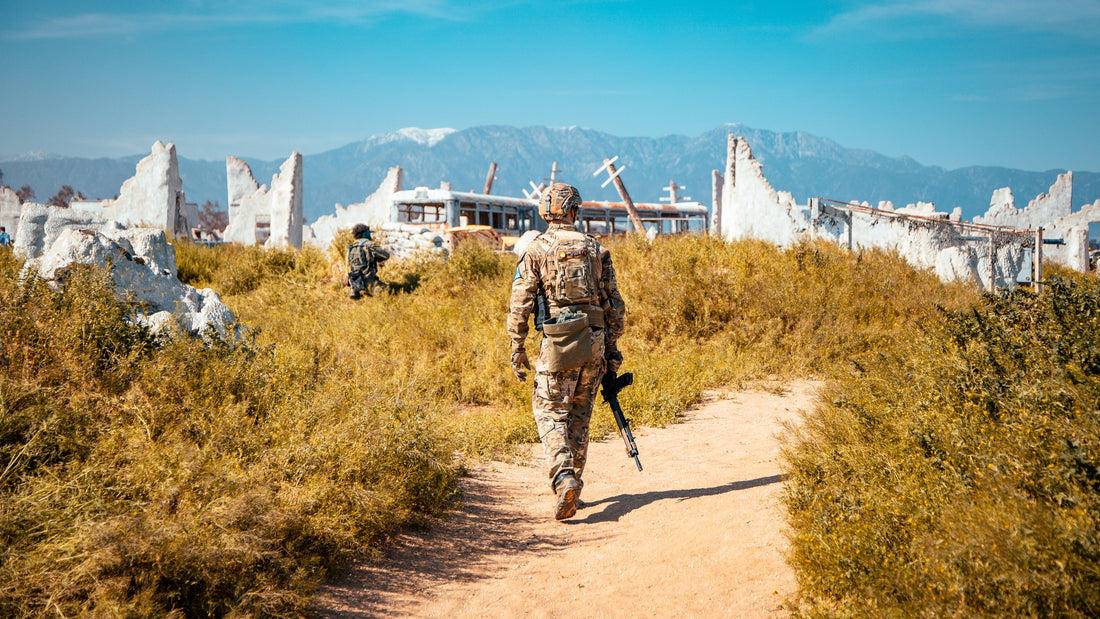
A simple four-person squad can be organized like this. The Point Man walks at the front, scouting the route and spotting enemies first. This role needs fast reflexes, confidence, and a good understanding of the team’s movement signals. Five to ten meters behind the point man are two Riflemen — the squad’s main firepower. They engage targets, provide covering fire, and handle most of the actual fighting. At the back is the Squad Leader or Support, carrying comms gear or a support weapon, watching the big picture, giving orders, and making sure nobody sneaks up from behind.
In practice, you won’t always stick to these roles rigidly. During pickup games you might not even know your teammates. But as long as someone naturally takes the lead, someone watches the flanks, and someone covers the rear, the entire group will perform dramatically better than if everyone just does their own thing. It’s not about titles — it’s about making sure these responsibilities are covered.
If someone on your team has a support weapon like an LMG or a high-cap AEG, that person is a natural fit for the suppression role. The support gunner doesn’t need to run around — their job is to hold a good firing position and keep steady fire toward the enemy so nobody on the other side dares to move. It might sound boring, but suppressive fire is the foundation of every tactical maneuver. Without it, nobody can safely move to a flanking position.
Fire and Maneuver: The Most Effective Tactic You’ll Ever Learn
If you only learn one team tactic, make it this one: suppressive fire combined with flanking. It’s the basis of almost every tactical move, from real battlefields to weekend airsoft games.
The concept is straightforward. When your squad makes contact with the enemy, you don’t need everyone shooting at the same spot. The smarter approach is to split into two elements: one suppresses, one flanks. The suppression element stays behind cover and maintains constant fire toward the enemy — the goal isn’t necessarily to hit anyone, but to keep the opposition pinned down so they can’t move or shoot back effectively. Meanwhile, the flanking element uses terrain and vegetation to quietly work their way around to the enemy’s side or rear. Once the flanking element is in position, they open fire from an angle the enemy never expected, and the situation flips instantly.
It sounds simple, but execution has its nuances. The most common problem with the suppression element is “fake suppression” — firing a few shots and then going quiet. Effective suppression needs to be sustained and consistent. The enemy has to genuinely believe they’ll get hit the moment they pop up. If you’re on suppression duty, don’t worry about accuracy. Rapid semi-auto fire is far more suppressive than carefully aimed single shots with long pauses in between.
The flanking element faces different challenges. You need to move quietly, use every bit of cover available, and get your timing right. Open fire too early and you give away your position before you’re in a good spot. Wait too long and the suppression element runs dry. Ideally, the flanking team moves under the cover of the suppression fire, signals when they’re in position (via radio or a pre-arranged signal), and both elements attack simultaneously from two directions.
In woodland fields, flanking works incredibly well because vegetation provides natural concealment. In more open terrain it’s harder — you’ll need to use elevation changes, ditches, or artificial cover to mask your movement. Regardless of the terrain, the principle stays the same: someone suppresses, someone moves, and both groups stay in communication.
Communication: The Glue That Holds Everything Together
You can have the best gear and know every tactic in the book, but if your team can’t communicate effectively, none of it matters. Communication is the most underrated — and most easily improved — element of team play.
The simplest form is voice. In most pickup games, talking is all you need. “Contact left!” “Cover me, I’m moving!” “Reloading!” These short, clear callouts tell your teammates what’s happening and what you need. A surprising number of players stay completely silent during games, spotting enemies and engaging without telling anyone. Getting into the habit of calling things out is the single fastest way to improve team coordination.
When distance increases or stealth becomes important, hand signals take over. You don’t need a complicated system — five or six basic signals will cover most situations: stop (raised fist), move forward (arm wave), get down (palm pressing downward), enemy direction (point), and rally (circular motion). The critical thing is that your team agrees on these signals before the game. There’s nothing more frustrating than waving your hand around while your teammate stares at you with a confused expression.
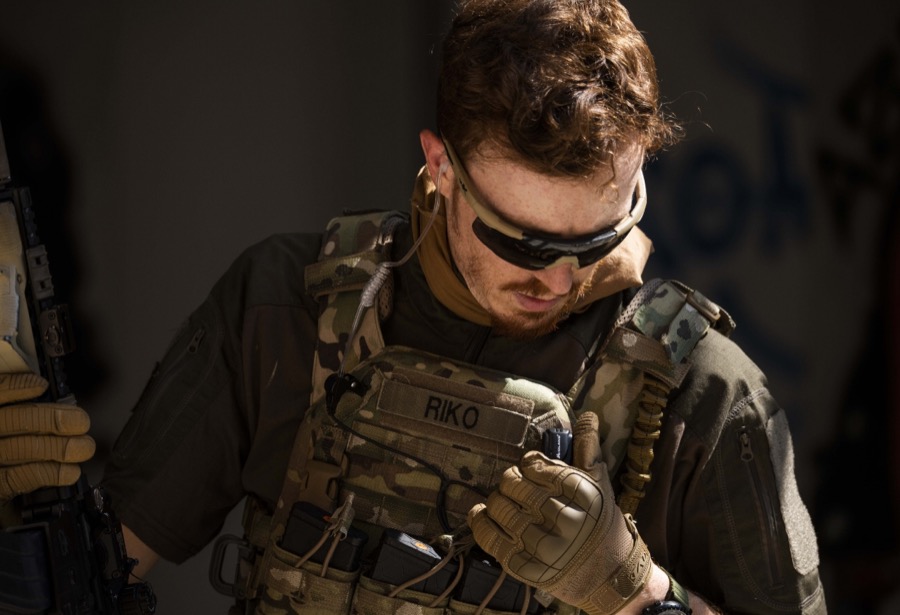
Radios are the most advanced communication option, and they’re practically mandatory at large fields and MilSim events. A pair of entry-level Baofeng radios costs around $25–40 and works well with a simple earpiece. A few basic radio discipline rules: press the transmit button and wait one second before speaking (so the first word doesn’t get clipped), keep messages short and clear (“Alpha team, three enemies spotted left side of target building, requesting support fire”), and don’t use the channel for casual chatter. For pickup games at smaller fields, radios are usually unnecessary since your squad should be close enough to communicate verbally. But if your team is splitting up for a flanking maneuver, radios make coordination dramatically easier.
Patrol Formations: Don’t Bunch Up
How you walk might sound like a boring topic, but in outdoor fields, your formation determines how quickly your team can respond to threats. The most common disaster is a group of players clustered together on a path, and then a single grenade wipes everyone out at once.
The three basic patrol formations each suit different situations. Single file means walking in a line, one behind the other. It works best on narrow paths, in thick vegetation, or when visibility is poor. The advantage is that your team presents the smallest possible profile from the front, making it harder to spot from the sides. The downside is that if you’re ambushed from the front, only the point man can return fire immediately.
The wedge formation is the most widely used patrol formation. The point man leads, and the rest of the team spreads out behind on both sides, forming an inverted V shape. This provides fire coverage to the front and both flanks while maintaining enough spacing between members to prevent one burst of automatic fire from hitting multiple people. For open outdoor terrain, the wedge is the most balanced choice.
The line formation has everyone advancing side by side, all facing the same direction. It delivers maximum frontal firepower and is ideal for the final phase of an assault — when you already know where the enemy is and need to overwhelm them with volume of fire. However, a line formation is extremely vulnerable from the flanks and shouldn’t be used for patrolling or long-distance movement.
No matter which formation you use, the single most important rule is spacing. Keep at least five to ten meters between squad members so that one grenade or one burst of auto fire can’t take out more than one person. Beginners tend to unconsciously drift closer together, especially when they feel nervous — but bunching up only makes things worse. If you notice you’re too close to the person ahead of you, actively create distance.
The Five Most Common Tactical Mistakes
We’ve covered what you should do — now let’s talk about what almost everyone gets wrong. These mistakes aren’t limited to beginners. Players who’ve been at it for years still fall into these traps.
The first and most widespread mistake is not communicating. You spot an enemy on the left, engage and move on, but never tell your teammates — so one of them walks right into the same threat five seconds later. Or you decide to reposition without saying anything, and your buddy assumes you’re still covering him and exposes himself. Anything you see or do on the field should be shared with the people next to you.
The second mistake is stacking behind the same piece of cover. Two or three people crouching behind the same tree or wall feels safe, right? It’s actually the opposite. The enemy only needs to concentrate fire on that one position, and all of you are pinned with nowhere to go. The correct approach is to use different cover positions, spread your angles, and force the enemy to deal with threats from multiple directions at once.
The third mistake is tunnel vision on the front while ignoring the flanks. This is especially common during active engagements, when everyone’s attention locks onto the enemy straight ahead. Nobody notices the two players who looped around and are now approaching from the side. Always have someone watching the flanks and rear — even during intense firefights.
The fourth mistake is one person pushing too far ahead. Maybe you react faster than your teammates and see an opportunity, so you sprint forward. But your teammates can’t keep up, and suddenly you’re alone against an entire opposing squad. A team moves at the speed of its slowest member, not its fastest. If you want to push aggressively, make sure someone is moving with you or at least providing covering fire.
The fifth mistake is overexposing your body behind cover. When firing from behind an obstacle, many players lean out with their entire upper body visible. You only need to show half your head and your muzzle. The less of your body you expose, the lower your chances of getting hit. This habit takes deliberate practice because instinct makes you want to see more — but in airsoft, every inch less exposure is an inch more survival.
Shot Timer Training for Tactical Improvement
You might wonder what a Shot Timer has to do with team tactics. Quite a lot, actually. Your team’s tactical efficiency is directly tied to individual speed — if you take five seconds to reload, your teammates have to suppress for five extra seconds. If you take too long moving between cover positions, you give the enemy time to adjust.
AirsoftShotTimer lets you train key skills at home with measurable data. Magazine reload speed is the most fundamental — drop the empty mag, grab a fresh one, insert, and rack the slide or charging handle. The target is under two seconds for the complete sequence. You can also practice the snap-out-and-back rhythm of suppressive fire: set a PAR time of 1.5 seconds and practice leaning out, firing two shots, and pulling back to cover within that window. This will dramatically improve your suppression efficiency on the field.
Another practical drill is pistol draw speed. In outdoor fields, if your primary runs dry or malfunctions, how quickly you can switch to your sidearm might determine whether you survive the encounter. Use the Shot Timer to track your draw times weekly — data-driven training beats “I feel like I’m getting faster” every time.
Conclusion
Team tactics aren’t some unreachable military specialty. They’re tools that make airsoft more fun. When you and your squad successfully pull off a flanking maneuver, or use solid communication to avoid an ambush, that feeling of accomplishment is far beyond anything you get from a solo charge.
Starting today, whether you’re playing with a regular team or random pickup groups, try to do three things: communicate, maintain spacing, and share the workload of covering different directions. Just these three habits alone will produce a noticeable leap in your team’s performance.
Related Articles
Airsoft Guides
- Complete Airsoft Beginner Guide - Your Airsoft Journey from Zero
- Airsoft Field Selection Guide - 5 Field Types Compared
- Airsoft CQB Tactics Guide - Indoor Combat and Room Clearing
- Airsoft Loadout Guide - Build the Perfect Gear Setup
- Airsoft Grenade Guide - Smoke, Sound, and BB Grenade Tactics
- Speedsoft Beginner Guide - Fast-Paced Competitive Airsoft
Shooting Techniques
- Shot Timer App Complete Guide - Professional Training with Your Phone
- Complete Pistol Draw Guide - Sidearm Transition Skills
- Complete Shooting on the Move Guide - Essential Skills for Outdoor Play
- Shooting Safety Rules Guide - Safety Is the Foundation of Everything
- Airsoft
- Airsoft Tactics
- Team Tactics
- Suppressive Fire
- Flanking
- Squad Tactics
- Hand Signals
- Radio Communication
- Outdoor Field
- MilSim
- Beginner Guide
- Airsoft Strategy