Competition Belt Complete Guide: IPSC, USPSA, IDPA Shooting Belt Comparison and Recommendations
Why Is the Belt the Foundation of Competition Shooting Gear?
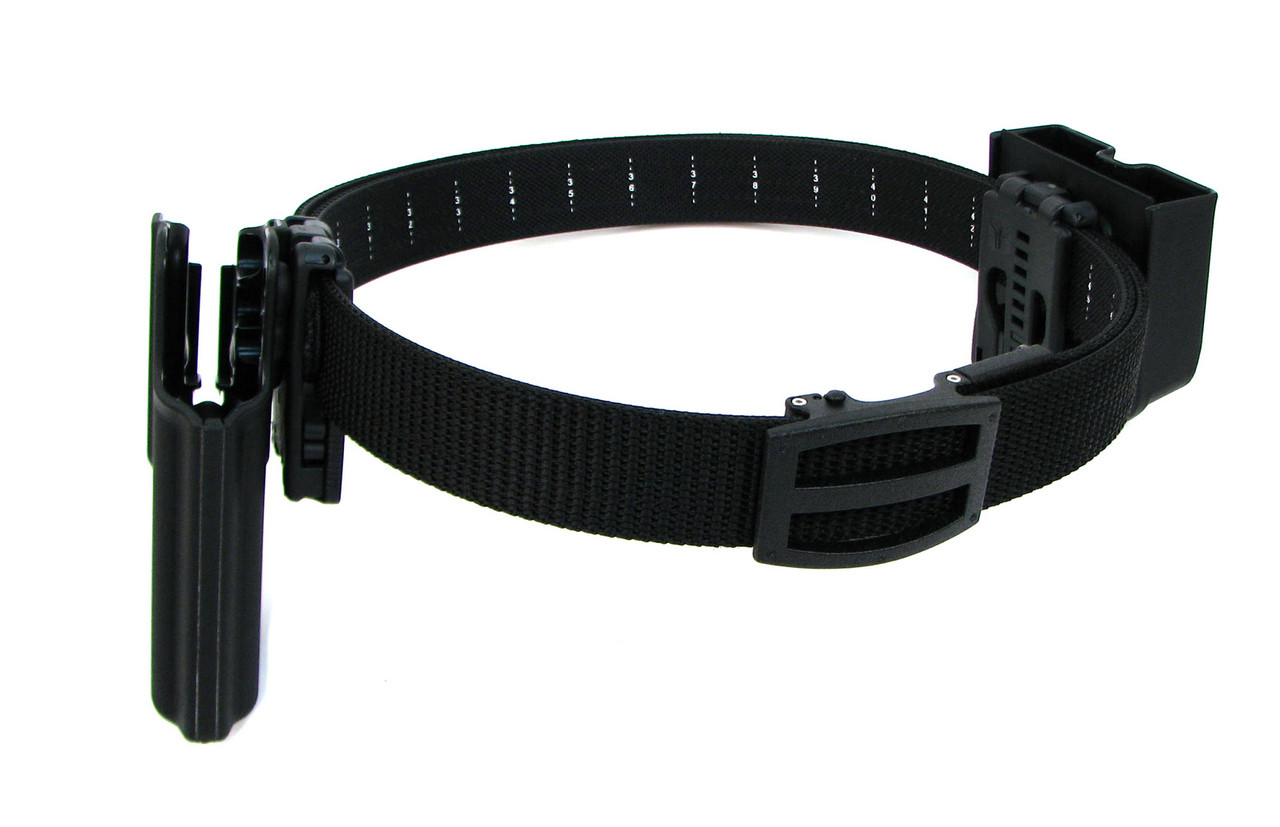
In competition shooting, the competition belt is the foundation platform that carries all your equipment. A good competition belt isn’t just a strap around your waist—it determines whether your holster and magazine pouches stay secure, how the weight of your gear is distributed, and whether every draw and reload is consistent.
Imagine this: You’re moving quickly through an IPSC stage when you need to stop suddenly for a shot. If your belt is too soft, your holster and magazine pouches will sway with your movement, changing your draw angle every time. If your belt is too tight, long-term wear becomes uncomfortable. If your belt doesn’t comply with match rules, you might not even be allowed to compete.
From experience, a proper competition belt is key to building stable muscle memory. When your equipment is in the same position every time, your movements can be the same speed every time.
This Guide Will Cover
- Key differences between IPSC/USPSA and IDPA belt rules
- Essential differences between competition belts vs everyday belts
- Detailed comparison of major competition belt brands
- Complete explanation of inner/outer dual belt systems
- Belt sizing guide and installation tips
- Budget planning and recommended setups for beginners
💡 Related Reading: Belts need to be paired with the right holster and magazine pouches. See Competition Holster Complete Guide and Competition Magazine Pouch Complete Guide
IPSC/USPSA vs IDPA Belt Rules Comparison
Before purchasing a belt, you must understand your target competition’s rules. IPSC/USPSA and IDPA have vastly different belt requirements.
IPSC/USPSA Belt Rules
IPSC and USPSA have relatively relaxed belt rules:
| Rule Item | Requirement |
|---|---|
| Attachment Method | Belt must be securely fixed at waist or secured with at least three belt loops |
| Dual Layer | Hook-and-loop inner/outer dual belt systems allowed |
| Width | No explicit limit (standard 1.5" or 1.75") |
| Stiffness | No limit (ultra-rigid competition belts allowed) |
| Removal | May be removed between courses of fire |
Equipment Position Rules:
- Production/Single Stack/Carry Optics/PCC: Holster and magazine pouches must be within 2⅛ inches from inner belt (per official overlay)
- Open/Limited/Limited-10/Revolver: Holster and magazine pouches must be within 3⅜ inches from inner belt
IDPA Belt Rules
IDPA simulates defensive shooting scenarios, so belt rules are stricter:
| Rule Item | Requirement |
|---|---|
| Width | Maximum 1¾ inches (44.5mm) |
| Thickness | Maximum 5/16 inches (7.9mm) |
| Attachment Method | Must pass through at least “total pant loops minus two” belt loops |
| Dual Layer | Dual belt systems not compliant (unless outer belt alone passes through loops) |
| Concealment Requirement | All gear must be covered by concealment garment |
Key Restrictions:
IDPA rules require belts to pass through pant belt loops. This means:
- Standard hook-and-loop dual competition belts are typically non-compliant
- To use a dual belt, only the outer layer (passing through loops) can be used without the inner layer
- The inner belt can be used alone as an IDPA belt if it meets thickness requirements
Quick Comparison Table
| Feature | IPSC/USPSA | IDPA |
|---|---|---|
| Dual Belt System | ✅ Allowed | ❌ Not allowed (standard setup) |
| Rigid Competition Belt | ✅ Allowed | ⚠️ Must meet thickness limit |
| Must Pass Through Loops | ❌ Not required | ✅ Required |
| Width Limit | ❌ No explicit limit | ✅ Max 1¾" |
| Thickness Limit | ❌ None | ✅ Max 5/16" |
Essential Differences: Competition Belts vs Everyday Belts
Many beginners ask: “Can I use a regular leather belt for competition?” Technically yes, but you’ll encounter many problems.
Key Differences
| Feature | Competition Belt | Everyday Belt |
|---|---|---|
| Stiffness | Extremely rigid, barely bends | Soft, comfort-focused |
| Support | Can carry 2-3 kg gear without sagging | Sags with minimal weight |
| Structure | Inner/outer dual layer hook-and-loop design | Single layer |
| Attachment | Hook-and-loop quick on/off | Belt buckle |
| Width | Standard 1.5" or 1.75" | Varies widely |
| Price | $80-150 USD | $20-50 USD |
| IDPA Compliant | Most are not compliant | May be compliant |
Why Stiffness Is So Important
Problems with Soft Belts:
- Gear Sags: Weight of pistol and magazines pulls the belt down
- Inconsistent Position: Draw and reload angles vary each time
- Movement Interference: Gear sways during rapid movement, affecting focus
- Can’t Build Muscle Memory: Inconsistent movements prevent stable technique development
Advantages of Rigid Belts:
- Gear Stays Secure: Holster and magazine pouches maintain the same position
- Consistent Movements: Same draw angle every time, building muscle memory
- Weight Distribution: Stiffness distributes weight evenly around the waist
- Quick On/Off: Dual layer system allows donning/doffing in seconds
Inner/Outer Dual Belt System Explained
Modern competition belts use an inner/outer dual layer design—the standard setup in competition shooting.
System Components
Inner Belt
- Material: Usually nylon webbing
- Surface: Has hook-and-loop (hook or loop side, depending on brand)
- Function: Passes through pant belt loops, provides base support
- Standalone Use: Some inner belts can be used alone for IDPA
Outer Belt
- Material: High-strength nylon, plastic, or composite materials
- Reinforcement: Built-in rigid support (Power-Core, wire, or plastic plates)
- Surface: Hook-and-loop surface that matches inner belt
- Function: Carries all shooting equipment
How to Wear
- Put on Inner Belt First: Pass inner belt through pant belt loops
- Adjust Position: Ensure inner belt is comfortable and secure
- Align Hook-and-Loop: Align outer belt with inner belt’s hook-and-loop
- Press to Secure: Starting from buckle, press around entire belt circumference
- Check Security: Try pushing outer belt to confirm it won’t slide
Advantages of Dual Belt System
- Quick On/Off: Can don full gear setup in seconds at matches
- Permanent Equipment Mounting: Holster and magazine pouches can stay fixed on outer belt
- Consistency: Equipment position is exactly the same every time you put it on
- Comfort: Inner layer contacts body directly, can choose more comfortable material
Major Competition Belt Brands Detailed Comparison
Double-Alpha Academy (DAA)
Brand Background: Israeli brand founded by IPSC World Champion Saul Kirsch, a leader in competition shooting equipment.
DAA Premium Belt (~$90-110 USD)
DAA’s flagship competition belt, used by many top shooters.
Pros:
- Extremely high stiffness, thicker and more rigid than most competitors
- Perfect compatibility with DAA holsters and magazine pouches
- Inner belt is second stiffest among competition belts (only Kore is stiffer)
- Solid buckle design
- Ambidextrous
Cons:
- Thicker design may cause compatibility issues with other brands’ accessories
- CR Speed magazine pouches fit very tight
- Not compatible with Tek-Lok and Comp-Tac PLM attachments
- Included nylon keeper is not pre-attached to belt (can be lost)
- Some users find inner belt feels cheap
Best For: IPSC/USPSA all divisions (not IDPA)
Compatibility Note: DAA and CR Speed belts are both 1.5" wide but have different thicknesses. Don’t mix different brands of belts and accessories.
CR Speed
Brand Background: Swedish brand known for precision engineering, possibly the most popular brand in competition belts.
CR Speed Hi-Torque Belt (~$85-100 USD)
The classic competition belt with leading global sales.
Pros:
- Super reinforced nylon outer construction
- Includes “no-snag” velcro inner belt for comfort
- Medium thickness, compatible with most accessories
- Excellent durability—many users report 3-10 years of good condition
- Keeper pre-attached to belt
- Less back strain than DAA (some users report)
Cons:
- Slightly less rigid than DAA
- Inner belt less stiff than Kore and DAA
Best For: IPSC/USPSA all divisions, 3-Gun (frequent configuration changes)
Durability: User reports indicate CR Speed belts show less wear over time than DAA. Some users note their DAA belt showed more wear after one season than CR Speed belts with years of use.
Ghost
Brand Background: Italian brand known for innovative design, very popular in European IPSC circles. Ghost Elite is currently the only major competition belt made in the USA.
Ghost Elite Belt (~$80-95 USD)
Pros:
- Reinforced edge design for durability
- Personalization options (window for personal info)
- Perfect integration with Ghost holsters and magazine pouches
- Made in USA
- Multiple colors available
Cons:
- Accessories harder to find in North America
- Design similar to DAA (origin unclear)
Best For: IPSC/USPSA all divisions
Kore Essentials
Brand Background: American brand known for innovative ratcheting system, the pioneer of “micro-adjustable” competition belts.
Kore Competition Belt (~$80-100 USD)
Pros:
- Patented ratchet system with 40+ positions at ¼" increments
- Adjust tightness without removing belt
- Uses rugged scuba webbing with double-reinforced Power-Core center
- Inner belt is stiffest among all major brands
- Better quality than modified Safariland
- Extremely rigid dual belt system
- Made in USA
Cons:
- Must be cut to size
- Not usable for IDPA (rules require belt through loops)
Best For: IPSC/USPSA all divisions
User Reviews: Many shooters say Kore may be the stiffest dual competition belt system available, and the ratchet system makes adjustment very convenient.
Safariland
Brand Background: American law enforcement equipment giant, ELS (Equipment Locking System) is a unique modular design.
Safariland ELS Belt (~$100-130 USD)
Pros:
- Extremely high modularity
- ELS system allows quick equipment changes and reconfiguration
- Perfect compatibility with all Safariland accessories
- Ideal for shooters who need to swap configurations between matches
- Used by top shooters (Jerry and Lena Miculek)
Cons:
- Wider belt (1.75" vs standard 1.5")
- Compatibility issues with other brands’ 1.5" accessories
- Higher overall system price
- Some shooters modify to add ratchet buckle
Best For: IPSC/USPSA all divisions, 3-Gun
Modification Tip: Many shooters replace the stock Safariland ELS buckle with a ratchet buckle for easier adjustment.
Black Scorpion Gear
Brand Background: American brand offering high value competition gear.
Black Scorpion Pro HD Competition Belt (~$50-65 USD)
Pros:
- Budget friendly
- Suitable for beginners
- Decent quality
Cons:
- Stiffness and durability not as good as top brands
- Limited accessory compatibility
Best For: Entry level, budget-conscious shooters
Competition Belt Comparison Table
| Brand/Model | Price (USD) | Width | Stiffness | IPSC/USPSA | IDPA | Features |
|---|---|---|---|---|---|---|
| DAA Premium | $90-110 | 1.5" | ★★★★★ | ✅ | ❌ | Stiffest, perfect DAA compatibility |
| CR Speed Hi-Torque | $85-100 | 1.5" | ★★★★☆ | ✅ | ❌ | Most popular, excellent durability |
| Ghost Elite | $80-95 | 1.5" | ★★★★☆ | ✅ | ❌ | Made in USA, personalization options |
| Kore Competition | $80-100 | 1.5" | ★★★★★ | ✅ | ❌ | Ratchet micro-adjust, stiffest inner |
| Safariland ELS | $100-130 | 1.75" | ★★★★☆ | ✅ | ❌ | ELS modular, used by top pros |
| Black Scorpion Pro | $50-65 | 1.5" | ★★★☆☆ | ✅ | ⚠️ | Best value entry option |
IDPA-Compliant Belt Options
Due to IDPA rule restrictions, most competition belts are non-compliant. Here are suitable IDPA options:
Recommended IDPA Belts
Wilderness Instructor Belt (~$40-50 USD)
Pros:
- Designed for tactical shooting
- Meets IDPA thickness requirements
- Passes through belt loops
- Stiff enough to support gear
- Multiple widths available
Best For: IDPA all divisions
Kore Essentials Gun Belt (~$60-80 USD)
Pros:
- Ratchet micro-adjustment
- Outer belt can be used alone through loops
- Sufficient stiffness
IDPA Usage: Kore’s outer belt (1.5") can pass through belt loops alone, meeting IDPA rules. But the inner/outer dual configuration cannot be used.
Blue Alpha Gear EDC Belt (~$50-70 USD)
Pros:
- Designed for EDC (everyday carry)
- Low-profile appearance
- IDPA compliant
- High comfort
Best For: IDPA, everyday carry
5.11 Tactical Belt
Pros:
- Tactical style
- Budget friendly
- Widely available
Best For: IDPA entry level
Dual-Sport Strategy
If you compete in both IPSC/USPSA and IDPA:
-
Option A: Buy two belt systems ($130-180 total)
- IPSC: CR Speed or DAA
- IDPA: Wilderness Instructor Belt
-
Option B: Compromise ($60-80)
- Use Kore outer belt alone through loops (verify compliance)
Belt Sizing Guide
Choosing the correct belt size is crucial.
How to Measure
- Don’t Use Pant Size: Pant size and belt size are different
- Measure Actual Waist: Measure at the height where you’ll wear your gear
- Order One Size Up: If you measure 36", order a 38" belt
- Between Sizes: Choose the larger size
- Round Up: Measured 39"? Order 40" belt
Brand Size Chart
| Waist Range | DAA/CR Speed | Kore | Recommendation |
|---|---|---|---|
| 28-30" | Small | Cut to fit | Choose Small |
| 31-34" | Medium | Cut to fit | Choose Medium |
| 35-38" | Large | Cut to fit | Choose Large |
| 39-42" | X-Large | Cut to fit | Choose X-Large |
| 43-46" | XX-Large | Cut to fit | Choose XX-Large |
Kore Special Note: Kore belts use a “one-size-cut-to-fit” design (24"-48"), requiring you to cut to length after purchase.
Belt and Accessory Compatibility
Ensuring belt compatibility with holsters and magazine pouches is key.
Width Compatibility
| Belt Brand | Width | Compatible Accessories |
|---|---|---|
| DAA | 1.5" | DAA (perfect), Ghost (good), CR Speed (tight) |
| CR Speed | 1.5" | CR Speed (perfect), Ghost (good), DAA (good) |
| Ghost | 1.5" | Ghost (perfect), DAA (good), CR Speed (good) |
| Kore | 1.5" | All 1.5" accessories |
| Safariland ELS | 1.75" | Safariland-specific accessories |
Brand Pairing Recommendations
For best compatibility and performance, match brands:
- DAA Belt → DAA Holster + DAA Magazine Pouches
- CR Speed Belt → CR Speed accessories or universal
- Ghost Belt → Ghost Holster + Ghost Magazine Pouches
- Safariland ELS → Complete Safariland system
Mixing Brands Notes
If you must mix brands:
- DAA belts are thicker—CR Speed pouches fit very tight, other brands may not fit
- Ghost 360 magazine pouches have highest versatility, fitting different belts (up to 1.75")
- Safariland 1.75" belt not compatible with standard 1.5" accessories
Belt Recommendations by Division
IPSC/USPSA Open/Limited Division
Recommended Setup:
- Belt: DAA Premium or Kore Competition
- Focus: Maximum stiffness to support heavy gear
- Budget: $90-110
Key Points:
- Open/Limited gear is heavier (2011 pistols, multiple magazines)
- Need stiffest belt to prevent sagging
- Consider matching holster brand
IPSC/USPSA Production/Production Optics
Recommended Setup:
- Belt: CR Speed Hi-Torque or DAA Premium
- Budget: $85-110
Key Points:
- Medium gear weight
- Consider future upgrades to Limited/Open compatibility
IPSC/USPSA Carry Optics
Recommended Setup:
- Belt: CR Speed Hi-Torque or Ghost Elite
- Budget: $80-100
3-Gun Competition
Recommended Setup:
- Belt: Safariland ELS or CR Speed
- Focus: Modularity for configuration changes between stages
- Budget: $100-130
Key Points:
- 3-Gun requires switching between pistol, rifle, and shotgun stages
- ELS system’s quick-change capability is very useful
- CR Speed works for shooters who frequently adjust
IDPA All Divisions
Recommended Setup:
- Belt: Wilderness Instructor Belt or Blue Alpha Gear EDC
- Budget: $40-70
Key Points:
- Must pass through belt loops
- Must meet thickness limit
- Consider comfort (all-day wear)
Competing in Both IPSC and IDPA
Recommended Strategy:
-
Option A: Buy two systems ($130-180 total)
- IPSC: CR Speed or DAA
- IDPA: Wilderness Instructor Belt
-
Option B: Compromise ($60-80)
- Use Kore outer belt alone through loops (verify compliance)
Budget Planning for Beginners
Budget Setup ($50-80 USD)
For beginners just starting in competition shooting.
| Item | Recommendation | Price |
|---|---|---|
| Belt | Black Scorpion Pro or Wilderness | $50-65 |
| Total | $50-65 |
Best For: IDPA, IPSC entry (but recommend upgrading soon)
Mid-Range Setup ($80-110 USD)
For shooters seriously committed to competition shooting.
| Item | Recommendation | Price |
|---|---|---|
| Belt | CR Speed Hi-Torque or Ghost Elite | $80-100 |
| Total | $80-100 |
Best For: IPSC/USPSA all divisions
Advanced Setup ($100-150 USD)
For competitive shooters pursuing best performance.
| Item | Recommendation | Price |
|---|---|---|
| Belt | DAA Premium or Kore Competition or Safariland ELS | $90-130 |
| Total | $90-130 |
Best For: IPSC Open/Limited, 3-Gun
Complete Gear Budget Reference
| Budget Level | Belt | Holster | Pouches (4) | Total |
|---|---|---|---|---|
| Entry | $50-65 | $60-80 | $100 | $210-245 |
| Mid-Range | $85-100 | $100-150 | $120-160 | $305-410 |
| Advanced | $100-130 | $200-225 | $240-300 | $540-655 |
Belt Installation and Adjustment
Initial Setup
- Cut (if needed): Cut Kore belt to measured size
- Install Inner Belt: Pass inner belt through all pant belt loops
- Mark Positions: With outer belt on, mark ideal holster and pouch positions
- Install Accessories: Mount holster and magazine pouches on outer belt
- Test Security: Confirm hook-and-loop is fully engaged
Daily Adjustment
- Donning Order: Inner belt first → then secure outer belt
- Alignment Check: Confirm outer belt aligns with inner belt
- Press to Secure: Press around circumference starting from buckle
- Security Test: Try pushing outer belt to confirm no sliding
- Equipment Position Check: Confirm holster and pouch positions are correct
Tightness Adjustment
Too Tight Problems:
- Uncomfortable for long-term wear
- Affects breathing and movement
- May compress nerves
Too Loose Problems:
- Unstable equipment position
- Entire rig will sag
- Affects draw and reload consistency
Ideal State:
- Can insert one finger
- Equipment stays stable, no sliding
- Comfortable for extended wear
Belt Maintenance and Care
Daily Maintenance
-
Cleaning
- Wipe with dry cloth after matches
- Avoid soaking (unless labeled washable)
- Remove dust and grit
-
Hook-and-Loop Maintenance
- Regularly remove lint and debris
- Use stiff brush to clean hook side
- Replace if hook-and-loop fails
-
Check for Wear
- Check if buckle is loose
- Check for fraying stitching
- Check for worn edges
Storage Recommendations
- Lay Flat or Hang: Avoid folded storage
- Avoid High Heat: Don’t leave in car in sun
- Keep Dry: Avoid humid environments
- Accessories Can Stay Mounted: Outer belt can be stored with accessories attached
FAQ
Q1: What belt should a beginner buy?
A: If mainly competing in IPSC/USPSA, start with CR Speed Hi-Torque. If mainly IDPA, choose Wilderness Instructor Belt. If budget is limited, Black Scorpion Pro is an entry option, but recommend upgrading soon.
Q2: What’s the difference between competition and tactical belts?
A: Competition belts focus on stiffness and stability, typically more rigid with dual-layer design. Tactical belts may focus more on comfort and all-day wear. Some tactical belts (like Wilderness) work for IDPA.
Q3: Do I have to use a dual-layer belt?
A: Highly recommended for IPSC/USPSA—significantly improves equipment stability and change efficiency. IDPA typically can’t use dual-layer systems due to rules.
Q4: Should belt brand match accessory brands?
A: Not required, but same-brand has best compatibility. If mixing, note: DAA belts are thicker and may have compatibility issues with other accessories; Safariland 1.75" belts don’t fit standard 1.5" accessories.
Q5: Is Kore’s ratchet system worth it?
A: Absolutely. The ratchet system lets you micro-adjust tightness while wearing, no need to remove the belt. This is especially convenient during long matches or after meals.
Q6: How do I know if my belt is too soft?
A: Simple test: Hold one end of the belt horizontally, see if the other end droops noticeably. A competition belt should stay nearly horizontal or have only slight bend.
Q7: How long do belts last?
A: Quality competition belts last 5-10 years. CR Speed users report their belts remain in good condition after many years. Key is regularly checking hook-and-loop and stitching condition.
Q8: Can I use the same belt for both IPSC and IDPA?
A: Technically possible but not ideal. Competition dual belts don’t meet IDPA rules (must pass through loops). You can: (1) Buy two systems (2) Use competition belt’s outer layer alone through loops (3) Use single-layer belt like Wilderness for both.
Summary
Key points when selecting a competition belt:
- Understand Rules: IPSC/USPSA allows dual-layer competition belts; IDPA requires single-layer through belt loops
- Prioritize Stiffness: Soft belts are the enemy of competition shooting—invest in a rigid competition belt
- Compatibility: Try to choose same-brand belt and accessories
- Correct Size: Measure actual waist and order one size up
- Reasonable Budget: Belts are a long-term investment; quality belts last years
The belt is the foundation of competition shooting gear—holster and magazine pouches all mount to it. A good belt keeps all equipment stable and consistent, key to building reliable muscle memory.
Whatever belt you choose, the most important thing is investing time in practice. Use the Shot Timer App to track your draw and reload times, ensuring your gear setup actually improves your performance.
Related Articles
- Competition Holster Complete Guide
- Competition Magazine Pouch Complete Guide
- Pistol Draw Technique Complete Guide
- Magazine Reload Technique Complete Guide
- IPSC Beginner Pistol Selection Guide
- IDPA Beginner Pistol Selection Guide
- IPSC Practical Shooting Complete Training Guide
- IDPA Defensive Shooting Complete Training Guide
- Shot Timer App Complete Guide
- Belt
- Competition Belt
- Shooting Belt
- IPSC
- USPSA
- IDPA
- DAA
- CR Speed
- Ghost
- Kore
- Shooting Gear
- Competition Shooting