Complete Dry Fire Training Guide: The Best Way to Improve Shooting Skills at Home
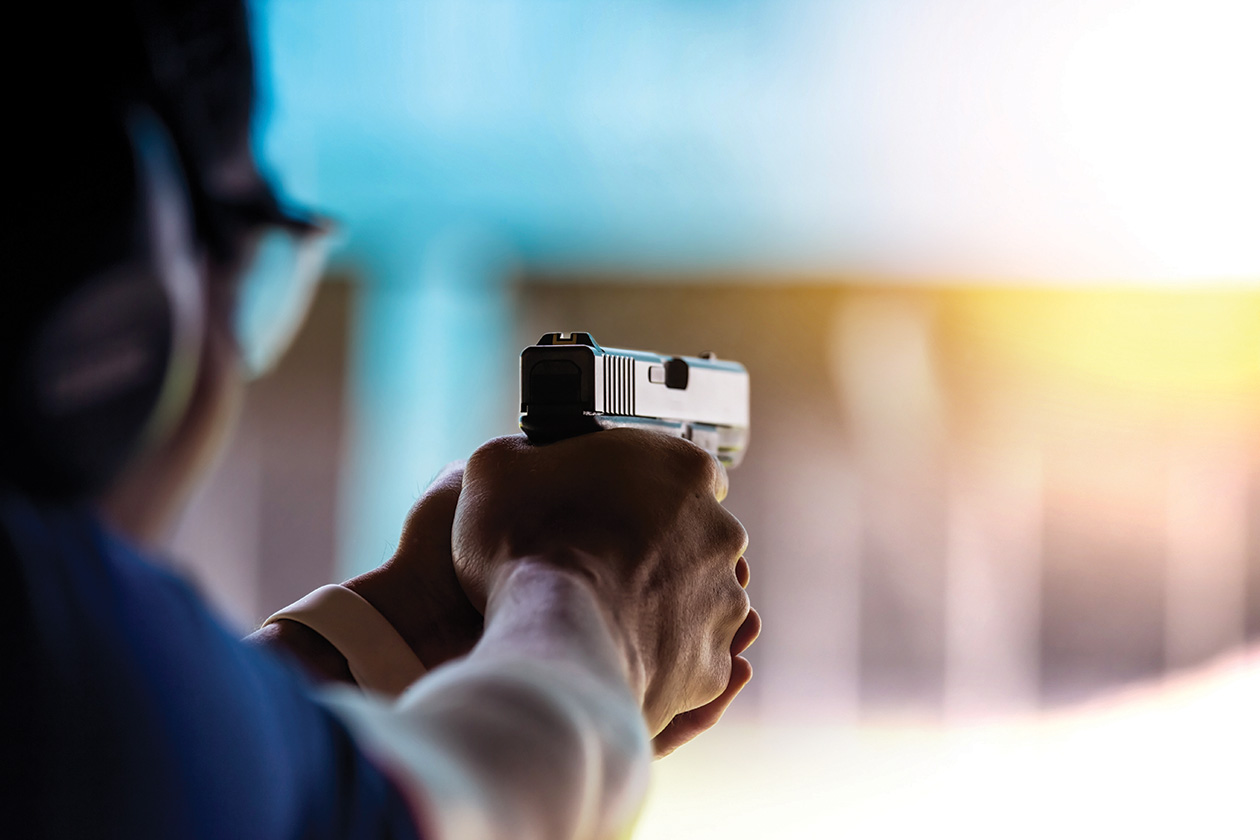
What is Dry Fire Training?
Dry Fire Training refers to practicing shooting mechanics—drawing, aiming, and trigger pulls—without using live ammunition. This is one of the most commonly used training methods by professional shooters and competitive athletes worldwide, allowing you to safely hone your shooting skills at home.
Why is Dry Fire Training So Important?
Traditional shooting practice has many limitations:
- High range fees
- Rising ammunition costs
- Limited by range operating hours
- Restricted practice frequency
Dry Fire Training solves these problems:
- Practice at home with no range needed
- Zero ammunition cost, unlimited practice
- Train anytime, 15-30 minutes daily
- Focus on technique without recoil interference
- Quantify progress with a Shot Timer
“I dry fire practice 30 minutes every day, and the results are better than going to the range once a week.” — A common sentiment among IPSC champions
Dry Fire Training Safety Rules
Safety is always the first priority! Although dry fire training doesn’t use live ammunition, strict safety rules must still be followed.
Five Iron Rules of Dry Fire Safety
1. Confirm the Firearm is Completely Unloaded
Before every training session, you must:
- Remove the magazine
- Check the chamber (visual + tactile confirmation)
- Confirm there is no ammunition
- Triple check
“Treat it as if it’s always loaded” — This rule applies equally during dry fire training. Build the habit of checking every time.
2. Keep All Ammunition Away from the Training Area
- Lock all ammunition in another room
- No live rounds should be in the training area
- Magazines should also be emptied and confirmed
3. Choose a Safe Training Background
- Use dedicated dry fire training targets
- Background should be a solid wall (concrete, brick)
- Avoid pointing toward doors, windows, or thin walls
- Ensure no one can enter the line of fire
4. Establish Fixed Training Sessions
- Before training, announce aloud: “I am now starting dry fire training”
- Do not handle live ammunition during training
- After training, announce: “Dry fire training is complete”
- Create a ritual to avoid confusion
5. Never Train When Fatigued or Distracted
- Fatigue leads to forgotten safety steps
- Distraction can cause fatal errors
- Stay focused and treat every session seriously
Safety Checklist
Before starting, confirm each item:
- Magazine removed
- Chamber checked (visual + tactile)
- All ammunition in another room
- Training area cleared
- Safe background
- Good mental state
Setting Up Your Home Dry Fire Training Space
Basic Equipment List
Essential Equipment
| Equipment | Description | Budget Range |
|---|---|---|
| Training Firearm | Airsoft or confirmed unloaded real firearm | Varies |
| Dry Fire Target | Dedicated paper or electronic target | $5-20 |
| Shot Timer | AirsoftShotTimer APP | Free |
| Holster | For draw training | $20-80 |
Optional Equipment
| Equipment | Description | Budget Range |
|---|---|---|
| Snap Caps | Protect firing pin | $10-20 |
| Laser Trainer | Instant hit feedback | $40-120 |
| Training Magazines | Dedicated to dry fire | $15-30 |
| Mirror | Check stance and form | Varies |
Training Space Planning
Ideal dry fire training space:
- Separate room: Lockable door to prevent others from entering
- Safe background: Solid wall, no doors or windows
- Adequate distance: At least 3-5 meters training distance
- Good lighting: Clearly see target and sights
- No distractions: Turn off phone notifications, focus on training
Minimum Space Requirements:
Even with limited space, 2-3 meters is sufficient for most dry fire training. Close-range training allows better focus on movement details.
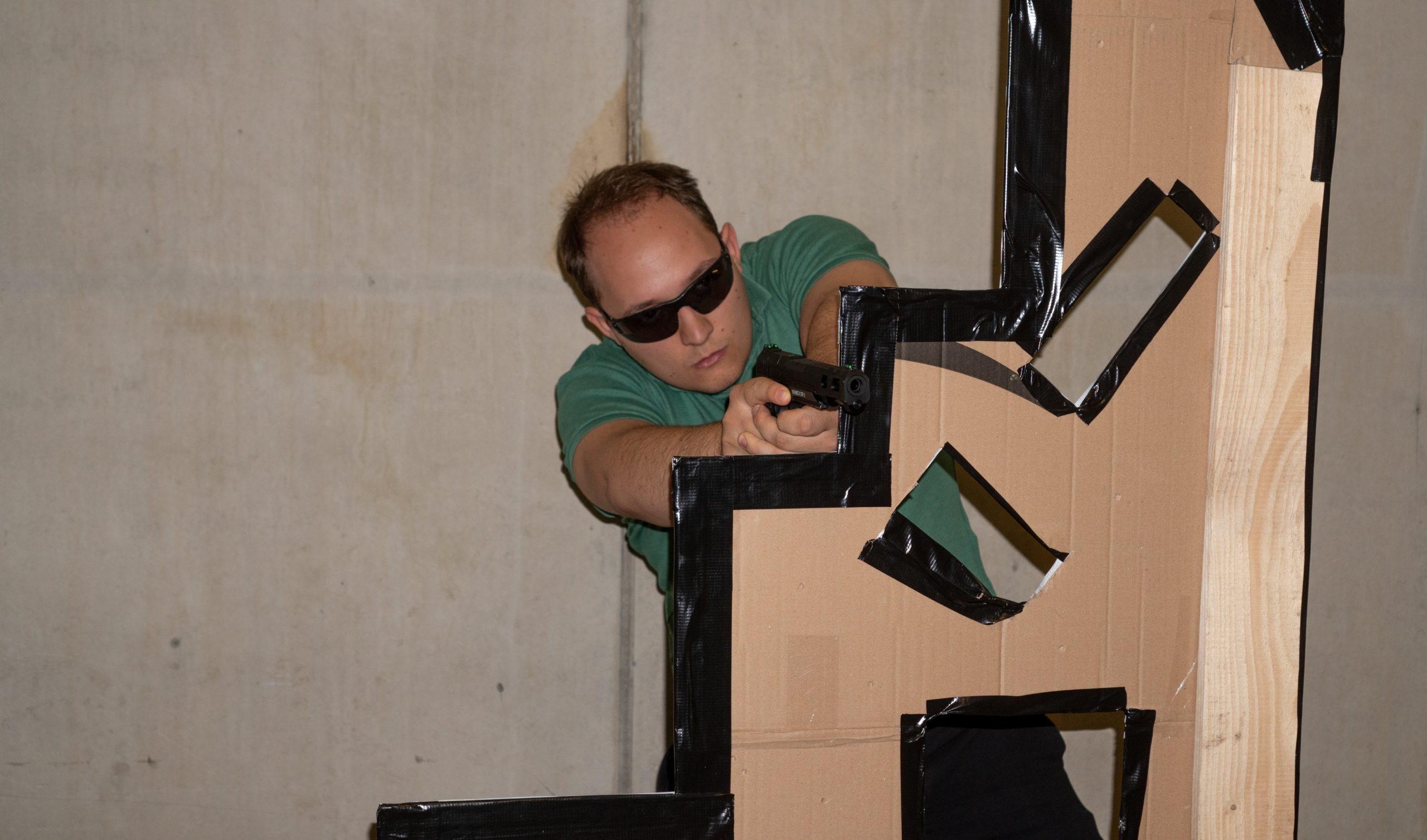
Six Essential Dry Fire Training Drills
Drill 1: Draw Stroke Training
Drawing is the most fundamental and important skill, worth spending significant time practicing.
Training Setup:
- Pistol in holster
- Target distance 3-5 meters
- AirsoftShotTimer set to random delay
Movement Breakdown:
-
Ready Position
- Hands naturally at sides or on chest
- Eyes focused on target
- Body relaxed but alert
-
Grip Acquisition
- Strong hand moves quickly to grip
- Establish proper grip position
- Finger outside trigger guard
-
Draw Phase
- Firearm lifts vertically, clears holster
- Muzzle begins rotating toward target
- Support hand prepares to meet
-
Extension Phase
- Both hands meet, establishing full grip
- Firearm pushes toward target
- Eyes align through sights
-
Aim and Fire
- Acquire sight picture
- Press trigger
- Maintain follow-through
Use Shot Timer to Record:
- Record time from “signal to trigger press”
- Beginner goal: Under 2.0 seconds
- Intermediate goal: Under 1.5 seconds
- Advanced goal: Under 1.0 seconds
Daily Practice Recommendation: 20-30 repetitions
Further reading: For more draw techniques, see Glock 17 Training Guide and CZ Shadow 2 Training Guide
Drill 2: Trigger Control Training
Trigger control is the core of accuracy, and dry fire training most effectively improves this skill.
Balance Coin Method:
- Place a coin on the barrel or slide
- Aim at target, slowly press trigger
- Coin should not fall
- If coin falls, movement was not smooth
Target Time Practice:
- Aim at bullseye
- Slowly, steadily press trigger
- Maintain sight picture until after “firing”
- Note if front sight moved
Common Errors:
- Anticipating recoil and pushing down
- Grip pressure changing during trigger press
- “Pushing” trigger instead of “pressing”
- Neglecting follow-through
Daily Practice Recommendation: 50-100 repetitions (in sets)
Drill 3: Magazine Reload Training
Fast magazine changes are a critical competitive shooting skill.
Emergency Reload Training:
- Aim at target and “fire”
- Slide locks back (simulating empty magazine)
- Press magazine release
- Empty magazine drops naturally
- Support hand grabs new magazine
- Insert into magazine well
- Release slide
- Re-aim and “fire”
Technique Points:
- Eyes stay on target, don’t look down
- Magazine placement relies on feel and muscle memory
- Movement should be fluid and continuous, no pauses
- Use Shot Timer to record complete time
Tactical Reload Training:
- Change magazine when still has rounds remaining
- Retain original magazine (pocket or mag pouch)
- Suitable when behind cover
Target Times:
- Emergency reload: Under 2.0 seconds
- Tactical reload: Under 2.5 seconds
Daily Practice Recommendation: 15-20 repetitions
Drill 4: Multiple Target Transition Training
Rapid movement between multiple targets is a core IPSC/IDPA skill.
Training Setup:
- Prepare 2-3 training targets
- Target spacing 30-50 cm apart
- Arranged horizontally or irregularly
Training Method:
-
Eyes Lead
- Eyes look to next target first
- Muzzle follows eyes
- Avoid “blind transitions”
-
Body Coordination
- Upper body leads the turn
- Feet remain stable
- Avoid excessive movement
-
Stop and Shoot
- “Fire” immediately upon reaching target
- Don’t over-aim
- Trust your sight picture
Using Shot Timer:
- Record total time to complete all targets
- Analyze transition time between each target
- Identify slowest transition and focus practice there
Daily Practice Recommendation: 10-15 sets
Drill 5: Movement Shooting Training
Maintaining stability while moving is an advanced skill that can be safely practiced with dry fire.
Lateral Movement:
- Face target
- Move laterally 2-3 steps
- Maintain aim while moving
- “Fire” when movement ends
Forward/Backward:
- Face target
- Move forward or backward
- Keep firearm stable
- “Fire” when feet are set
Technique Points:
- Knees slightly bent, absorb shock
- Keep upper body stable (imagine balancing water on your head)
- Light footwork, avoid bouncing
- Eyes and muzzle always point at target
Daily Practice Recommendation: 10-15 sets
Drill 6: Combination Training
Combine multiple skills to simulate actual competition scenarios.
El Presidente Dry Fire Version:
- Start facing away from targets
- On signal, turn and draw
- “Fire” 2 rounds at each of three targets
- Reload
- “Fire” 2 more rounds at each target
Custom Combination Practice:
- Draw + fire 2 + reload + fire 2
- Draw + move to cover + fire
- Two-handed shooting + transition to one-handed
Weekly Practice Recommendation: 2-3 combination training sessions
Dry Fire Training Program
Beginner Program (Weeks 1-4)
Daily Training Time: 15-20 minutes
| Drill | Reps | Notes |
|---|---|---|
| Safety Check | 1 | Required before starting |
| Draw Training | 15 | Focus on correct form |
| Trigger Control | 30 | Use coin method |
| Magazine Reload | 10 | Emergency reload focus |
| Closing Confirmation | 1 | End of training ritual |
Weekly Goals:
- Week 1: Familiarize with movement sequence
- Week 2: Start using Shot Timer to record
- Week 3: Establish stable baseline data
- Week 4: Set improvement goals
Intermediate Program (Weeks 5-12)
Daily Training Time: 20-30 minutes
| Drill | Reps | Notes |
|---|---|---|
| Safety Check | 1 | Required before starting |
| Draw Training | 25 | Focus on speed improvement |
| Trigger Control | 50 | Add movement elements |
| Magazine Reload | 15 | Tactical + Emergency |
| Target Transitions | 10 sets | 2-3 targets |
| Movement Shooting | 10 sets | Lateral movement |
| Closing Confirmation | 1 | End of training ritual |
Weekly Goals:
- Compare Shot Timer data weekly
- Focus on improving weakest areas
- Gradually reduce time for each drill
Advanced Program (Week 13+)
Daily Training Time: 30-45 minutes
| Drill | Reps | Notes |
|---|---|---|
| Safety Check | 1 | Required before starting |
| Warm-up Draws | 10 | Activate muscle memory |
| PAR Time Training | 15 sets | Push speed limits |
| Weak Hand Training | 15 | Develop fully |
| Combination Training | 5 sets | Simulate competition |
| Stress Training | 5 sets | Shoot after exercise |
| Closing Confirmation | 1 | End of training ritual |
Using AirsoftShotTimer to Track Progress
The Importance of Training Records
“You can’t improve what you can’t measure”
Use a Shot Timer to record every training session, making progress visible.
AirsoftShotTimer Dry Fire Setup
Recommended Settings:
- Mode: Random delay mode
- Delay Range: 1-4 seconds
- Sensitivity: Adjust for environment
Recording Points:
- Record drill type and repetitions each session
- Record best time and average time
- Note any factors affecting performance
Progress Tracking Recommendations
Weekly Review:
- Compare this week’s data to last week’s
- Identify improving drills
- Identify stagnating drills
Monthly Assessment:
- Comprehensively evaluate all drills
- Adjust training focus
- Set next month’s goals
Quarterly Summary:
- Review three-month progress curve
- Evaluate training plan effectiveness
- Plan next phase goals
Further reading: Shot Timer Complete Guide - Learn how to use data to improve shooting skills
Dry Fire Training FAQ
Q1: Will dry firing damage the firing pin?
A: This depends on firearm design:
- Modern pistols (Glock, SIG P320, etc.): Designed for safe dry fire
- Older pistols: Recommend using snap caps to protect firing pin
- Airsoft: No issue at all
Recommendation: Check your firearm’s manual to confirm if safe dry fire is possible.
Q2: How long should I practice each day?
A: Quality matters more than quantity:
- Minimum effective dose: 15 minutes daily
- Ideal training volume: 20-30 minutes daily
- Avoid overtraining: More than 45 minutes leads to fatigue and bad habits
Recommendation: Short, high-focus training sessions work best.
Q3: Can I use airsoft guns if I don’t have a real firearm?
A: Absolutely! And there are many advantages:
- Handling feels similar to real firearms
- Can actually fire (dual-use for dry fire and live fire)
- Lower cost
- Fewer legal restrictions
Recommended Airsoft:
- Tokyo Marui Hi-CAPA (competition favorite)
- WE Glock Series (high realism)
- KSC/KWA Series (excellent build quality)
Further reading: Airsoft Beginner’s Complete Guide - Learn about airsoft selection
Q4: Can dry fire training completely replace live fire training?
A: It cannot completely replace, but can significantly reduce live fire needs:
- Dry fire training: Movement technique, muscle memory, speed
- Live fire training: Recoil control, hit confirmation, mental conditioning
Ideal Ratio: 70% dry fire + 30% live fire
Q5: How do I avoid developing bad habits?
A:
- Record regularly: Video your movements, review playback
- Use a mirror: See if posture is correct in real-time
- Practice in slow motion: First aim for correct form, then speed
- Regularly verify with live fire: Confirm dry fire results transfer
Q6: What’s the best time to train?
A: Choose when you’re most alert and focused:
- Morning: Mind is clear, habit formation is easier
- Evening: Relaxed after work, but avoid being too tired
- Fixed time: Training at the same time daily forms habit
Avoid: Right after eating, too fatigued, after drinking alcohol
Conclusion
Dry fire training is a skill every serious shooter must master. It allows you to safely, freely, and efficiently improve your shooting skills at home. Many world-class competitors spend significant time on dry fire training daily—this is no coincidence.
Core Values of Dry Fire Training
- Zero cost, unlimited practice
- Train anywhere, anytime, without range limitations
- Focus on technique without recoil interference
- Quantifiable progress tracking with Shot Timer
- Build muscle memory and reaction speed
Start Your Dry Fire Training
- Set up a safe training area: Ensure all safety measures are in place
- Prepare basic equipment: Training firearm, targets, Shot Timer
- Start with basics: Practice draw and trigger control first
- 15-30 minutes daily: Consistency is most important
- Track and record: Use AirsoftShotTimer to record every session
Dry Fire Training + Shot Timer + Consistency = Rapid Shooting Skill Improvement
Start your dry fire training today and improve every day!
Safety first, happy training!
Related Articles
Training Guides
- Shot Timer Complete Guide - Improve shooting skills with data
- Glock 17 Training Guide - Classic pistol training methods
- CZ Shadow 2 Training Guide - Competition pistol training tips
- SIG P320 Training Guide - Modular pistol training
Competitive Shooting
- IPSC Practical Shooting Complete Training Guide - Core competitive shooting techniques
- IDPA Defensive Shooting Complete Training Guide - Tactical-oriented training
Beginner’s Guide
- Airsoft Beginner’s Complete Guide - Start your Airsoft journey from zero