G&G CM16 Raider 2.0 Complete Guide: The Best-Selling Beginner AEG — Specs, Upgrades & Field Performance
Why Does Everyone Recommend the CM16 for Beginners?
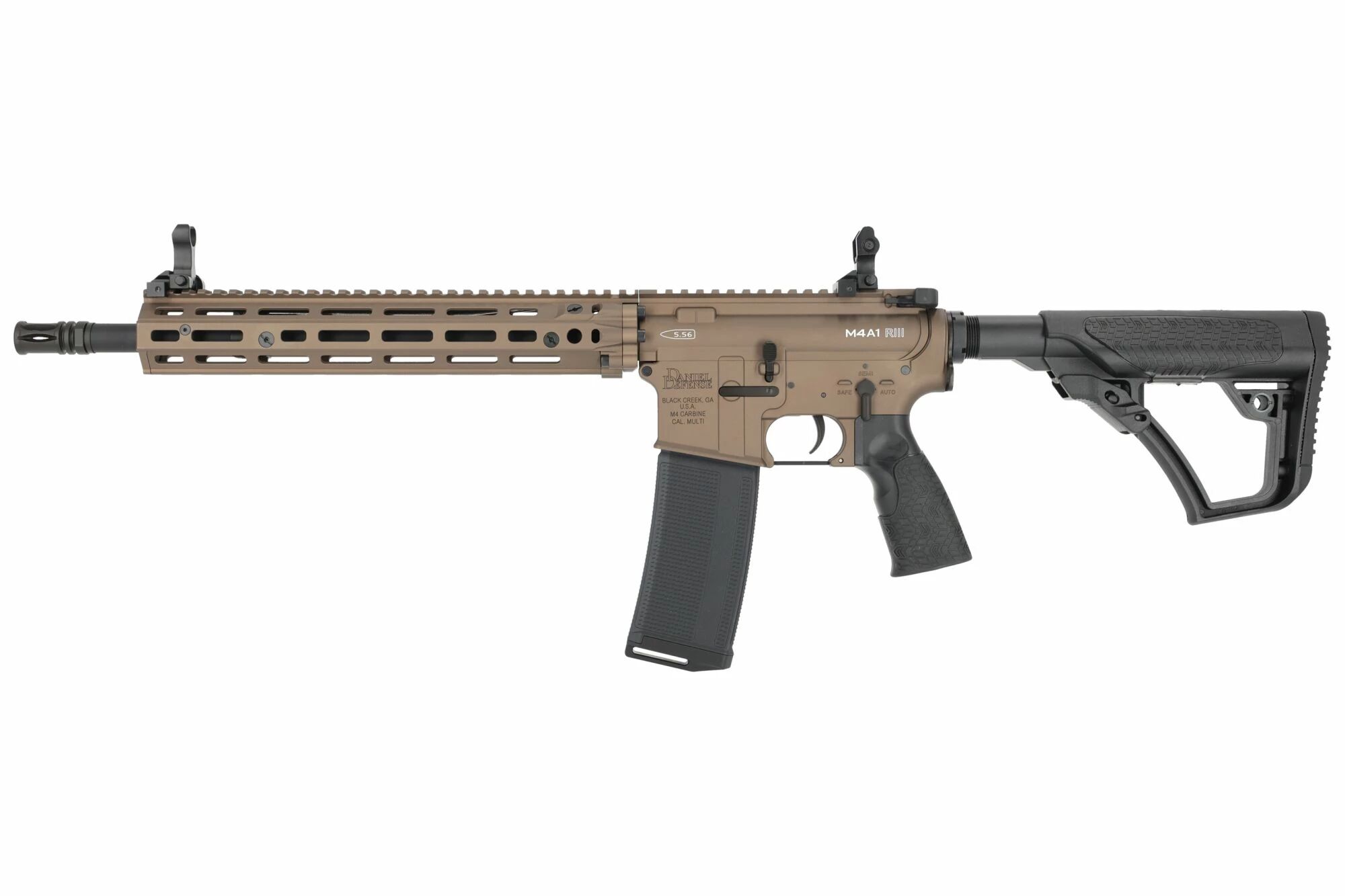
If you ask “What should I buy as my first airsoft gun?” on any forum, one name comes up with almost suspicious frequency — the G&G CM16 Raider. This isn’t a coincidence. From North America to Europe to Asia, from Reddit threads to local pro shop recommendations, nearly every experienced player points newcomers toward this rifle. It’s not the cheapest option out there, and it’s not the highest-performing one either. But somehow, it hits that sweet spot where everything is “just right.”
My first encounter with a CM16 was in a friend’s gear bag. At the time, I was running a no-name M4 that started developing all kinds of quirks after three months — magazine feeding issues, hop-up inconsistency, and an occasional dead trigger. My friend’s CM16, on the other hand, had been going strong for nearly two years of weekly games without a single trip to the tech bench. That kind of “I don’t have to worry about it breaking” reliability is exactly why the CM16 has become the default starter recommendation.
This guide will walk you through everything about the CM16 Raider 2.0 — from brand history to hands-on impressions, from box-stock specs to upgrade paths, and how to get the most out of it on the field.
G&G Armament: A World-Class Brand from Taiwan
G&G Armament (Guay Guay Trading Co., Ltd.) was founded in Taipei, Taiwan in 1986, initially operating as a dealer of airsoft products and military collectibles. In 2001, G&G made the pivotal decision to launch their own brand and start designing their own electric airsoft guns. That decision reshaped the industry.
Between 2004 and 2013, G&G developed and released over 100 different airsoft replicas, shipping products to markets worldwide. To keep up with growing demand, G&G established a second factory in Changhua, Taiwan, and all their products carry ISO 9001 quality certification. The company also invented a unique pneumatic blowback system, patented in multiple countries.
The Combat Machine (CM) series is G&G’s signature entry-level product line. The “16” in CM16 represents the M4/M16 platform, and the design philosophy behind the series is straightforward: deliver reliable performance at a reasonable price. The original CM16 Raider was a massive commercial success, and the 2.0 version brought comprehensive upgrades to both the exterior and internals, making this “people’s starter gun” even better.
Unboxing the CM16 Raider 2.0: First Impressions
The first thing you notice when you pick up the CM16 Raider 2.0 is how light it is. At roughly 2.3 kg with an empty magazine, it weighs nearly half as much as many full-metal AEGs. For a beginner, this is a huge advantage — after a full day of gaming for the first time, your arms will be far less fatigued than you’d expect.
The receiver is made from reinforced nylon fiber polymer with a fine matte texture. Honestly, it feels noticeably different from metal — you won’t mistake it for an aluminum body. But consider this: the weight savings from a polymer receiver matter far more in actual gameplay than whether the gun “feels like a real firearm” when you hold it. And G&G’s polymer quality is well-regarded in the industry — the hardness and impact resistance are leagues ahead of cheap plastic.
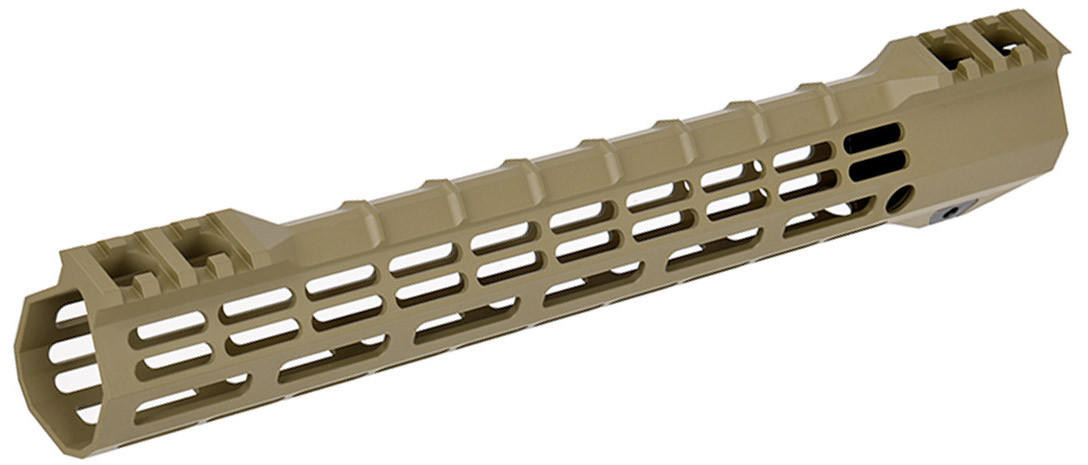
The most obvious visual change in the 2.0 is the handguard, which swaps the traditional RIS quad rail for an M-LOK system. The M-LOK handguard is lighter, cleaner-looking, and more convenient for mounting accessories. You no longer need a full Picatinny rail section just to attach a flashlight — a small M-LOK adapter is all it takes. The front and rear flip-up sights are another welcome upgrade; fold them down when you’re not using irons, and they won’t obstruct your view when running a red dot.
The ergonomic pistol grip is a noticeable improvement over the first generation — your fingers naturally wrap around it, and extended sessions don’t leave your hand feeling cramped. The retractable stock has six positions, accommodating shooters of all sizes. The battery sits inside the buffer tube — a 7.4V LiPo is recommended, as it’s lighter, lasts longer than a 9.6V NiMH, and fits more easily in the tube-style stock.
| Specification | Details |
|---|---|
| Overall Length | 715mm (stock collapsed) / 790mm (extended) |
| Weight | Approx. 2,300g (with empty magazine) |
| Magazine Capacity | 450 rounds (Hi-Cap) |
| Muzzle Velocity | ~350-380 FPS (0.2g BBs) |
| Power System | AEG (Automatic Electric Gun) |
| Fire Modes | Semi-Auto / Full-Auto |
| Hop-Up | Rotary adjustable |
| Inner Barrel | 6.04mm brass tight bore (275mm) |
| Gearbox | Ver.2 full metal |
| Connector | Deans (Tamiya adapter included) |
2.0 vs 2.0E: Which Version Should You Choose?
The CM16 Raider currently comes in two main variants: the standard 2.0 and the enhanced 2.0E. They look virtually identical — the differences are all internal.
The standard 2.0 comes with a 6.04mm brass inner barrel and basic wiring, priced at roughly $150-180. For players who simply want to get started and are watching their budget, this version is more than adequate. Its out-of-the-box performance handles most field conditions, and the internal component quality won’t have you reaching for upgrades anytime soon.
The 2.0E adds two key features: a built-in programmable MOSFET electronic trigger unit, and an upgraded 6.01mm precision inner barrel. What’s a MOSFET? In simple terms, it’s a protective circuit board that reduces trigger contact wear, supports higher-voltage batteries (11.1V LiPo), and enables adjustable fire modes. With the MOSFET, you can configure burst fire, active braking, and more. The 2.0E runs about $200-230 — the extra $50 buys long-term value.
If your budget allows, I’d recommend going straight for the 2.0E. A MOSFET is something you’ll want eventually, and having it factory-installed means you don’t have to crack open the gearbox yourself or worry about compatibility. But if budget is truly tight, the standard 2.0 won’t leave you with regrets — it’s a thoroughly complete gun on its own.
How Does the CM16 Stack Up Against the Competition?
In the $150-250 price range, the CM16 Raider 2.0 isn’t your only option. CYMA and Specna Arms both field strong competitors, and understanding the differences will help you make a more informed decision.
CYMA holds an unshakeable position in the AK segment. If you prefer the AK platform’s aesthetics and manual of arms, the CYMA CM.028 is the classic budget choice at just over $100, with a full-metal receiver that feels substantial. That said, CYMA’s M4 lineup isn’t as impressive — in the M4 world, their reputation trails behind G&G. CYMA’s strength is extreme value for money; the trade-off is that factory hop-up units and motors generally need upgrading to reach satisfying performance.
Specna Arms is a Polish brand that has risen rapidly in the European market in recent years. Their CORE series is the entry-level line, priced similarly to the CM16, with a standout feature: a built-in quick-change spring system that lets you swap springs without opening the gearbox — incredibly handy when you need to adjust FPS for different field limits. The EDGE series sits higher, equipped with an ORION gearbox and GATE X-ASR MOSFET. Specna Arms’ weakness is their shorter track record — their long-term durability reputation hasn’t yet matched G&G’s decade-plus of market-proven Combat Machine reliability.
The core reason to choose the CM16 Raider 2.0 isn’t that it leads in any single category — it’s that it maintains a solid standard across every dimension. A proven Ver.2 gearbox, mature M4 platform compatibility, and the most extensive parts and upgrade ecosystem in the world — together, these make the CM16 the “safest” choice for beginners. You’ll never discover that a critical replacement part is impossible to find, and you’ll never post a question on a forum that nobody can answer.
Upgrade Paths: Taking Your CM16 to the Next Level
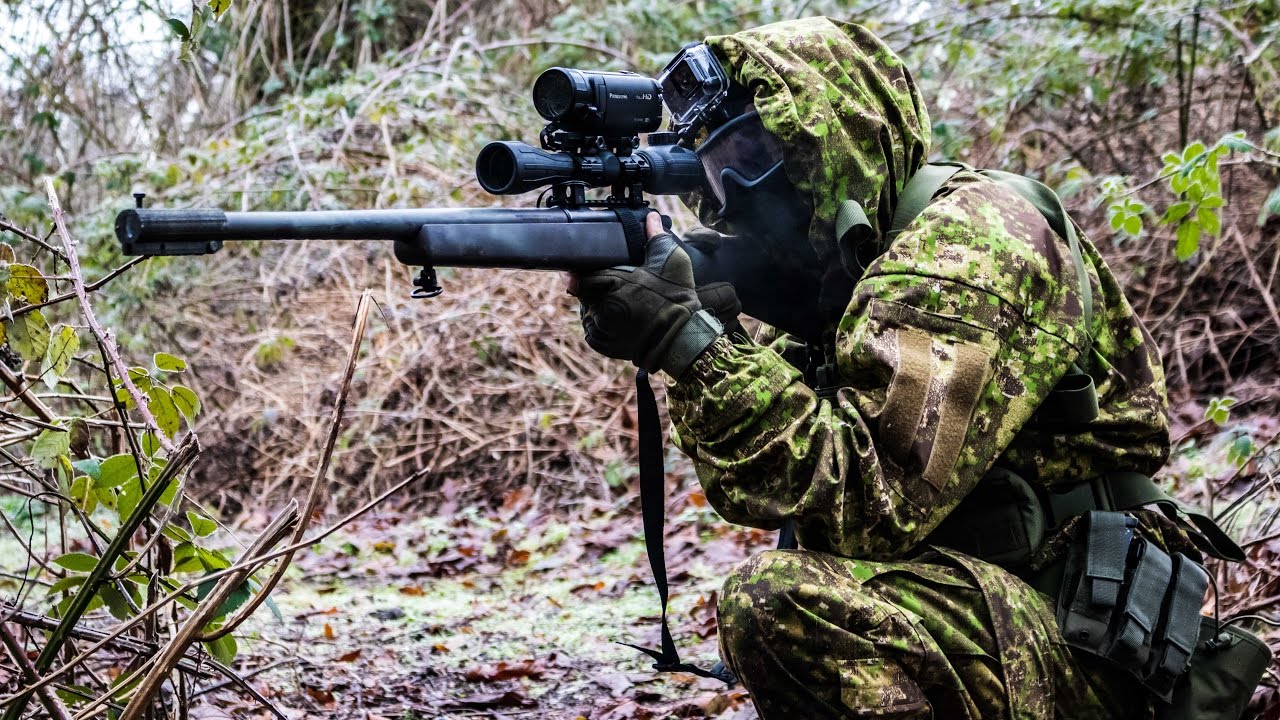
The CM16 Raider 2.0 performs well enough out of the box to keep you happy for months. But when you start wanting better performance, its Ver.2 gearbox opens up nearly unlimited upgrade potential. There’s no need to do everything at once — follow a priority order and put every dollar where it counts.
Step one is always accuracy. Swapping the hop-up bucking is the single best value upgrade — a Maple Leaf or Modify bucking costs around ten to fifteen dollars, yet the improvement in trajectory consistency is immediately visible. Pair it with a quality nub, and your effective range can easily gain 10-15 meters. If the budget allows, a Prometheus or ZCI 6.03mm stainless steel inner barrel will push accuracy up another notch. These three components together run under $50, yet they’ll bring your CM16’s precision close to guns costing twice as much.
Step two is the motor. The stock CM16 runs an 18,000 RPM standard motor — adequate but unspectacular in trigger response and rate of fire. A high-torque motor (such as the ASG Infinity U-18000 or SHS High Torque) noticeably improves trigger response, especially in semi-auto where you want each shot to follow your finger immediately. This makes a real difference in scenarios demanding quick, precise single shots.
Step three is the electrical system. If you bought the standard 2.0 (without a built-in MOSFET), adding one is strongly recommended. A basic MOSFET costs just $20-30 and protects your trigger contacts from the high-current draw of LiPo batteries, allowing you to safely run 11.1V LiPo for faster cycling and snappier trigger response. For more advanced features, a GATE PicoAAB or Perun V2 Hybrid offers burst fire, active braking, and precocking.
Core components like gears and the cylinder don’t need replacing unless something actually breaks. G&G’s factory gears are among the best in the entry-level segment and will last for years under normal use. Keep your upgrade priorities focused on accuracy and responsiveness, not chasing higher FPS or rate of fire — your field performance depends on whether you can hit your target, not how fast the BB leaves the barrel.
Field Performance and Tactical Tips
The CM16 Raider 2.0 is positioned as an all-around rifle, but it really shines on medium-sized outdoor fields. At 350-380 FPS with a 275mm inner barrel, effective range sits around 40-50 meters. Within that envelope, the factory hop-up system delivers stable enough trajectories to be competitive.
Running an M4 platform outdoors comes with a very practical advantage: you never have to worry about magazine and parts availability. Nearly all M4-pattern AEG magazines are cross-compatible, so you can easily borrow spares from teammates without stressing over proprietary specs. The 450-round hi-cap magazine requires occasional winding of the bottom wheel to feed, but for beginners the generous capacity offers plenty of forgiveness — you’re unlikely to suddenly run dry in the middle of a firefight. Once you’re ready for a more realistic experience, switch to 120-round mid-cap magazines and practice your reloads.
One thing many beginners overlook in actual games: learn to use semi-auto effectively. Full-auto spraying looks exciting, but beyond 40 meters the spread means you’ll burn through BBs without hitting anyone. Build the habit of using precise semi-auto fire, reserving full-auto for close encounters or suppressive fire. This conserves ammo and will make you a more effective shooter much faster.
Another common beginner confusion is BB weight selection. The CM16 Raider 2.0 achieves its rated FPS with 0.20g BBs, but outdoors in any wind, 0.20g trajectories get blown all over the place. Use 0.25g at minimum — if you’ve upgraded your hop-up bucking, 0.28g will dramatically improve your hit rate at medium range. Heavier BBs show lower FPS numbers on a chronograph, but actual effective range and trajectory stability are significantly better.
💡 Further Reading: Want to learn more about field selection and rules? Check out our Airsoft Field Guide.
Shot Timer Training Drills
Once you have a reliable gun, what separates you from other beginners is training. The CM16 Raider 2.0 is the ideal platform for practicing fundamental rifle operations because its controls are identical to virtually every M4-pattern system — muscle memory built on the CM16 transfers directly to any M4 platform you might use in the future.
The first drill is target acquisition speed. Set up a Shot Timer, hold the rifle in a low-ready position, and on the buzzer, raise the gun, acquire your sight picture, and fire. Beginners typically need over 2 seconds; the goal is to consistently get under 1.5 seconds. The CM16’s light weight is an advantage here — you won’t fight excess barrel wobble during the mount.
The second drill is magazine changes. Hit the magazine release, strip the empty mag, insert a fresh one, slap the bottom to confirm it’s seated — time the whole sequence with the Shot Timer. The M4’s magazine well design is the most intuitive of any rifle platform, and your target is sub-3-second reloads. This skill matters more than you’d think: running empty mid-engagement and getting back in the fight within 3 seconds often decides whether you tag someone or get tagged.
The third drill is target transitions. Set up two targets roughly 60-90 degrees apart and practice swinging between them while firing. Record split times on the Shot Timer. This drill trains upper body coordination and visual switching speed — essential for real-game scenarios with multiple opponents.
All of these drills can be done at home with an empty magazine and no battery installed. Combined with the techniques in our Dry Fire Training Guide, you can dramatically improve your handling proficiency without spending a single BB. Fifteen minutes a week on these three drills, and within a month your teammates will notice the difference.
Maintenance and Common Issues
AEG maintenance is far simpler than GBB, but basic care habits will keep your CM16 running smoothly for years. After each session, run a cleaning rod with a lightly silicone-oiled patch through the inner barrel from the muzzle end. No special solvents needed. Periodically check whether the hop-up bucking has hardened with age — if your accuracy starts dropping off, a fresh bucking usually fixes it.
Battery care is the maintenance item AEG users most commonly neglect. If you’re running LiPo batteries, never discharge them to empty. Over-discharging permanently damages LiPo cells and can cause swelling or even fire. Best practice: recharge promptly after use, and store at storage voltage (about 3.8V per cell) when not in use for extended periods. Always use a balance charger, and never leave batteries charging unattended.
The most common beginner issue is feeding problems. Hi-cap magazines need the bottom wheel wound regularly to push BBs into the feed tube — if you suddenly stop firing, give the wheel a few turns before troubleshooting further. Another frequent cause is low-quality BBs — cheap BBs with rough surfaces jam in the feed path. Investing in quality BBs (such as BLS, G&G factory, or Elite Force) will noticeably improve your experience.
💡 Further Reading: For more cleaning and maintenance knowledge, check out our Pistol Cleaning & Maintenance Guide.
Conclusion: The Best Companion from Day One to Growing Beyond
The G&G CM16 Raider 2.0 isn’t a gun that’ll turn heads on an internet forum. It doesn’t have the cold touch of a full-metal receiver, the prestige of licensed trademarks, or the kind of looks that stop people in their tracks. But it does something more important — it lets you focus on actually enjoying airsoft, instead of spending your weekends fixing your gun.
From your first game day through your first upgrades, from the exploratory beginner phase to building genuine confidence, the CM16 Raider 2.0 provides stable, reliable support at every stage. The moment you land that first precise semi-auto hit on a target 40 meters out, you’ll understand why players worldwide consider this gun the starting point of the hobby. And with a Ver.2 gearbox offering a full universe of upgrades, this rifle can grow alongside your skills rather than being outgrown and discarded.
If you’re agonizing over what to buy as your first gun, my advice is simple: get a CM16 Raider 2.0, and spend the money you saved on a quality pair of goggles, good BBs, and a 7.4V LiPo battery. Then take that setup to the field and enjoy your first game of airsoft.
Related Articles
- Airsoft Gear Buying Guide — Complete guide from guns to protective gear
- Airsoft Loadout Guide — Loadout configurations for every play style
- Airsoft CQB Tactics Guide — Indoor tactical techniques
- Airsoft Field Guide — Outdoor vs indoor field comparison
- Shot Timer App Guide — Quantify your training progress with a timer
- G&G
- CM16 Raider
- AEG
- Electric Airsoft Gun
- Airsoft
- Airsoft AEG
- Beginner Airsoft
- M4
- Combat Machine
- Shot Timer
- Best Beginner Airsoft Gun