Complete IPSC Beginner Pistol Guide: Production Division Handgun Recommendations & Equipment Setup

Why Production Division is the Best Starting Point for Beginners
Want to enter the world of IPSC competitive shooting but don’t know which gun to choose? Production Division is your best bet. This division is designed for “out-of-the-box” factory pistols, allowing newcomers to step onto the competitive stage with minimal budget and modifications.
According to IPSC and USPSA rules, Production Division has several key restrictions:
- Barrel length not exceeding 5 inches
- Magazine capacity limited to 15 rounds
- External appearance must remain factory-original
- Iron sights only (no red dots)
These restrictions actually become advantages for beginners—you don’t need to spend big money on modifications or stress about which accessories to buy. A quality factory pistol plus basic competition gear is all you need to start your IPSC journey.
💡 Further Reading: If you’re not familiar with IPSC, we recommend reading Complete IPSC Practical Shooting Training Guide first to understand the rules and training methods.
Top Production Division Beginner Pistol Recommendations
Based on USPSA National Championship statistics, here are the most popular pistol brands and models in Production Division. We’ve categorized them into three price tiers to help you choose based on your budget.
Premium Choice: CZ Shadow 2 (~$1,350 USD)
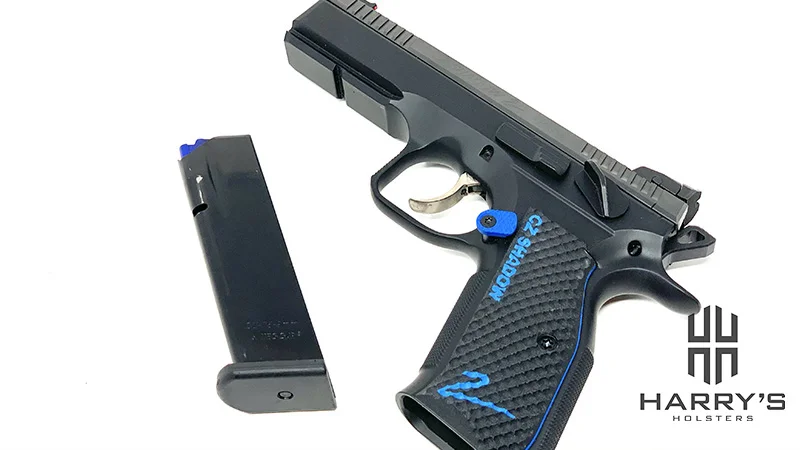
The CZ Shadow 2 is the “gold standard” for Production Division. At the 2023 USPSA Production National Championship, 34% of competitors used CZ pistols, with the Shadow 2 and its variants being the most popular choices.
Why Does the CZ Shadow 2 Dominate Production?
- Steel Frame: Weighing approximately 1.32 kg, effectively reducing felt recoil
- Excellent Trigger: SA mode trigger pull of only 2.5 pounds with a crisp, glass-rod-breaking feel
- Outstanding Ergonomics: Low bore axis design with comfortable grip angle
- 17-Round Magazine Capacity: Maximum capacity within Production limits
Best For: Shooters willing to invest in premium equipment for the best competitive performance
💡 Further Reading: Want to learn more about this champion’s choice? Check out CZ Shadow 2 Complete Guide
Mid-Range Choice: Canik SFx Rival-S (~$900 USD)
Canik is a Turkish brand that has risen rapidly in recent years, and the SFx Rival-S is their competition flagship. At the 2023 USPSA National Championship, competitor Nils Jonasson won the Production Division title using a Canik SFx Rival-S, proving this pistol’s competitiveness.
Advantages of the Canik Rival-S
- Full Steel Frame: Comparable weight and stability to the CZ Shadow 2
- Top-Tier Factory Trigger: Rated among the best in class, even better than many aftermarket triggers
- Exceptional Value: Price is only two-thirds of the CZ Shadow 2
- Complete Accessory Package: Comes with holster, multiple magazines, grip inserts, and more
Best For: Shooters seeking value who want to be “competition-ready out of the box”
💡 Further Reading: Learn more about Canik’s story and product line in Canik Pistol Complete Guide
Budget Choice: Glock 34 Gen5 (~$700 USD)
The Glock 34 is the go-to choice for budget-conscious shooters. While factory specifications are relatively basic, Glock has the industry’s most comprehensive aftermarket ecosystem, allowing you to upgrade gradually as your skills improve.
Unique Advantages of the Glock 34
- Legendary Reliability: Functions under any conditions
- Lightweight Design: Only 655g unloaded—the lightest option on this list
- Aftermarket Ecosystem: Countless upgrade options available
- Easy Maintenance: Can be completely disassembled in 10 minutes; parts available everywhere
- MOS Version: Pre-milled for optics mounting, upgradeable to Carry Optics division later
Best For: Budget-limited shooters who plan to upgrade gradually and value reliability
💡 Further Reading: Learn more about Glock pistols in Glock 17 Training Guide and Complete Glock Introduction
Other Beginner Pistols Worth Considering
Beyond the three mainstream choices above, these pistols are also popular in Production Division:
SIG P320 X-Five Legion (~$900 USD)
- Modular design with interchangeable grip modules
- 9% usage rate at 2020 USPSA National Championship
- Derivative of the US Army MHS program
💡 Further Reading: SIG P320 Complete Guide
Tanfoglio Stock 2 (~$800 USD)
- Italian-made, close cousin to CZ designs
- 12% usage rate at USPSA National Championship
- Often called “the poor man’s CZ Shadow 2”
Walther Q5 Match SF (~$1,300 USD)
- Steel frame version with excellent feel
- Outstanding factory trigger quality
- Representative of German craftsmanship
Smith & Wesson M&P 2.0 Competitor (~$650 USD)
- American-made, reliable quality
- Budget-friendly, suitable for new shooters
- Rich selection of aftermarket parts
💡 Further Reading: Smith & Wesson M&P Complete Guide
Top Three Beginner Pistol Comparison Chart
| Feature | CZ Shadow 2 | Canik Rival-S | Glock 34 Gen5 |
|---|---|---|---|
| Price | ~$1,350 | ~$900 | ~$700 |
| Weight (Unloaded) | 1,320g | 1,270g | 655g |
| Trigger System | DA/SA | Striker-fired | Striker-fired |
| Trigger Pull (SA) | ~2.5 lbs | ~4.0 lbs | ~5.5 lbs |
| Magazine Capacity | 17+1 | 18+1 | 17+1 |
| Barrel Length | 4.89" | 5.0" | 5.31" |
| Frame Material | Steel | Steel | Polymer |
| Aftermarket Support | Moderate | Limited | Extensive |
| Included Accessories | Basic | Comprehensive | Basic |
| Reliability | Excellent | High | Legendary |
How to Choose?
- Seeking best competitive performance → CZ Shadow 2
- Seeking value and out-of-box readiness → Canik Rival-S
- Limited budget but planning long-term development → Glock 34
- Prefer American-made → S&W M&P 2.0 Competitor
- Like modular designs → SIG P320 X-Five Legion
Essential Equipment for Production Division
Choosing a pistol is just the first step. You’ll need the following equipment to compete:
1. Competition Belt ($40-150)
The belt is the foundation of your entire setup—it must be rigid enough to hold your holster and magazine pouches in consistent positions.
Entry-Level Options:
- Budget ($40-70): Entry-level belts from KRYDEX, FMA, etc.
- Mid-Range ($70-100): CR Speed, DAA double-loop belt systems
- Premium ($100+): Black Scorpion, Safariland competition belts
Recommendation: Beginners can start with budget options and upgrade once committed to long-term participation. The double-loop system (inner + outer belt) provides better retention.
2. Competition Holster ($50-150)
The holster must secure the pistol during vigorous movement while allowing quick draws.
Important Rules:
- Holster must be on the strong-hand side of the belt
- Cannot extend forward of the hip bone
- Cant angle is restricted (muzzle cannot point more than 1m in front of or behind feet)
- Must cover the trigger guard
Recommended Brands:
- CR Speed: Classic choice, excellent for CZ Shadow series
- Ghost: Italian-made, multiple adjustment options
- Black Scorpion: American-made, good value
3. Magazine Pouches ($15-40 x 3-4 pouches)
Production Division competitors should carry at least 3-4 magazine pouches.
Magazine Pouch Position Rules:
- Distance from belt inner edge to magazine is limited to 2 1/8 inches
- Magazine base must be even with or higher than the top of the belt
Recommended Options:
- Ghost 360 Magazine Pouches: 360-degree adjustable angle, highly adaptable
- DAA Magazine Pouches: German design, reliable quality
- KRYDEX Sets: Budget-friendly, suitable for beginners
4. Other Essential Equipment
- Eye Protection (required): ANSI Z87.1 certified
- Ear Protection (required): Electronic or passive
- Gun Bag or Case: For safe transportation
- Magazine Loader: Reduces thumb fatigue, improves efficiency
Equipment Budget Estimate
| Equipment | Budget Setup | Mid-Range Setup |
|---|---|---|
| Pistol | $700 (Glock 34) | $1,350 (CZ Shadow 2) |
| Belt | $50 | $100 |
| Holster | $60 | $120 |
| Mag Pouches x4 | $80 | $160 |
| Eye Protection | $30 | $80 |
| Ear Protection | $30 | $150 |
| Total | ~$950 | ~$1,960 |
Common Beginner Mistakes and How to Avoid Them
Before purchasing equipment and attending your first match, understanding these common mistakes can help you avoid unnecessary frustration:
1. Safety Violations Leading to DQ
The 180-degree rule is the most important safety rule. Imagine your toes are on the start line—your muzzle movement cannot exceed 90 degrees to the left or right, for a total of 180 degrees of safe handling area. Violating this rule results in immediate disqualification (DQ).
Other DQ Causes:
- Handling firearm outside designated safe areas
- Handling ammunition in safe areas
- Improper finger placement inside trigger guard
- Negligent discharge
2. Over-Emphasizing Speed
The most common beginner mistake is focusing only on speed while neglecting accuracy. IPSC scoring includes two elements: time and points. Shooting slower with all A-zone hits is usually better than shooting fast with frequent misses.
Recommendation: Let your sight alignment dictate your speed—ensure every shot is confident before pulling the trigger.
3. Over-Investing in Equipment
Many beginners want to buy the most premium equipment right away. But the truth is: skill matters far more than equipment.
Recommendations:
- Compete with budget equipment for a few matches
- Upgrade only after committing to long-term participation
- Invest saved money in training instead
4. Competing Without Knowing the Rules
Each division has specific rules—violations result in penalties or DQ.
Recommendations:
- Read the IPSC or USPSA rulebook before competing
- Ask experienced shooters questions before your first match
- Observe how other competitors handle equipment and movements
Training Beginner Skills with a Shot Timer
With your equipment ready, it’s time to train. Here are the three most essential skills for beginners, along with recommended target times:
1. Draw to First Shot
This is the most fundamental IPSC skill.
Training Method:
- Assume competition ready position (hands relaxed naturally)
- Draw upon timer signal
- Fire one shot at target
- Record time from signal to shot
Target Times (7 meters):
- Beginner: 1.5-2.0 seconds
- Intermediate: 1.0-1.5 seconds
- Advanced: < 1.0 second
💡 Further Reading: Complete Guide to Fast Pistol Draw Techniques
2. Split Times
Split time is the interval between consecutive shots.
Target Times (A-zone hits):
- Close Range (7m): 0.20-0.30 seconds
- Mid Range (15m): 0.30-0.40 seconds
- Long Range (25m): 0.50-0.70 seconds
3. Reloads
Fast magazine changes save precious seconds.
Target Times:
- Beginner: 2.5-3.0 seconds
- Intermediate: 1.5-2.0 seconds
- Advanced: < 1.5 seconds
💡 Further Reading: Complete Guide to Fast Magazine Reload Techniques
Conclusion: Take the First Step
Choosing a beginner pistol doesn’t need to be overthought. CZ Shadow 2 is the choice for peak performance, Canik Rival-S offers exceptional value, and Glock 34 is a budget-friendly and reliable starting point.
More importantly: don’t wait for perfect equipment to start. Take whatever pistol you have, put on basic gear, and attend your first match! Most IPSC/USPSA communities are very welcoming to newcomers, and you’ll learn more than any article can teach.
Remember, all top competitors started as beginners. Take the first step today and begin your IPSC journey!
Related Articles
- Complete IPSC Practical Shooting Training Guide
- Complete IDPA Defensive Shooting Training Guide
- IPSC Production Optics Beginner Guide
- IPSC Match Procedure and Preparation Guide
- Complete Guide to Fast Pistol Draw Techniques
- Complete Guide to Fast Magazine Reload Techniques
Track your training progress with AirsoftShotTimer!
- IPSC
- IPSC Beginner
- Beginner Pistol
- Production Division
- Competition Pistol
- USPSA
- Handgun Selection
- Glock 34
- CZ Shadow 2
- Canik Rival