Complete Pistol Draw Technique Guide: Four-Phase Breakdown from Holster to Shot
Why Is Draw Technique So Important?
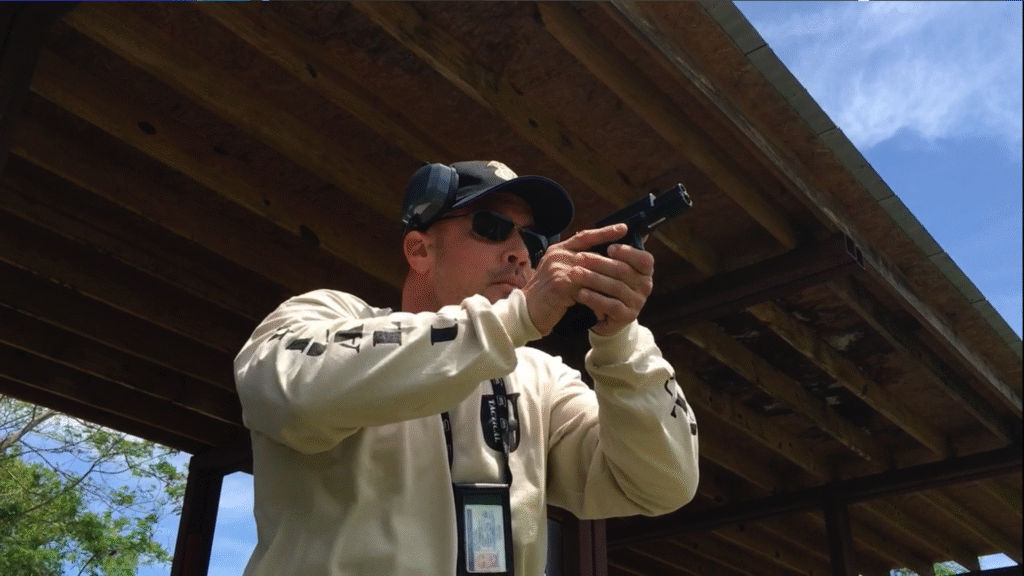
In competitive shooting and defensive situations, the draw stroke is where everything begins. Whether you’re competing for first-shot advantage in IPSC or simulating defensive scenarios in IDPA, a smooth and fast draw is a fundamental skill every shooter must master.
A standard draw takes beginners 2.5-3.0 seconds, while top competitive shooters can complete it and hit the A-zone in under 1.0 second. This seemingly small difference can accumulate into a decisive time gap in matches requiring multiple draws.
More importantly, the grip established during the draw affects all subsequent shooting. As experts say: “If your grip interaction doesn’t feel right during the draw, this is the only real opportunity to correct it—once the pistol leaves the holster, you’re mostly stuck with the grip you have.”
What This Guide Will Teach You
- Complete four-phase draw breakdown
- IPSC vs IDPA draw rule differences
- Progressive training program
- Using Shot Timer to track progress
- Common mistakes and corrections
- Competition holster selection
The Four Phases of the Draw
Traditionally, the draw is taught as a four-point combat draw, but the goal is for it to become one continuous, smooth, and fast motion. Here’s the detailed breakdown:
Phase One: Establish Grip
This is the most critical phase of the entire draw.
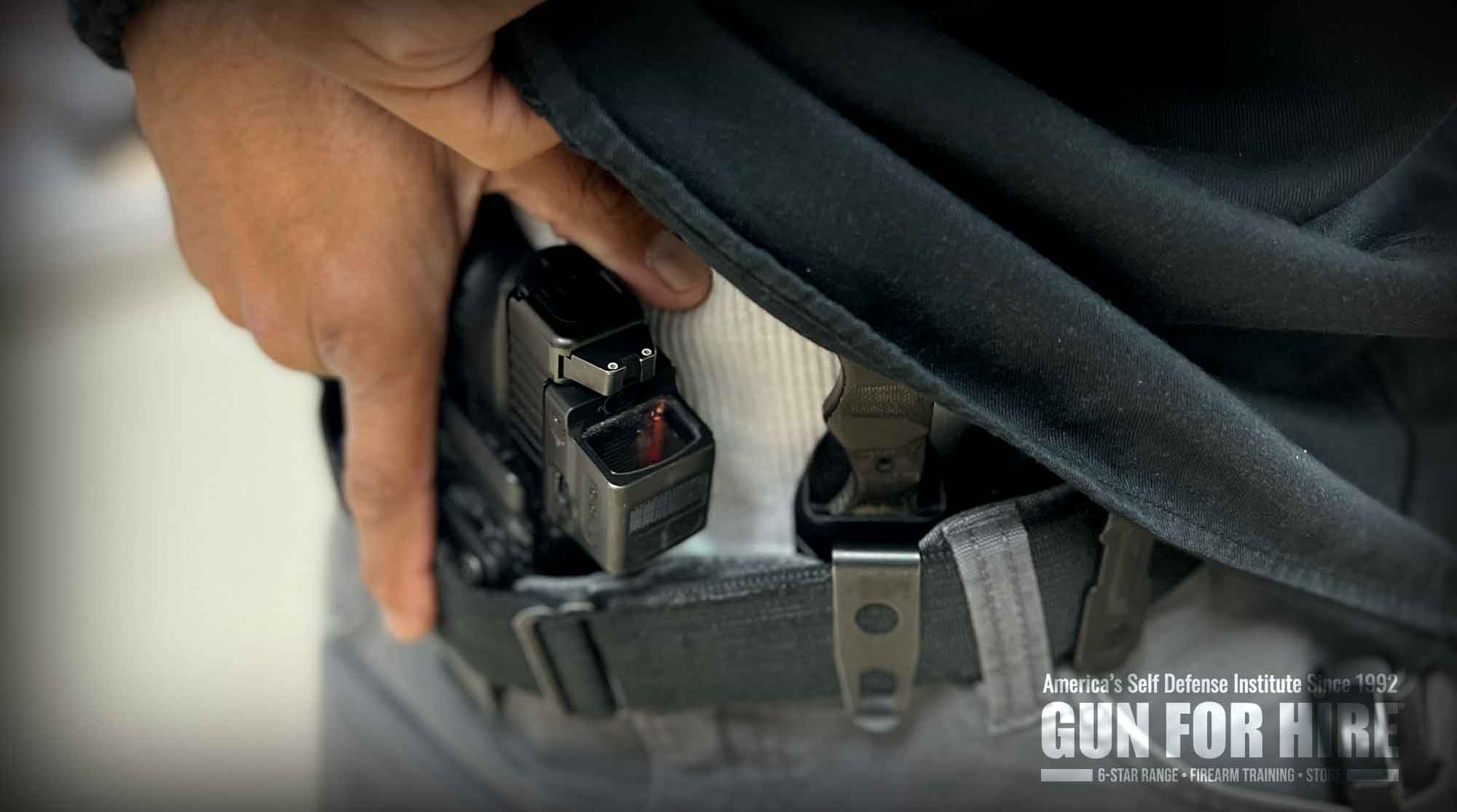
If the draw stroke is the foundation for success, the grip is the cornerstone of that foundation. You cannot adjust your grip on the way out of the holster—you must establish the correct grip the moment you first touch the pistol.
Key Points
-
Strong Hand Movement
- Elbow leads upward, palm moves directly to grip
- Web of hand seats deep in the beavertail
- Three fingers (middle, ring, pinky) wrap firmly around grip
- Index finger extends straight along holster exterior
-
Support Hand Simultaneous Movement
- As strong hand moves to grip, support hand moves to chest centerline
- Preparing to meet strong hand in Phase Three
- Don’t let support hand idle or wander
-
Confirm Proper Grip
- If the web-to-grip contact doesn’t feel right, this is your only chance to correct it
- Feel complete palm-to-grip contact
- Establish the “Master Grip”
Key Point: From first contact with the grip, your strong hand grip should not change until shooting is complete.
Phase Two: Clear
The handgun must be lifted straight up and out of the holster. If you bend the handgun at an angle, it may drag or the sights may snag on the holster.
Key Points
-
Defeat Retention
- If equipped with retention device, disengage properly
- Competition holsters typically use friction or magnetic retention
- Confirm pistol is free
-
Vertical Extraction
- Contract bicep, pull pistol straight up
- Ensure muzzle completely clears holster
- Pistol should rise to chest height
-
Establish Retention Position
- Drive elbow down, muzzle naturally orients toward target
- Pistol slightly canted outward so slide can operate freely
- In emergencies, shots can be made from this position
Phase Three: Meet (Smack)
Support hand joins in this phase, establishing complete two-handed grip.
Key Points
-
Hands Meet
- Support hand moves from chest centerline to meet strong hand
- Support palm presses firmly against grip side, filling gaps
- Thumbs forward position
-
Complete the Grip
- Support thumb rests below safety/slide release
- Four fingers wrap over strong hand fingers
- Establish 360-degree complete grip
-
Maintain Muzzle Safety
- Ensure muzzle always points in safe direction (toward target)
- Finger still outside trigger guard
Phase Four: Presentation (Extension)
Push the pistol toward the target while acquiring sight picture.
Key Points
-
Extend Forward
- Both arms push toward target
- Keep shoulders relaxed, arms slightly bent
- Pistol rises to eye level
-
Acquire Sight Picture
- Eyes track through sights to target
- Begin finding sights during extension
- Don’t wait for full extension to start aiming
-
Prepare to Shoot
- Confirm proper sight picture
- Finger moves inside trigger guard, contacts trigger
- Draw complete, begin trigger control
Draw Time Standards
Understanding draw time standards for different skill levels helps set realistic training goals.
Open Holster (Competition)
| Level | Draw to First Shot | Description |
|---|---|---|
| Beginner | 2.5+ seconds | Focus on correct technique |
| Novice | 2.0-2.5 seconds | Basic proficiency |
| Intermediate | 1.5-2.0 seconds | Smooth execution |
| Advanced | 1.2-1.5 seconds | Competition level |
| Expert | 1.0-1.2 seconds | Regional/National level |
| Elite | Under 1.0 second | World-class |
Concealed Carry (With Garment Clear)
| Level | Draw to First Shot | Description |
|---|---|---|
| Beginner | 3.0+ seconds | Learning garment clear |
| Intermediate | 2.0-2.5 seconds | Coordinated movement |
| Advanced | 1.5-2.0 seconds | Defensive-ready |
| Expert | 1.0-1.5 seconds | Achieved by very few |
Defining the “Sub-Second Draw”
A true sub-second draw means drawing from concealment and delivering an A-zone/Down Zero hit on a USPSA or IDPA target at seven yards in under one second. Very few people can legitimately accomplish this.
Research shows different draw speeds require different levels of attacker distraction:
- 2.0 second draw: Attacker must show you back of head and one shoulder
- 1.5 second draw: Attacker must be completely side-on
- 1.0 second draw: Attacker must take eyes off you
IPSC vs IDPA Draw Rules
IPSC (USPSA) Rules
IPSC pursues pure speed with relatively relaxed holster rules:
- Holster Position Flexibility: Open division allows placement anywhere on belt
- Speed Holsters: Fully open holsters permitted
- Drop and Offset: DOH holsters are legal
- Standard/Production Divisions: Holster must be behind hip bone
- No Drawing While Facing Uprange: Results in DQ
Strategy: Use the fastest legal holster setup to minimize draw time.
IDPA Rules
IDPA emphasizes “combat simulation” with stricter rules:
- No Drop and Offset: DOH holsters not permitted
- High and Tight Required: Grip top must be above belt
- Trigger Guard Behind Centerline: Holster position restricted
- Concealment Requirements: Some divisions start from concealment
- Variable Start Positions: May require starting with gun on table, in box, etc.
Strategy: Master garment clearing and various starting position draws.
Draw Technique Breakdown
Drawing from Competition Holster
Let’s break down the competition draw into practicable individual phases:
Ready Position
-
Hand Position
- Per match rules: hands relaxed at sides
- Or hands raised to chest (surrender position)
- Or hands on markers
-
Body Position
- Facing target
- Knees slightly bent, weight forward
- Eyes focused on target or area
-
Mental Preparation
- Focus on start signal
- Visualize draw path
- Prepare to explode
Phase 1-4 Practice
Practice each phase individually:
- Grip establishment only (100 reps)
- Extraction to chest only (100 reps)
- Meet movement only (100 reps)
- Extension and aim only (100 reps)
Connected practice:
- Link all four phases into one motion
- Prioritize correctness before speed
- Use mirror to check form
Drawing from Concealment
Concealed carry adds a “garment clear” step, increasing complexity.
Garment Clear Techniques
-
Strong Hand Clear
- Strong hand grabs shirt hem first
- Pull up to chest height
- Quickly transition to grip
-
Support Hand Clear (Recommended)
- Support hand grabs shirt hem
- Pull up and outward
- Strong hand simultaneously moves to grip
-
Two-Hand Clear
- Both hands grab shirt hem
- Spread outward (for tighter clothing)
- Strong hand quickly transitions to grip
Common Garment Clear Mistakes
- Not clearing high enough, garment falls back over grip
- Clearing garment before moving strong hand, wasting time
- Excessive clearing motion, consuming too much time
- Not confirming garment is secured
Draw Training Program
Systematic training is key to progress. Here’s a three-phase training program.
Phase One: Foundation Building (Weeks 1-4)
Goal: Establish correct movement patterns, develop muscle memory
Daily Training Content (20 minutes)
| Item | Reps | Focus |
|---|---|---|
| Grip Establishment | 30 | Deep web, complete grip |
| Extraction Practice | 30 | Vertical pull, no snagging |
| Meet Practice | 30 | Synchronized hands, fill gaps |
| Complete Draw | 30 | Smooth movement, no timer |
Key Points
- Slow Motion Practice: Prioritize correctness before speed
- Isolated Practice: Practice each phase until proficient
- Use Mirror: Check if movements are correct
- No Timer: Focus on movement quality
Weekly Goals
- Week 1: Familiarize with four phases
- Week 2: Complete without looking down
- Week 3: Smooth flow without pauses
- Week 4: Begin using Shot Timer for baseline
Phase Two: Speed Development (Weeks 5-12)
Goal: Increase speed while maintaining correct technique
Daily Training Content (30 minutes)
| Item | Reps | Focus |
|---|---|---|
| Warm-up Draws | 10 | Activate muscle memory |
| Timed Draws | 30 | Track time progress |
| PAR Time Challenge | 20 | Challenge target times |
| Draw + Shot Combinations | 20 | Integrate full sequence |
Using AirsoftShotTimer
- Set random delay (1-4 seconds)
- Record each draw time
- Calculate weekly averages
- Track progress curve
PAR Time Training Method
PAR time training effectively develops speed:
- Set initial PAR time: 0.2 seconds faster than current average
- 10 reps per set:
- 10/10 success → reduce by 0.1 second
- 8-9/10 success → maintain practice
- <8/10 success → increase by 0.1 second
- Progressively shorten: Until target time reached
Phase Three: Competition Refinement (Week 13+)
Goal: Achieve competition level, adapt to pressure situations
Advanced Training Items
-
Multi-Target Draw
- Draw then transition to different targets
- Practice acquiring sight picture at different distances
- Combine with movement
-
Stress Draw Training
- Do 10 burpees or jumping jacks first
- Immediately perform draw practice
- Record performance under fatigue
-
El Presidente Drill
- Back to three targets
- Turn and draw, shoot 2 per target
- Reload
- Shoot 2 per target again
- Target time: 10 seconds (advanced: 5 seconds)
-
Bill Drill
- Draw and shoot 6 rounds (same target)
- Tests draw to rapid fire capability
- Target time: 2.5 seconds (advanced: 2.0 seconds)
Holster Selection and Setup
Proper holster setup significantly improves draw efficiency.
Competition Holster Types
| Type | Pros | Cons | Recommended Brands |
|---|---|---|---|
| Friction Kydex | Stable, low friction | Medium speed | Comp-Tac, Blade-Tech |
| Magnetic | Extremely fast extraction | Less secure | DAA, BOSS |
| Open Quick-Release | Ultra-fast, pro-level | Requires adjustment | GHOST, CR Speed |
| Drop and Offset | Optimal draw angle | IDPA non-compliant | CR Speed, DAA |
Holster Position Setup
-
Height
- Grip top about 2-3cm above belt
- Too low increases draw distance
- Too high affects grip establishment
-
Angle
- Slight forward cant (10-15 degrees) aids grip
- Straight setup is safer and faster
- Avoid excessive cant
-
Horizontal Position
- Direct side (3 o’clock) most common
- Slightly forward shortens draw path
- IDPA requires trigger guard behind body centerline
Belt Selection
Competition shooting requires stable belt support:
- Two-layer design: Inner belt + outer belt for easy on/off
- Width: 1.5-2 inches provides adequate support
- Material: Rigid nylon or Kydex-lined
- Recommended brands: GHOST, DAA, CR Speed, Safariland
Common Mistakes and Corrections
Mistake 1: Incomplete Grip Establishment
Problem: Web not seated deep in beavertail, grip too high or low
Cause: Rushing to draw, not taking time for proper grip
Correction:
- Practice grip establishment alone 100 times
- Feel web-to-beavertail contact
- Confirm three fingers completely wrap grip
- Slow motion practice until correct
Mistake 2: Finger Entering Trigger Guard Too Early
Problem: Finger enters trigger guard and touches trigger during draw
Cause: Lack of trigger discipline or incorrect habit
Correction:
- Force index finger straight along holster/frame side
- Only allow finger inside guard after sight picture established
- Follow this rule even with training guns
- Have others observe and correct
Mistake 3: Muzzle Sweeping Self
Problem: Muzzle points at leg or body during draw
Cause: Incorrect extraction angle or meeting position too low
Correction:
- Ensure vertical upward extraction
- Meet position at chest, not abdomen
- Check holster angle setup
- Use training gun to confirm safety during practice
Mistake 4: Support Hand Joining Too Late
Problem: Strong hand already extended before support hand joins
Cause: Hands not synchronized, support hand starts too late
Correction:
- Both hands start moving simultaneously at signal
- Support hand pre-positions at chest to wait
- Complete meet at chest, then extend together
- Practice “clap” rhythm feel
Mistake 5: Over-Pursuing Speed
Problem: Form breaks down, grip unstable, poor sight picture
Cause: Pursuing speed before establishing correct technique
Correction:
- Return to slow motion practice
- Only correct movements can be “sped up”
- Speed results from repeated correct movements
- Use “10-rep rule”: 10 correct reps before increasing speed
Dry Fire Training: Draw Focus
Drawing is one of the skills most suitable for home dry fire training.
Safety Precautions
- Confirm gun is completely empty
- Remove all live ammunition to another room
- Use training-specific gun or empty gun
- Point in safe direction (no people or pets)
Recommended Training Drills
Drill One: Pure Draw Timing
- Hands in designated position
- Draw on Shot Timer signal
- Establish sight picture and dry fire one shot
- Record completion time
Initial goal: 2.5 seconds → progressively shorten
Drill Two: Segmented Practice
Split draw into two halves, set PAR time for each:
First half (Grip + Clear):
- After signal, establish grip and extract to chest
- Target: 0.75 seconds
Second half (Meet + Extend):
- Start from chest position, meet and extend to aim
- Target: 0.75 seconds
Drill Three: 10-Rep Challenge
- Set current PAR time
- Draw 10 consecutive times
- Record success count
- Adjust PAR time based on results
Drill Four: Draw + Multiple Shots
- Dry fire 2-3 shots after draw
- Practice rapid shooting after draw
- Ensure grip remains stable
Advantages of Using AirsoftShotTimer
- Random delay simulates real reaction
- Automatically records segment times
- Tracks long-term progress trends
- Set PAR time challenges
Further reading: Complete Dry Fire Training Guide - More home training techniques
Live Fire Training Suggestions
Dry fire builds muscle memory; live fire validates and strengthens skills.
Recommended Live Fire Draw Drills
Basic Draw Drill (7 yards)
- Draw and fire 1 shot
- Holster
- Repeat 10 times
- Record each time and hit location
Goal: Average 2.0 seconds, all hits in A-zone
Bill Drill (7 yards)
- Draw and fire 6 shots (same target)
- Balance speed and accuracy
- Record total time
Target times:
- Beginner: 4.0 seconds
- Intermediate: 3.0 seconds
- Advanced: 2.5 seconds
- Expert: 2.0 seconds
Draw + Turn (7 yards)
- Back to target
- Turn, draw, and fire 2 shots on signal
- Practice coordination of turn and draw
Target time: 2.5 seconds
Training Frequency Recommendations
- Dry fire training: 15-20 minutes daily
- Live fire training: 1-2 times weekly, 50-100 rounds focused on draw
Conclusion
The draw is the starting point of shooting technique and a key factor in competitive performance.
Through systematic training, you can reduce your draw time from 2.5 seconds to 1.5 seconds or faster. This requires not only correct technique but also extensive repetition to build muscle memory.
Remember These Core Principles
- Grip Determines Everything: Establish correct grip immediately; no adjustment later
- Safety Always First: Finger off trigger until sight picture complete
- Correctness Before Speed: Practicing incorrect movements only reinforces errors
- Use a Timer: Quantify progress, set clear goals
- Practice Daily: Muscle memory requires constant maintenance
Start Your Draw Training
- Assess your current draw time (using Shot Timer)
- Identify which phase needs most improvement
- Create a training plan
- Practice consistently every day
- Regularly assess progress
Smooth draw = Faster first shot = Better performance
Good luck with training and winning matches!
Related Articles
Fundamental Shooting Training
- Complete Pistol Grip Technique Guide - High grip and two-handed techniques
- Complete Shooting Stance Guide - Isosceles and Weaver explained
- Complete Pistol Aiming Guide - Sight alignment and visual focus
- Complete Trigger Control Guide - Pre-travel and break techniques
Advanced Skill Training
- Complete Magazine Reload Guide - Speed and tactical reloads
- Complete Shooting on the Move Guide - Shooting while moving
- Complete Dry Fire Training Guide - Home training techniques
Competition Shooting Training
- Complete IPSC Training Guide - Competition shooting core techniques
- Complete IDPA Training Guide - Tactical-oriented training
- Complete Shot Timer Guide - Using data to improve technique
- Draw Technique
- Draw Stroke
- Fast Draw
- Holster Draw
- IPSC
- IDPA
- Shooting Training
- Competition Shooting
- Dry Fire Practice