Shooting Protection Gear Guide: Choosing the Right Eye and Ear Protection
Why Protection Gear Is Your Most Important Investment
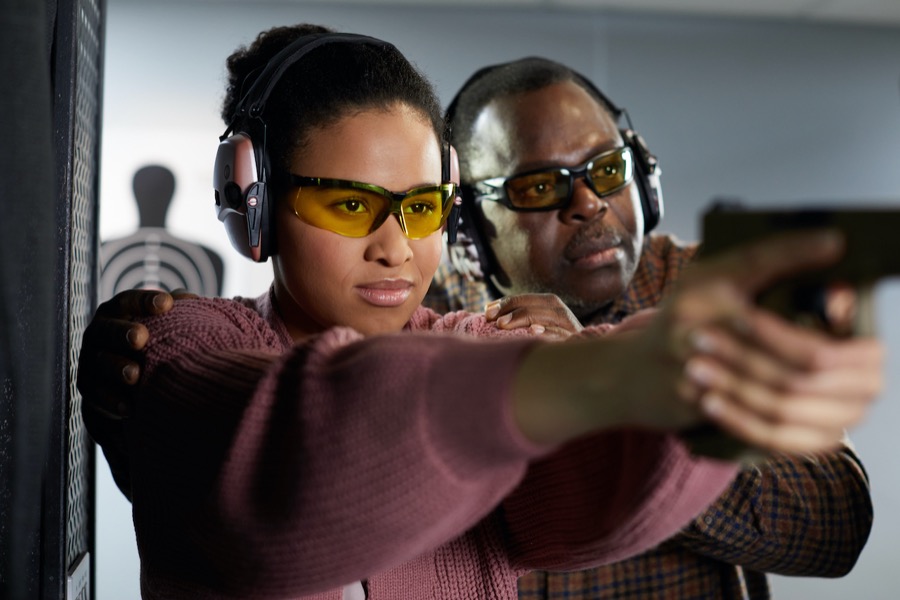
Many shooters spend weeks researching their first firearm, comparing models and prices, yet barely give a thought to their protection gear. They’ll buy a $2,000 pistol but show up to the range with free disposable foam earplugs and a pair of regular sunglasses. This approach might seem like smart budgeting, but it’s actually gambling with your most irreplaceable senses.
Gunfire typically registers between 140 and 170 decibels, while human hearing begins to suffer permanent damage from sustained exposure to just 85 decibels. That means a single gunshot—just one—can inflict irreversible hearing damage. Noise-Induced Hearing Loss and tinnitus from shooting are permanent conditions with no cure. The stakes for your eyes are equally serious: brass fragments, unburnt powder particles, and even ejected casings from neighboring shooters can cause instant eye injuries.
This guide will walk you through every aspect of shooting protection—from ear to eye, from recreational plinking to competitive matches and airsoft games—so you can find the right gear for your needs and budget.
💡 Further reading: Protection gear is a key part of shooting safety. Check out our Shooting Safety Rules Complete Guide for a comprehensive look at safety fundamentals.
How Loud Are Gunshots? Understanding Decibels and Hearing Risk
Before shopping for ear protection, it helps to understand exactly what level of noise threat you’re dealing with. Normal conversation sits around 60 decibels. A busy city street reaches about 80 decibels. A rock concert pushes 110 decibels. Gunfire blows past all of these and enters the range of instant hearing damage.
Different firearms and calibers produce significantly different noise levels. A typical 9mm handgun generates roughly 160 decibels per shot. The .45 ACP is slightly quieter at about 157 decibels. Rifle calibers run higher—a 5.56mm AR-15 can exceed 165 decibels. Indoor ranges are even worse because sound waves bounce off walls and ceilings, amplifying the perceived volume. Even airsoft gas blowback guns, while nowhere near as loud as live firearms, can produce uncomfortable noise levels during sustained fire in enclosed spaces.
Understanding NRR (Noise Reduction Rating) is essential when choosing ear protection. NRR is a standard developed by the U.S. EPA, with higher numbers indicating better noise reduction. However, there’s an important nuance: the labeled NRR doesn’t equal actual real-world protection. According to OSHA’s calculation method, actual noise reduction is roughly the NRR value minus 7, divided by 2. So a set of earmuffs rated NRR 23 only reduces noise by about 8 decibels in practice. This is exactly why single protection often isn’t enough, and why doubling up with earplugs plus earmuffs is so strongly recommended for shooting.
Ear Protection: Safeguarding Your Most Precious Sense
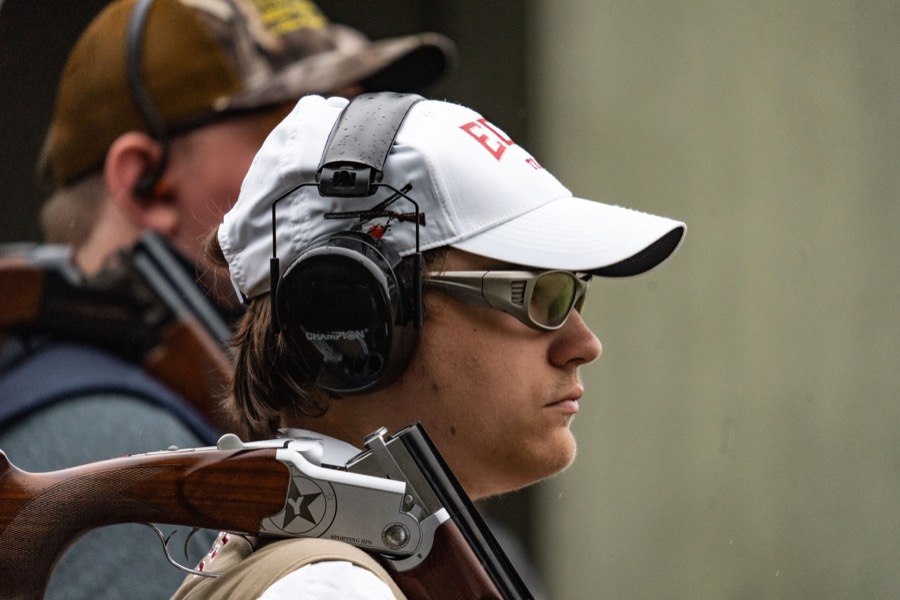
Ear protection is the single most important piece of personal protective equipment in shooting—bar none. You can tolerate uncomfortable glasses or ill-fitting gloves, but you cannot afford to lose your hearing. Ear protection falls into three main categories: passive earplugs, passive earmuffs, and electronic hearing protection.
Passive Foam Earplugs
Foam earplugs are the most basic and affordable ear protection option. The principle is simple—you compress a cylinder of foam, insert it into your ear canal, and the foam expands to create a seal that blocks noise. Quality foam earplugs can achieve NRR ratings of 32-33, which is actually among the highest of any hearing protection device. A pair of 3M E-A-R Classics or Howard Leight MAX foam plugs costs less than a dollar yet delivers top-tier noise reduction.
Proper insertion technique is crucial. Roll the plug into a thin cylinder, then use your opposite hand to pull your ear upward and backward (this straightens the ear canal), and insert the compressed plug deep into the canal. Wait about 15-20 seconds for the foam to fully expand. Most people who complain that foam earplugs don’t work well are simply not inserting them deeply enough or not waiting for full expansion before shooting.
The main drawback of foam earplugs is that they block all sound equally, including conversations with nearby shooters and safety commands from range officers. In competitive settings where you need to hear Range Officer commands, plain foam earplugs alone can be problematic.
Passive Earmuffs
Passive earmuffs are another common option. They fit like headphones over your entire ears, using thick foam cushions and sound-dampening materials to block noise. Good passive earmuffs typically rate between NRR 25-31—slightly lower than top foam earplugs—but they’re much more convenient to put on and take off. Between shooting strings, you can simply slide them down around your neck instead of reinserting earplugs each time.
When choosing passive earmuffs, pay attention to clamping force—too tight causes headaches during extended wear, too loose reduces the seal and noise reduction. Also consider profile height: thick earmuffs can interfere with your cheek weld when shooting rifles or shotguns. If you primarily shoot long guns, look for slim-profile designs.
Electronic Hearing Protection
Electronic hearing protection is the most popular innovation in shooting sports in recent years. External microphones pick up ambient sound and play it through internal speakers in real time, allowing you to hear conversations and commands normally. When the circuit detects sudden loud noise (like a gunshot), it cuts or dramatically reduces the output within milliseconds, protecting your hearing. In other words, you hear everything normally, but gunshots get compressed to safe levels.
Electronic earmuffs are especially popular in competitive shooting because you’ll never miss a Range Officer command. In team shooting activities and airsoft games, they let you communicate naturally with teammates. Some premium models even include Bluetooth connectivity for music streaming or phone calls.
The range of electronic earmuff brands and prices is wide. The entry-level Howard Leight Impact Sport (about $50-60) is one of the best-selling electronic earmuffs worldwide, rated NRR 22, offering basic sound amplification and noise cutoff—an excellent choice for budget-conscious shooters. The mid-range Peltor Sport Tactical 500 (about $90-100) offers NRR 26, better sound quality, and Bluetooth support. The premium MSA Sordin Supreme Pro-X (about $300-350) is the choice of many top competitive shooters, particularly popular in precision rifle circles, with audio quality and directional sound capabilities that entry-level products simply can’t match.
Electronic earplugs are another option, packing electronic protection technology into an earplug form factor. Brands like Axil XCOR, Walker’s Silencer, and Peltor TEP-200 all offer solid products. Electronic earplugs won’t interfere with cheek weld during long gun shooting and are far more comfortable in hot weather than earmuffs. However, battery life is typically shorter, and prices are higher than comparable electronic earmuffs.
Double Protection: The Serious Shooter’s Standard
If you frequently shoot at indoor ranges or fire large-caliber weapons, a single layer of protection likely isn’t enough. NIOSH (National Institute for Occupational Safety and Health) recommends that shooters use double protection—earplugs and earmuffs together. According to OSHA’s calculation method, combined NRR equals the higher device’s NRR plus 5 decibels. For example, NRR 33 foam earplugs paired with NRR 22 electronic earmuffs yield a combined NRR of 38.
Many competitive shooters run foam earplugs underneath electronic earmuffs as their standard setup. The foam plugs provide maximum physical noise reduction, while the outer electronic muffs let you still hear ambient sound and commands. This combination strikes the optimal balance between protection and practicality. During practice days or high-volume shooting sessions, this double protection becomes even more essential.
Eye Protection: Don’t Let a Split Second Change Your Life
Eye protection ranks just behind ear protection in importance. Potential eye hazards during shooting are more numerous than most people realize: powder residue, brass fragments, unburnt powder particles, ejected casings from neighboring shooters, and even spall ricocheting back from steel targets. Wearing ordinary sunglasses to the range is like driving without a seatbelt—it seems fine most of the time, but that one incident can be life-changing.
ANSI Z87.1+ Certification: The Non-Negotiable Standard
The most important factor when buying shooting glasses is confirming ANSI Z87.1+ certification. Note the “+” symbol—it indicates the glasses passed High Impact testing, including withstanding a 500-gram pointed projectile dropped from 50 inches, and a 0.25-inch steel ball fired at 150 feet per second. Only glasses with the “+” designation are suitable for shooting. The European equivalent is EN 166 B/F, while the U.S. military standard MIL-PRF-32432 is even more stringent.
Airsoft players need ANSI Z87.1+ or equivalent certified eye protection as well. BBs travel at 90-150 meters per second, and a direct hit to the eye will cause permanent blindness. Never use uncertified general safety glasses or sunglasses for airsoft.
Lens Colors and Their Applications
Shooting glasses lens colors serve a functional purpose beyond aesthetics—different tints perform better in different lighting conditions. Clear lenses are the most basic choice, ideal for indoor ranges and low-light environments without altering color perception. Yellow or orange lenses enhance contrast, making orange target markings pop in overcast or dim conditions—a favorite among competitive shooters. Gray or smoke lenses suit bright outdoor shooting, functioning like standard sunglasses. Purple or copper lenses perform best in mixed lighting, simultaneously enhancing contrast and reducing glare.
If you compete at various venues, consider purchasing shooting glasses with interchangeable lens systems. This way you need just one frame with several different-colored lenses to handle any scenario. Many brands like Wiley X, Rudy Project, and ESS offer interchangeable lens systems.
Photochromic lenses that automatically adjust tint based on ambient light have become increasingly popular in recent years. While they don’t react as precisely as manual lens swaps, they’re very convenient for shooters who don’t want to carry multiple lenses.
Recommended Shooting Glasses
Beyond safety certification, consider wrap-around coverage, anti-fog capability, and earmuff compatibility when shopping. Thick temple arms can break the seal on earmuffs, reducing ear protection effectiveness. Good shooting glasses feature slim, narrow temples that won’t create gaps when worn with earmuffs.
At the entry level, the ESS Crossbow (about $50) and Oakley SI Ballistic M Frame (about $100) are both extensively proven through military and law enforcement use. Mid-range to advanced shooters can consider the Rudy Project Tralyx (about $150-200) or Hunters HD Gold series ($200+), whose lens technology has earned high praise in competitive shooting circles. For shooters who need prescription correction, many brands offer prescription lens options or dedicated prescription insert frames.
Competition Shooting Protection Requirements
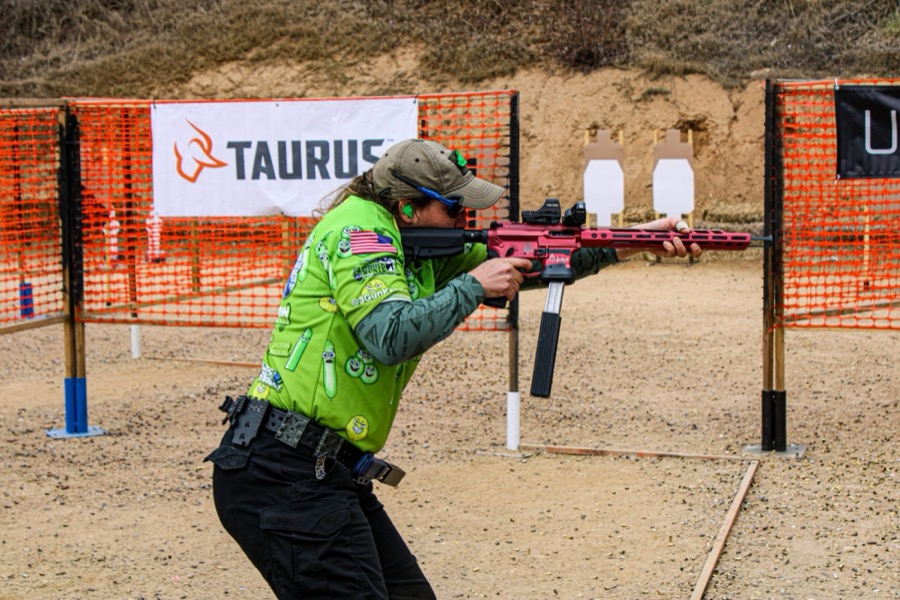
In IPSC, USPSA, and IDPA competitions, eye and ear protection are mandatory. Whether you’re actively shooting or standing as a spectator, you must wear protection at all times within the shooting area. Violations can result in warnings or even match disqualification.
USPSA rules specifically state that if eye or ear protection falls off during a course of fire, that stage will be scored as a reshoot. However, if the Range Officer determines that a competitor deliberately displaced their protection to gain a reshoot, it constitutes Unsportsmanlike Conduct—resulting in immediate match disqualification. This rule underscores that protection isn’t just a safety requirement; it’s an integral part of competitive regulations.
For competitive shooters, electronic earmuffs are practically essential equipment. You need to clearly hear every Range Officer command—“Are You Ready?”, “Standby,” the buzzer, “If You Are Finished, Unload and Show Clear”—and more. Missing commands doesn’t just hurt performance; it can create safety hazards. Many competitors run foam earplugs under electronic earmuffs for double protection, maximizing hearing safety while maintaining full awareness of commands.
For eye protection, competition rules require industrial safety glasses or proper shooting glasses—regular sunglasses may not be accepted at some matches. Yellow or orange lenses are particularly popular in competition because they enhance the contrast between scoring zones on targets, making it easier to distinguish A-zone and C-zone boundaries during rapid fire.
💡 Further reading: If you’re interested in competitive shooting, check out our IPSC Training Guide, USPSA Beginner Guide, and IDPA Training Guide.
Airsoft Protection Requirements
Airsoft protection needs differ from live-fire shooting but are equally non-negotiable. While BBs won’t cause the same type of injuries as real bullets, they travel at 90-150 meters per second and will cause pain and bruising on bare skin, with direct eye hits causing permanent damage. Airsoft protection priorities focus on comprehensive eye coverage and facial protection, with hearing protection being less critical than in live-fire shooting.
Eye protection is the highest priority in airsoft. Full-seal goggles provide the best protection by completely enclosing the eye area, preventing BBs from entering at any angle. The downside is fogging, especially in hot and humid environments. Low-profile goggles offer better field of view and comfort but require verification of adequate sealing. Regardless of style, always confirm ANSI Z87.1+ or equivalent certification. Avoid using mesh goggles as your only eye protection—BBs can shatter on impact with metal mesh, and fragments may pass through the openings to injure your eyes.
Facial protection is also important, particularly in CQB indoor fields. A lower-face mask protects your teeth and cheeks—incidents of BBs knocking out teeth are not uncommon. Full-face masks or helmet-and-mask combinations provide the most complete coverage. Anti-fog treatment is a major consideration when shopping for airsoft eye protection: anti-fog coatings, dual-pane lenses, and fan-equipped goggles are all effective solutions.
💡 Further reading: For more airsoft gear information, see our Airsoft Gear Guide and CQB Tactics Guide.
Using a Shot Timer with Protection Gear
When training with a Shot Timer App, your choice of ear protection directly affects the timer experience. Shot timers rely on microphones to detect gunfire and record split times—your ear protection won’t affect the phone or timer’s audio pickup. However, if you’re using a shot timer with electronic earmuffs at an indoor range, the earmuffs’ sound-cutoff function may prevent you from clearly hearing each shot’s feedback during rapid strings, potentially affecting your sense of rhythm.
During dry fire training with a shot timer, ear protection typically isn’t necessary, but maintaining the habit of wearing eye protection is still good practice. Even in dry fire, wearing the same protection you’d use in competition helps you acclimate to the weight and field-of-view limitations, ensuring no surprises on match day. This attention to detail is something many top shooters emphasize—training conditions should mirror competition conditions as closely as possible.
If you’re using a shot timer in airsoft training, the AirsoftShotTimer App’s FFT frequency-domain analysis and wind noise filtering can accurately detect firing sounds across various environmental conditions. When used with electronic earmuffs, you can clearly hear the buzzer start signal and team communications throughout your training sessions.
Budget-Based Protection Combos
If you’re new to shooting, you don’t need to buy the most premium gear right away. A basic but properly certified set of protection is infinitely more useful than expensive equipment sitting unused at home.
The budget option runs about $60-80. For ears, pair a Howard Leight Impact Sport electronic earmuff with a bag of foam earplugs. For eyes, grab a set of ESS Crossbow shooting glasses. Every piece in this combo meets proper certification standards and will handle recreational shooting and entry-level competitions just fine.
The mid-range option costs about $150-250. Upgrade your ears to a Peltor Sport Tactical 500 electronic earmuff (with Bluetooth) paired with quality molded silicone earplugs for the inner layer. For eyes, go with an Oakley SI or Wiley X model with interchangeable lenses. This tier offers noticeably better comfort and functionality, well-suited for regular shooters and competitors.
The premium option runs $350 and up. For ears, choose MSA Sordin Supreme Pro-X or equivalent electronic earmuffs with custom-molded silicone earplugs. For eyes, select Rudy Project or Hunters HD Gold series shooting glasses with multiple lens tints. This level delivers the best audio quality, most comfortable fit, and finest optical performance—built for dedicated competitive shooters.
Maintenance and Replacement
Ear protection requires regular cleaning and inspection. Electronic earmuff ear cushions are consumable items—replace them when they become stiff, cracked, or lose elasticity, typically every 6 to 12 months. Deteriorated cushions reduce seal quality, directly impacting noise reduction. Most brands sell replacement cushions, and swapping them is usually straightforward. Check electronic earmuff batteries regularly, and develop the habit of turning them off after each use to extend battery life.
Foam earplugs are single-use items—never reuse them. After use, earplugs accumulate oils and debris from the ear canal. Reusing them not only reduces seal effectiveness but can also lead to ear infections. Fortunately, foam earplugs are extremely affordable: buy a bulk box, keep it in your range bag, and use a fresh pair every session.
Inspect shooting glasses lenses regularly for scratches. Heavily scratched lenses don’t just impair vision—they also reduce structural integrity, making them more likely to shatter on impact. Clean lenses with a dedicated microfiber cloth and lens cleaning solution; avoid using shirt corners or tissues, which may contain microscopic particles that scratch lens coatings.
Frequently Asked Questions
Q1: Are foam earplugs enough for indoor range shooting?
While foam earplugs have high NRR ratings, the reflected noise at indoor ranges is very intense. Double protection with foam earplugs plus earmuffs is strongly recommended, especially when shooting near large-caliber firearms.
Q2: Can electronic earmuffs react fast enough for gunshots?
Modern electronic earmuffs have response times of 1-2 milliseconds, far faster than the time it takes for sound to reach your ears. Speed isn’t a concern. However, lower-quality products may experience audio distortion during rapid consecutive shots (like full-auto or fast trigger pulls).
Q3: I wear prescription glasses—can I still use shooting eyewear?
Yes. Many shooting glasses brands offer prescription lens options, and dedicated prescription insert frames are available for many goggles. Another option is wearing contact lenses with standard shooting glasses. If your everyday glasses meet ANSI Z87.1+ standards they can work, but most prescription eyewear doesn’t meet this rating.
Q4: Are mesh goggles safe for airsoft?
Not recommended as your sole eye protection. While mesh goggles don’t fog up, BBs can shatter on impact with the metal mesh, and fragments may pass through the openings. If fogging is a major concern, wear a pair of ANSI Z87.1+ safety glasses behind mesh goggles.
Q5: Is higher NRR always better for ear protection?
Higher NRR does mean better noise reduction, but practicality matters too. Excessive noise reduction can prevent you from hearing ambient sound and safety commands. For most shooting scenarios, NRR 22-33 is adequate. For indoor ranges or large-caliber shooting, doubling up is more effective than chasing the highest possible single-device NRR.
Q6: How long do electronic earmuff batteries last?
This varies by brand and usage patterns. Most AAA-powered electronic earmuffs last 200-500 hours. Rechargeable models typically provide 20-40 hours per charge. Always carry spare batteries, especially on match days.
Q7: What happens if my protection falls off during a competition?
In IPSC/USPSA matches, if eye or ear protection falls off during a course of fire, the stage is scored as a reshoot. Ensuring your protection stays secure before starting is your responsibility. Properly fitted gear and retainer straps can prevent this issue.
Q8: Do children need special shooting protection?
Yes. Children have smaller ear canals, and adult foam earplugs may not seal properly. Use child-specific small-size earplugs or youth earmuffs designed with lighter clamping force for smaller heads. Double protection (earplugs plus earmuffs) is strongly recommended when bringing children to the range.
Conclusion
Shooting protection gear may not be as exciting as a new pistol or optic, but it’s the most important investment in your shooting career. A quality firearm can last decades, but lost hearing and vision are gone forever. Choosing properly certified gear, wearing it correctly, and replacing consumables on schedule—these simple steps let you enjoy shooting while keeping yourself safe.
Whether you’re at the range for practice, competing in IPSC/USPSA matches, or playing airsoft with friends on the weekend, make it a habit to check your protection before every session. Protection gear is like a seatbelt—unremarkable most of the time, but when it matters, it’s the last line of defense between you and permanent injury.
Related Articles
- Shooting Safety Rules Complete Guide
- Shot Timer App Complete Guide
- IPSC Practical Shooting Training Guide
- USPSA Practical Shooting Beginner Guide
- IDPA Defensive Shooting Training Guide
- Airsoft Gear Complete Guide
- Airsoft CQB Tactics Guide
- Shooting Protection
- Ear Protection
- Eye Protection
- NRR
- Electronic Earmuffs
- Shooting Glasses
- ANSI Z87.1
- IPSC
- USPSA
- IDPA
- Airsoft
- Range Safety