Complete Guide to Pistol Shooting Stances: Isosceles, Weaver, and Modern Fighting Stance
Why Is Shooting Stance So Important?
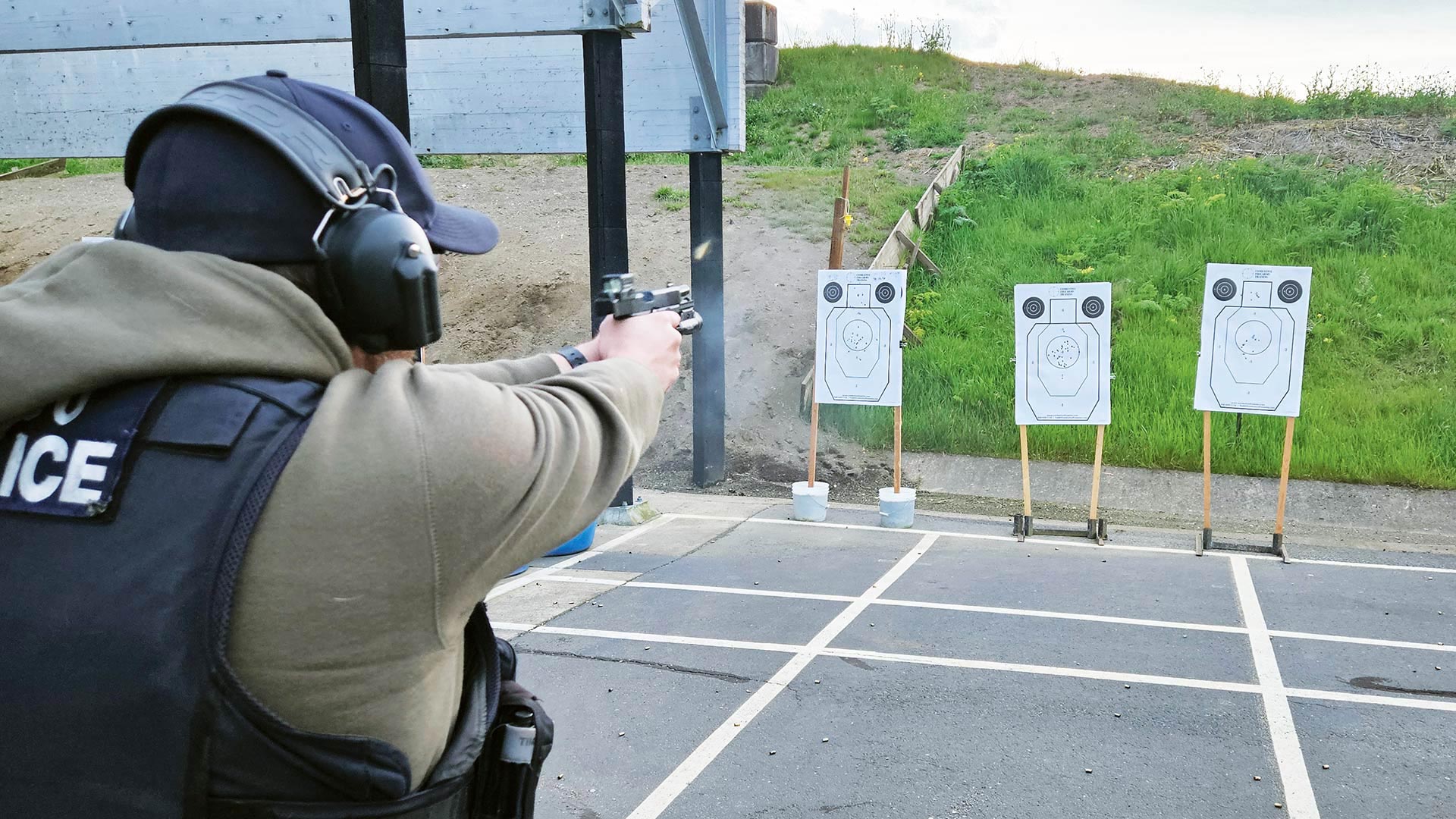
Shooting stance is the foundation of pistol shooting, directly affecting your accuracy, shooting speed, and recoil control. A proper shooting stance allows you to:
- Quickly acquire sight alignment and maintain stability
- Effectively absorb and control recoil
- Maintain consistency across multiple shots
- Rapidly transition between targets and move
- Reduce fatigue and extend training sessions
Many new shooters overlook the importance of stance, jumping straight into trigger control and aiming, resulting in slow progress and bad habits. A correct shooting stance is the cornerstone of all advanced techniques.
“Your stance is like the roots of a tree—without a solid foundation, even light recoil can knock you off balance.”
The Three Classic Shooting Stances
The shooting community has developed several classic stances, each with unique characteristics and applications. Let’s explore the three most important ones.
1. Isosceles Stance
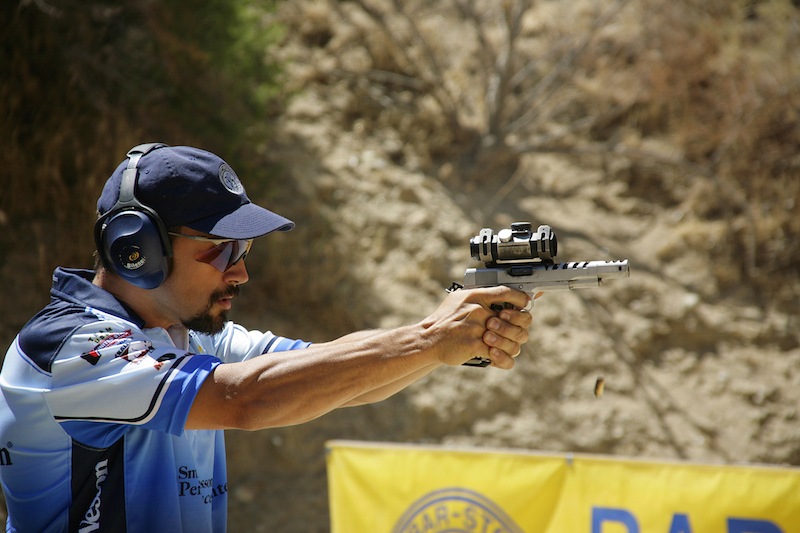
The Isosceles Stance is the most widely used shooting stance today and the preferred choice for many shooters.
Basic Technique
-
Foot Position
- Feet shoulder-width apart or slightly wider
- Toes pointing toward the target
- Knees slightly bent for flexible support
-
Center of Gravity
- Body weight slightly forward
- About 60-70% of weight on the balls of your feet
- Maintain a “nose over toes” posture
-
Arm Extension
- Both arms extended forward
- Arms form an isosceles triangle (hence the name)
- Shoulders rolled slightly forward
-
Head Position
- Head remains upright
- Both eyes focused on the target
- Wide peripheral vision
Advantages
- Easy to Learn: The most natural and intuitive stance
- Lateral Stability: Excellent stability for side-to-side movement
- Peripheral Vision: Face-on to target maximizes visual field
- Body Armor Compatibility: Presents maximum armor coverage to threat
- Natural Under Stress: Research shows 78.6% of law enforcement officers naturally adopt isosceles under high stress
Disadvantages
- Weak Front-to-Back Balance: With feet parallel, balance is compromised in the forward-backward direction
- Recoil Absorption: Recoil control is less effective than other stances with full-power ammunition
Best Applications
- IPSC/USPSA competitive shooting
- Indoor range practice
- Beginner training
- Officers wearing body armor
2. Weaver Stance
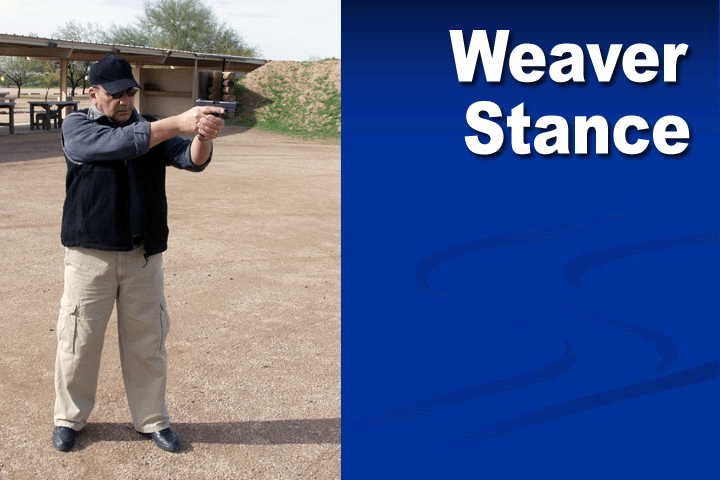
The Weaver Stance was invented by Los Angeles County Sheriff Jack Weaver in the 1950s and is the ancestor of all modern two-handed shooting positions.
Basic Technique
-
Foot Position
- Adopt a bladed stance
- Strong-side foot (dominant hand side) stepped back
- Support-side foot forward, toes pointing at target
- Similar to a boxer’s fighting stance
-
Body Angle
- Body at approximately 45 degrees to target
- Side-facing the target
- Weight on the balls of your feet
-
Arm Position
- Strong arm mostly extended (but not locked)
- Support arm bent, elbow pointing down
- Creates a “push-pull” tension system
-
Push-Pull Grip
- Strong hand “pushes” the gun forward
- Support hand “pulls” the gun back
- These opposing forces create stability
Advantages
- Push-Pull System: Unique tension effectively controls recoil
- Reduced Exposure: Bladed stance minimizes body exposure
- Target Transitions: Unlocked elbows allow faster pivoting to side targets
- Quick Presentation: Fast sight acquisition
Disadvantages
- Poor Armor Compatibility: Side-facing exposes unprotected areas
- Movement Difficulty: Maintaining bladed position while moving is awkward
- Muscle Dependent: Requires upper body strength for push-pull tension
- Learning Curve: Requires more practice than isosceles to master
Best Applications
- Tactical environments (with cover)
- Situations requiring reduced body exposure
- Shooters who prefer traditional techniques
- IDPA defensive shooting
Jack Weaver famously said, “A pretty quick hit is better than a lightning-fast miss.”
3. Chapman / Modified Weaver Stance
The Chapman Stance is an improved version of the Weaver, combining the advantages of both stances.
Basic Technique
-
Foot Position
- Same as Weaver: bladed stance
- Strong-side foot back
- Knees slightly bent
-
Arm Position
- Strong arm fully extended and locked
- Support arm bent for support
- This is the main difference from Weaver
-
Recoil Absorption
- Locked strong arm transfers recoil to upper body and shoulders
- Body mass helps absorb energy
Advantages
- Better Recoil Control: Locked arm absorbs recoil more effectively than bent arm
- Less Muscle Dependent: No need to maintain constant push-pull tension
- Better for Large Calibers: More comfortable with .44 Magnum and similar
- Best of Both Worlds: Retains bladed stance benefits while improving recoil control
Best Applications
- Shooting large-caliber handguns
- Shooters with less upper body strength
- Those who like Weaver but want better recoil control
Modern Fighting Stance
The Modern Fighting Stance is currently the most recommended stance in the shooting community, combining the best elements of Isosceles and Weaver. It was developed by competitive shooting legends Brian Enos and Rob Leatham.
Basic Technique
-
Foot Position
- Feet slightly wider than shoulder-width
- Strong-side foot stepped back slightly (about half a foot length)
- Support-side foot toe pointing at target
- Strong-side foot toe pointing about 45 degrees to the side
-
Body Position
- Face the target (like isosceles)
- Knees slightly bent for flexibility
- Hips pushed slightly forward
- Upper body leaning slightly forward
-
Arm Extension
- Both arms extended forward
- Elbows slightly bent (not fully locked)
- Shoulders rolled forward, creating a “diving” posture
-
Weight Distribution
- Like preparing to push a car
- Weight on balls of feet
- Ready to absorb recoil
Why Is the Modern Fighting Stance Most Recommended?
| Feature | Isosceles | Weaver | Modern Fighting |
|---|---|---|---|
| Learning Difficulty | Easy | Medium | Easy |
| Recoil Control | Medium | Good | Excellent |
| Moving & Shooting | Good | Difficult | Excellent |
| Target Transitions | Good | Good | Excellent |
| Armor Compatibility | Best | Poor | Good |
| Front-Back Stability | Poor | Good | Excellent |
| Lateral Stability | Excellent | Good | Excellent |
The Modern Fighting Stance has no significant disadvantages. It eliminates the main problems of both Isosceles and Weaver, becoming the mainstream choice for today’s shooting training.
Proper Grip Technique
Stance is just the foundation—grip technique is equally important.
Basic Principles of Two-Handed Grip
1. Strong Hand Grip
-
Grip Height
- Web of hand as high as possible toward barrel axis
- Backstrap should fully contact the heel of your palm
- Higher grip means less muzzle flip
-
Finger Position
- Middle, ring, and pinky fingers grip the frame tightly
- Thumb naturally rests along the side of the slide
- Index finger straight along the frame (when not shooting)
-
Grip Pressure Distribution
- Grip pressure mainly from the bottom three fingers
- About 70% of total grip strength
2. Support Hand Grip
-
Placement
- Support hand fingers wrap around strong hand fingers
- No gaps should remain
- Support palm fills all available space on the grip
-
Thumb Position
- Support thumb lies flat below strong hand thumb
- Both thumbs parallel, pointing forward
- Never place thumb behind the slide
-
Grip Pressure Distribution
- Support hand provides about 30% of total grip
- Primary function is filling space and adding stability
Common Grip Mistakes
Mistake 1: Tea Cup Grip
What it looks like: Support hand cupping under the magazine
Why it’s wrong: Support hand provides almost no stability—essentially one-handed shooting
Fix: Support hand should wrap around the side of the grip, not underneath
Mistake 2: Support Hand Too Low
What it looks like: Support hand positioned lower than the strong hand
Why it’s wrong: Creates gaps that allow the gun to shift during recoil
Fix: Support hand should grip as high as possible, filling all space
Mistake 3: Thumb Behind the Slide
What it looks like: Either thumb placed behind the slide
Why it’s wrong: Slide will cut or pinch the thumb when cycling
Fix: Both thumbs always on the side of the slide
Mistake 4: Limp Wristing
What it looks like: Loose wrist that doesn’t resist recoil
Why it’s wrong: Causes severe muzzle flip and can cause malfunctions
Fix: Keep wrists locked, transferring recoil to arms and body
Common Stance Mistakes
Mistake 1: Leaning Back
Symptom: Shooter fears recoil and leans body backward
Problems:
- Weight on heels, extremely poor stability
- Recoil pushes body further back
- Cannot effectively control muzzle flip
Fix:
- Adopt “nose over toes” forward-leaning posture
- Imagine preparing to absorb a pushing force
- Keep weight on balls of feet
Mistake 2: Locked Knees
Symptom: Both legs fully extended, knees locked
Problems:
- Cannot absorb recoil
- Stiff and inflexible during movement
- Fatigues quickly
Fix:
- Keep knees slightly bent
- Like a pre-jump position
- Knees act as shock absorbers
Mistake 3: Over-Extended Arms
Symptom: Arms fully straightened to hyperextension
Problems:
- Muscles fatigue rapidly
- Excessive stress on joints
- Cannot maintain stable aim
Fix:
- Extend arms to natural stopping point
- If elbows start rotating inward, you’ve gone too far
- Keep slight bend in arms
Mistake 4: Over-Tensing
Symptom: Entire body tense, death-gripping the gun
Problems:
- Muscle tremors transfer to gun
- Rapid fatigue
- Movements become stiff
Fix:
- Learn to relax
- Grip should be firm but not rigid
- “Firm without stiffness” is the goal
Special Shooting Positions
One-Handed Shooting
When one hand is injured or occupied, single-hand shooting is necessary.
Strong Hand Only
- Body slightly turned to reduce exposure
- Arm extended but not locked
- Wrist remains locked
- Grip tighter than two-handed
Support Hand Only
- Requires extensive practice to master
- May need to tilt head to align with dominant eye
- Target time typically 150% of strong hand
Kneeling Positions
Used to lower profile or utilize low cover.
Single Knee Down
- Strong-side knee on ground
- Support-side leg forward for stability
- Upper body maintains same position as standing
- Can rest elbow on forward knee for stability
Both Knees Down
- Both knees on ground
- Buttocks can rest on heels
- Lowest shooting position
- Least mobile
Cover Shooting
Common in IPSC/IDPA competition.
Key Points
- Minimize body exposure
- Only expose what’s needed for aiming
- Quick lean out, shoot, retreat
- Practice both left and right side cover shooting
Shooting Stance Training Plan
Beginner (Weeks 1-4)
Daily training 15-20 minutes
| Activity | Time | Focus |
|---|---|---|
| Dry stance practice | 5 min | Build proper body memory |
| Grip practice | 5 min | Ensure correct hand position |
| Presentation | 5 min | From ready to aim |
| Mirror check | 5 min | Confirm correct posture |
Weekly Goals:
- Week 1: Familiarize with modern fighting stance
- Week 2: Confirm correct grip technique
- Week 3: Begin incorporating draw stroke
- Week 4: Smooth draw-to-aim sequence
Intermediate (Weeks 5-12)
Daily training 20-30 minutes
| Activity | Time | Focus |
|---|---|---|
| Draw training | 10 min | Record with Shot Timer |
| Moving stance | 10 min | Maintain upper body stability |
| Position transitions | 5 min | Standing to kneeling |
| Cover shooting | 5 min | Both sides |
Using AirsoftShotTimer:
- Record draw to first shot time
- Beginner target: Under 2.0 seconds
- Intermediate target: Under 1.5 seconds
Advanced (Week 13+)
Daily training 30-45 minutes
| Activity | Time | Focus |
|---|---|---|
| Stress training | 15 min | Shooting after physical exertion |
| Weak hand training | 10 min | Well-rounded development |
| Complex drills | 10 min | Movement + cover + shooting |
| Speed work | 10 min | PAR time training |
Advanced Goals:
- Draw to first shot: Under 1.0 second
- Maintain stance consistency under all conditions
- Stable performance under pressure
Frequently Asked Questions (FAQ)
Q1: Which shooting stance is best?
A: There’s no “best” stance, but the Modern Fighting Stance is currently the most recommended. It combines the advantages of Isosceles and Weaver while eliminating their respective disadvantages, suitable for most situations.
Q2: Which stance should beginners learn first?
A: We recommend starting with the Modern Fighting Stance. It’s relatively easy to learn and builds a solid foundation. We don’t recommend starting with pure Isosceles (insufficient stability) or pure Weaver (too complex).
Q3: Does stance affect shooting accuracy?
A: Yes, significantly. Poor stance causes:
- Inadequate recoil control
- Point of aim drift during rapid fire
- Rapid fatigue
- Inability to shoot stable while moving
Q4: How much time should I spend practicing stance?
A: In the early stages of shooting training, we recommend spending over 50% of your time on stance and grip practice. Once these fundamentals are solid, improvements in accuracy and speed will come much faster.
Q5: Can I practice shooting stance with airsoft guns?
A: Absolutely! Benefits of airsoft training:
- Low cost
- Can practice at home
- Handling similar to real firearms
- Quantify progress with AirsoftShotTimer
Related reading: Complete Guide to Dry Fire Training - Home practice for shooting skills
Q6: Do tall or short shooters need to adjust their stance?
A: Basic principles remain the same, but minor adjustments can help:
- Tall shooters may need wider stance
- Short shooters may need more forward lean
- The key is finding your Natural Point of Aim
Conclusion
Shooting stance is the foundation of all shooting techniques. Whether you want to compete in IPSC/IDPA or simply enjoy shooting, proper stance will help you achieve better results with less effort.
Key Takeaways
- Modern Fighting Stance is the most recommended, combining stability and flexibility
- Grip technique is as important as stance—avoid common mistakes
- Forward lean, soft knees, relaxed but firm are core stance principles
- Use AirsoftShotTimer to record training data and quantify progress
- Consistent practice matters more than any technique
Next Steps
- Practice modern fighting stance in front of a mirror
- Check that your grip is correct
- Start recording draw times with AirsoftShotTimer
- Practice 15-30 minutes daily
- Periodically record video to review your stance
Correct Stance + Consistent Training = Rapid Improvement in Shooting Skills!
Happy training!
Related Articles
Training Guides
- Complete Guide to Dry Fire Training - Home practice for shooting skills
- Complete Guide to Shot Timers - Track progress with data
- Complete Guide to Magazine Reloads - Master reload techniques
Competitive Shooting
- IPSC Practical Shooting Training Guide - Core competitive shooting techniques
- IDPA Defensive Shooting Training Guide - Tactical-oriented training
- IPSC Match Procedure Guide - Complete competition preparation
Pistol Guides
- Glock 17 Training Guide - Classic pistol training
- CZ Shadow 2 Complete Guide - Top competitive pistol
- SIG P320 Complete Guide - Modular pistol training
Beginner Guides
- Complete Beginner’s Guide to Airsoft - Start your Airsoft journey
- Shooting Stance
- Weaver Stance
- Isosceles Stance
- Shooting Training
- IPSC
- IDPA
- Pistol Training
- Handgun Grip