Tokyo Marui VSR-10 Complete Guide: Version Differences, Upgrade Path & Sniper Training Methods
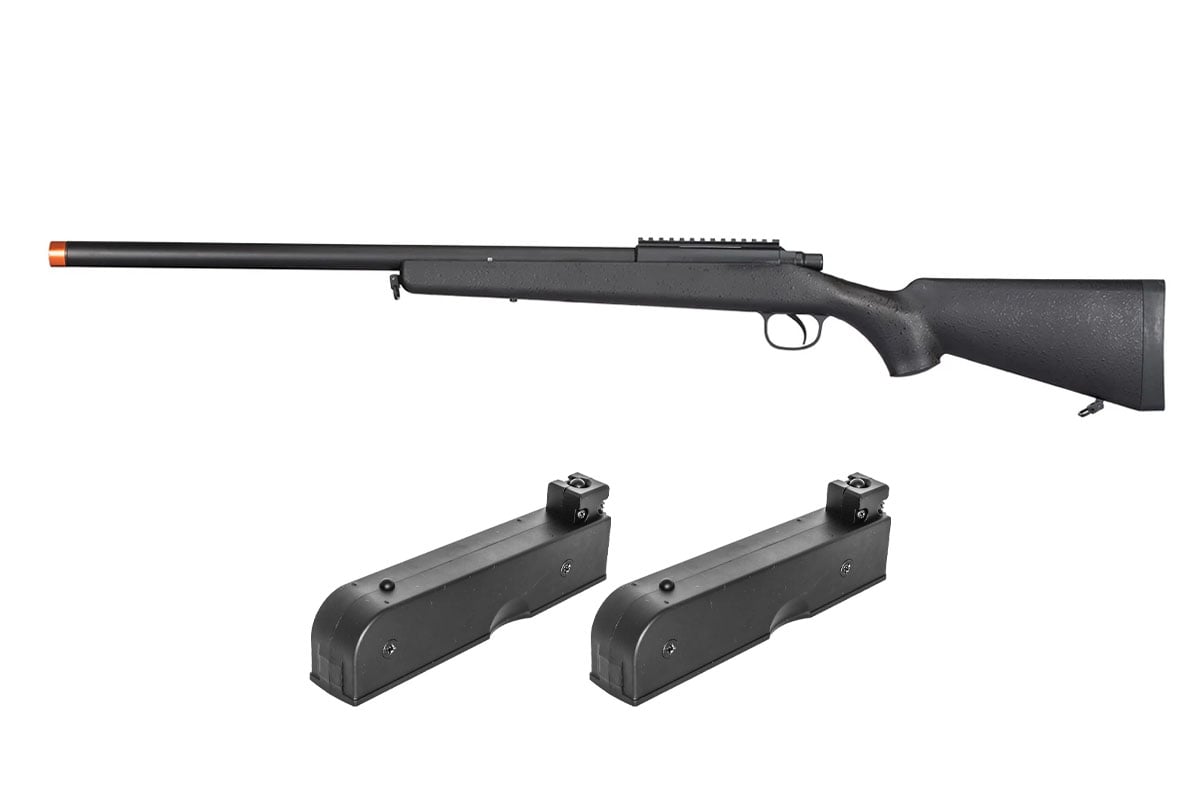
Why Is the VSR-10 a Name Every Sniper Can’t Avoid?
Walk into any airsoft shop and tell the staff you want to buy a sniper rifle, and they’ll almost instinctively ask: “Have you considered a VSR-10?” It’s not that they’re lazy — it’s because ever since Tokyo Marui released this bolt-action sniper rifle in late 2003, it has become the cornerstone of the entire airsoft sniper ecosystem. Over twenty years later, dozens of aftermarket manufacturers from Action Army to Maple Leaf to Springer Custom Works all design their parts around VSR-10 internal specifications. It’s like how phone case makers always produce iPhone cases first — because that’s where the largest user base is.
But the VSR-10’s appeal goes far beyond parts availability. The first time you cycle the bolt, that impossibly smooth action becomes instantly addictive. Tokyo Marui’s machining precision brings the metal components into such perfect alignment that there’s no scraping, no stuttering — just a clean, satisfying mechanical glide every single time. Unlike some high-FPS spring snipers that require serious arm strength to cock, the stock VSR-10 hits that sweet spot — light enough to cycle one-handed, yet with enough tactile feedback to let you know the spring is compressed and ready to fire.
This guide will take you through every VSR-10 variant, its real-steel origins, a complete upgrade roadmap, and how to use a Shot Timer to train the most critical sniper skills. Whether you’re considering your first sniper rifle or looking to push an existing VSR-10 to its limits, you’ll find what you need here.
Remington 700: The Real Steel Legend Behind the VSR-10
The VSR-10’s exterior design draws from the Remington Model 700, one of the most iconic bolt-action rifles in firearms history. When Remington introduced the Model 700 in 1962, it was simply a civilian rifle aimed at hunters and target shooters. But its clean, robust, and exceptionally accurate bolt mechanism quickly caught the military’s attention.
In 1966, the U.S. Marine Corps developed the M40 sniper rifle based on the Model 700, and it served from Vietnam all the way through Iraq and Afghanistan. In 1988, the U.S. Army followed with the M24 Sniper Weapon System, also built on the Model 700 action. These two military sniper platforms accumulated countless combat records across dozens of conflicts worldwide, cementing the Remington 700’s reputation as synonymous with precision shooting. Beyond the U.S. military, over forty countries’ military and law enforcement agencies have adopted various Model 700 derivatives, from the FBI’s Hostage Rescue Team to the Israeli Defense Forces’ sniper units.
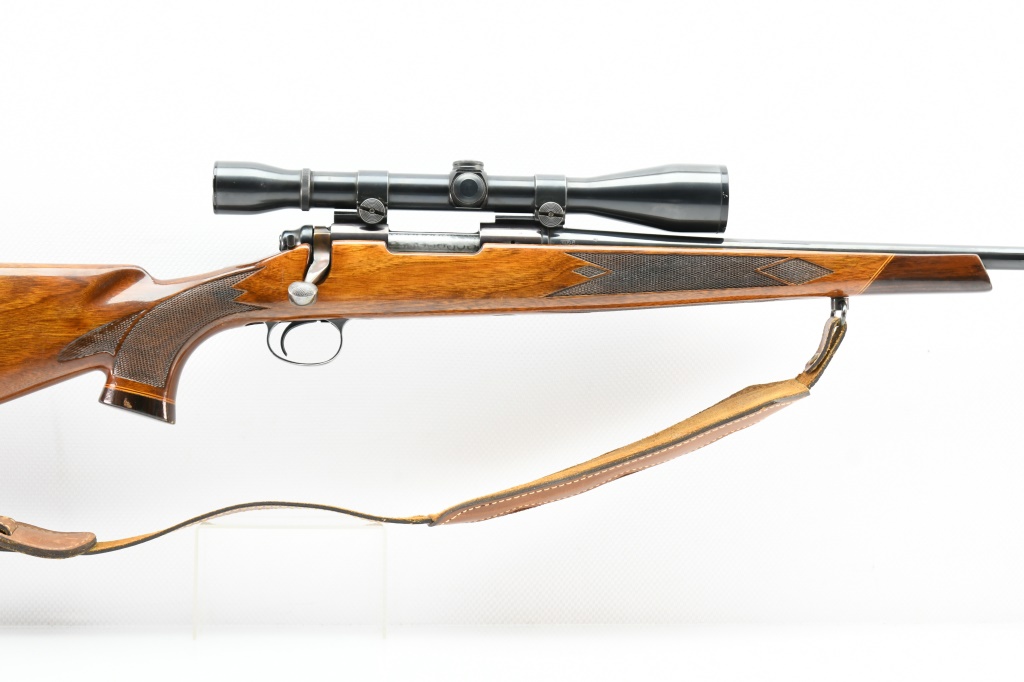
The Model 700’s enduring success comes down to its bolt mechanism — dual locking lugs, a short throw, and a rock-solid cylindrical receiver that gives shooters a sense of precise mechanical reliability with every cycle. This “simple but perfected” design philosophy was faithfully translated into the VSR-10 by Tokyo Marui. While the airsoft version doesn’t need to withstand real chamber pressures, the smooth yet deliberate bolt feel genuinely evokes the quality of operating a real firearm. For players who enjoy taking on the sniper role in MilSim events, this “feels like operating a real Remington 700” experience is one of the VSR-10’s most irreplaceable qualities.
VSR-10 Version Breakdown: Pro Sniper, G-Spec, Real Shock & VSR-ONE
Over two decades, Tokyo Marui has released several VSR-10 variants, each tailored to different use cases. Newcomers often get confused by all the version names, but the core system is identical across all of them — the differences lie mainly in external configuration and minor details.
The Pro Sniper is the classic full-length version and what most people picture when they hear “VSR-10.” It features a 430mm inner barrel, a traditional wood-grain ABS stock, and measures about 1,135mm overall at 2,090g. The proportions faithfully reproduce the Remington 700 silhouette, making it the standard answer if you’re after that elegant, traditional sniper rifle look. The 30-round magazine sits flush beneath the stock without breaking the sleek profile.
The G-Spec is the most popular version in the VSR-10 family, and my personal recommendation for newcomers. It shortens the inner barrel to 303mm with a correspondingly shorter outer barrel, then adds a detachable suppressor to the muzzle. With the suppressor installed, overall length is about 950mm — roughly 20cm shorter than the Pro Sniper. That difference is very noticeable in the field: moving through dense brush, threading through undergrowth, or peeking around cover, the shorter profile makes you quicker and less exposed. The suppressor isn’t just cosmetic either — it genuinely reduces the report, providing a real tactical advantage for snipers who depend on concealment. The G-Spec also swaps the wood-grain stock for a matte black or OD green finish with a more modern tactical appearance.
The Real Shock version looks virtually identical to the Pro Sniper but adds lead weights around the piston. This extra mass creates a more noticeable vibration when you cycle the bolt and fire, simulating real-steel recoil feedback. Honestly, the effect is subtle — nothing like GBB handgun recoil, more of a muted “thud.” If you value an immersive firing experience, the Real Shock adds a nice touch of ceremony; from a pure performance perspective, it’s identical to the Pro Sniper.
The VSR-ONE, released in March 2024, is the youngest member of the family and Tokyo Marui’s answer to “what would a modern VSR-10 look like.” It retains the proven VSR-10 internals but completely overhauls the exterior — a folding stock, a separate M4-style pistol grip (swappable), M-LOK slots, and Picatinny rails along the chassis. With the stock folded, it’s only 614mm long; extended, 800mm — even more compact than the G-Spec. The 200mm short inner barrel means slightly lower FPS than other versions, but at most indoor or mid-range fields this isn’t an issue. The VSR-ONE clearly targets players who prefer a tactical aesthetic and want a rapidly deployable compact sniper platform. An April 2025 Gold Edition added gold accents to the muzzle, bolt, trigger, and stock for a striking look.
| Version | Inner Barrel | Overall Length | Weight | Key Feature |
|---|---|---|---|---|
| Pro Sniper | 430mm | 1,135mm | 2,090g | Classic full-length, traditional sniper aesthetic |
| G-Spec | 303mm | ~950mm (w/ suppressor) | 1,900g | Short barrel + suppressor, most popular version |
| Real Shock | 430mm | 1,135mm | 2,300g | Added weights simulate recoil feedback |
| VSR-ONE | 200mm | 614mm / 800mm | 2,100g | Folding stock, M-LOK, modern tactical style |
Hands-On Feel: The Art of the Bolt Pull
No matter which version you choose, your first experience operating a VSR-10 will leave an impression. Picking up the rifle, the roughly two-kilogram weight distributes evenly — no front-heavy awkwardness. The ABS stock feels better than you’d expect — the matte surface has an almost rubberized texture that provides a secure grip even with sweaty palms.
But the real highlight is the bolt pull. Press your thumb against the bolt knob, rotate up to unlock, then pull back — the entire stroke covers about 10 centimeters, gliding as if the parts were separated by silk. Push it forward again, and the bolt slides into lockup with a crisp “click” — clean, definitive, with zero wobble or extraneous noise. This feel is something many other brands’ bolt-action rifles can’t match, including some that cost significantly more. Some players joke that they didn’t buy the VSR-10 for games — they bought it purely because cycling the bolt is therapeutic. You won’t understand until you’ve tried it yourself.
Stock FPS with 0.20g BBs runs approximately 270-290 FPS. With heavier 0.28g or 0.30g BBs and proper Hop-Up adjustment, effective range reaches about 50-60 meters. This is respectable under Japanese power limits, but if you’re playing overseas, many opponents’ AEGs may actually chrono higher than your sniper rifle. This is exactly why most VSR-10 owners eventually go down the upgrade path — the stock accuracy and consistency provide a solid foundation that just needs a few key improvements to transform from “decent” into “the most accurate rifle on the field.”
The Complete Upgrade Roadmap
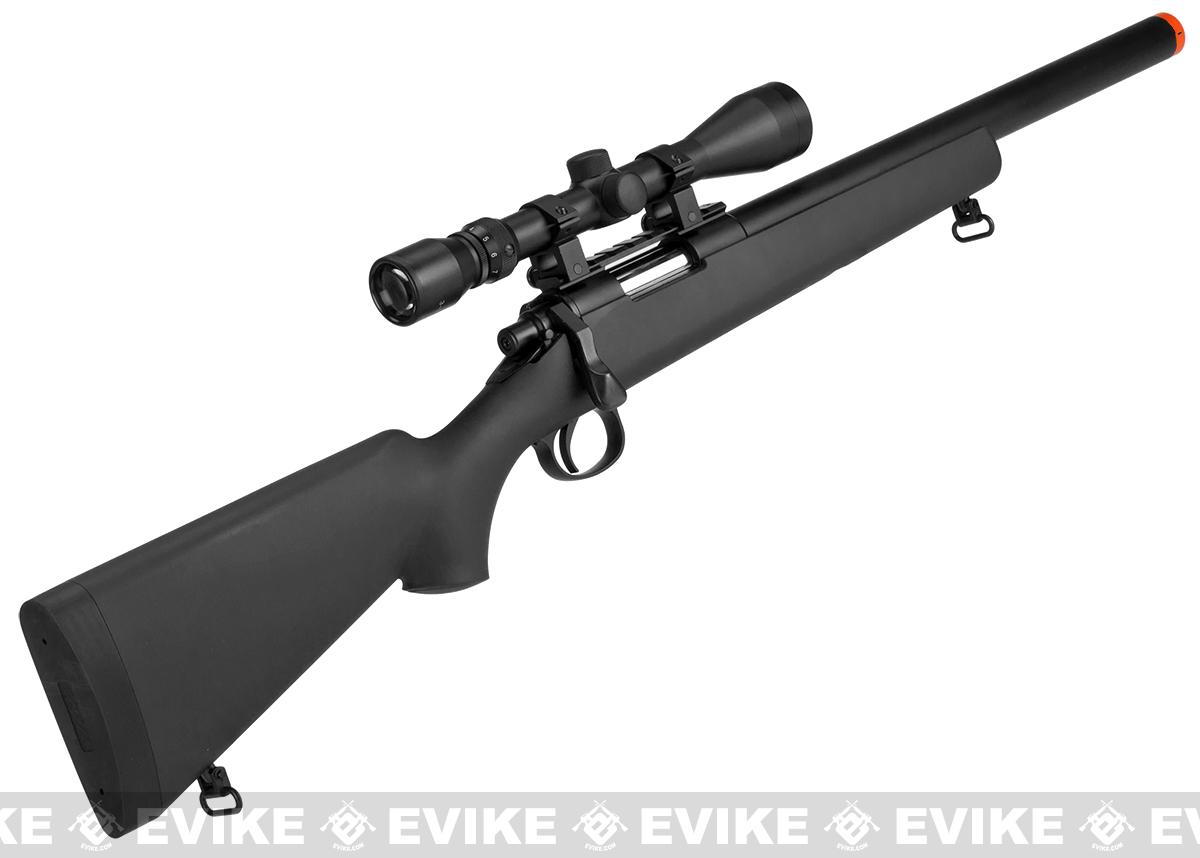
The VSR-10’s dominance over the airsoft sniper market for two decades comes down primarily to its upgrade ecosystem. The sheer number of aftermarket parts designed specifically for the VSR-10 platform might exceed your expectations. From budget buckings to CNC aluminum receiver sets, every component has multiple brand options available.
If you can only afford one upgrade, spend your money on the Hop-Up system. The Hop-Up is the single most important accuracy component in any airsoft gun — it applies backspin to the BB via a small rubber nub, generating the Magnus effect that dramatically extends range and stabilizes trajectory. The stock Hop-Up bucking and chamber are merely adequate; swapping in an Action Army CNC aluminum Hop-Up chamber paired with a Maple Leaf Autobot or MR Hop-Up bucking (50 or 60 degree) delivers immediately noticeable accuracy improvements. This upgrade costs roughly $40-60 but produces the most dramatic performance gains. For further refinement, add a DangerWerx hop arm for more even pressure distribution and finer adjustment.
Step two is a precision inner barrel. The stock barrel has a 6.08mm bore; switching to a 6.01mm or 6.03mm precision barrel reduces BB deviation within the bore. PDI, Maple Leaf, and EDGI are all well-regarded brands. Match the barrel length to your version — 303mm for the G-Spec, 430mm for the Pro Sniper. During installation, wrap Teflon tape around the inner barrel as spacers to prevent it from rattling inside the outer barrel. Some players prefer 6.05mm over extreme 6.01mm bores, arguing that the slightly larger diameter is easier to clean and more forgiving of BB quality variations, while the accuracy difference is negligible at real-world engagement distances.
Step three is the piston and spring. If you want to push FPS to your field’s limit (typically 450-500 FPS), you’ll need a stiffer spring. Be aware that stiffer springs mean harder bolt pulls — over a full day of play, your arm will fatigue significantly. The Springer Custom Works piston paired with a Rapax spring is among the community’s highest-rated combinations, offering excellent air seal with shot-to-shot FPS deviation as low as 2-3 FPS. The Action Army blue piston is another classic choice — more affordable but equally reliable.
Finally, the trigger unit. The stock trigger has a long pull with an indistinct break point, which isn’t ideal for precision shooting. The Springer Custom Works S-Trigger is widely regarded as the best trigger upgrade for the VSR-10 platform, reducing travel to near-zero with a break that players love to describe as a “glass rod break.” The Action Army Zero Trigger is also a solid option at a lower price point with similarly satisfying results. A good trigger isn’t just about feel — it reduces the micro-movements caused by a long trigger pull, directly improving hit rates.
Sniper Loadout Essentials
A well-tuned VSR-10 is just the starting point for becoming an effective sniper. Your complete loadout determines how long you survive on the field, how quickly you acquire targets, and whether you have any chance when enemies close the distance.
Optic selection is simpler than most people think. Don’t chase high magnification — airsoft engagements rarely exceed 70 meters, and mounting a 9x or 12x scope just narrows your field of view to the point where you can’t find anyone. A 3-9x variable scope is the most practical range: scan the environment at 3-4x, then dial up to 6-7x once you spot a target. Glass quality matters far more than magnification — a clear, bright 4x scope is infinitely more useful in actual gameplay than a dim, hazy 9x optic. You can find solid options in the $50-100 range without needing to invest in real-steel grade optics.
A sidearm is a sniper’s life insurance. Most fields enforce a Minimum Engagement Distance (MED) for sniper rifles, typically 15-20 meters, within which you cannot fire your bolt-action at opponents. You need a handgun ready for close-range encounters at all times. Tokyo Marui’s Hi-CAPA or Glock series GBB pistols are the most popular choices, paired with a drop-leg or belt holster for quick draws. Some veterans even carry a compact AEG SMG as a secondary — the extra weight is worth it when you need suppressive fire during a hasty retreat after being discovered. For more sidearm options, check out our Tokyo Marui Hi-CAPA Complete Guide or Tokyo Marui Glock GBB Complete Guide.
For concealment, the key is breaking your human silhouette rather than pursuing the most elaborate ghillie suit. A jacket that matches the field’s color palette, a hat wrapped with camo strips, plus gloves and a face covering already dramatically reduce your visibility. Head and shoulders are the most critical areas to camouflage since those are what the human eye identifies first. Remember, the best concealment doesn’t turn you into a tree — it makes your opponent’s eyes sweep past your position without pausing. For a deeper dive into sniper loadout strategies, our Airsoft Sniper Rifle Complete Guide covers this in more detail.
Shot Timer Training: Faster and More Accurate Bolt Work
Sniper training isn’t just about lying in wait for targets. Bolt cycling speed, target acquisition, and post-shot repositioning are all skills that improve dramatically with deliberate practice, and a Shot Timer is the best tool for quantifying your progress.
The first drill is bolt cycling speed. Set up a Shot Timer with a random-delay buzzer. When the buzzer sounds, complete a full “cycle bolt, aim, fire” sequence. Don’t worry about accuracy initially — focus purely on smooth, fluid mechanics. Most people start at 3-4 seconds for the full cycle; after a few weeks of practice, you should be under 2 seconds. Log every time and track your improvement curve — watching those numbers shrink day by day creates a powerful feedback loop that keeps you motivated.
The second drill adds accuracy under time pressure. Place a 15cm diameter target (roughly head-sized) at 15 meters. When the Shot Timer buzzes, complete the bolt cycle, aim, and fire. This time you’re tracking both speed and hit rate. The goal is completing the cycle within 2.5 seconds while maintaining 80% or better accuracy. Once you can consistently achieve this, push the distance to 25 meters, 30 meters, or shrink the target to 10cm.
The third drill is sustained fire cadence. Set up five targets at different positions. When the Shot Timer buzzes, engage each target in sequence. The focus here is maintaining a steady rhythm between shots — don’t rush the bolt cycle and compromise your form, but don’t hesitate too long after cycling before firing either. The ideal cadence is 2-2.5 seconds between shots, including bolt cycling, re-aiming, and firing. You can use our Airsoft Shot Timer App for these drills — its sensitivity can be adjusted to detect spring sniper rifle shots.
The final advanced drill is shoot-and-move. Set up two firing positions 5-10 meters apart at different distances from the targets. When the Shot Timer buzzes, fire from the first position, then quickly relocate to the second position and fire again. This simulates the fundamental sniper tactic of “shoot and scoot” — firing more than twice from the same position is extremely dangerous, as experienced opponents will start searching for you after the first shot.
Buying Advice: Which Version Is Right for You?
If you’re new to airsoft sniping, the G-Spec is the safest choice. Its moderate length, included suppressor for added stealth, and black or OD green finish work well in any environment. The money you save can go straight into Hop-Up and precision barrel upgrades, which will be far more effective than buying a more expensive rifle and leaving it stock.
If you prefer the traditional sniper rifle aesthetic or frequently play at large outdoor fields with long-range engagements, the Pro Sniper’s 430mm barrel provides more stable long-distance ballistics. Just keep in mind that the longer profile is less convenient when moving through dense vegetation — you’ll need more time to find suitable firing positions.
If you favor a modern tactical style, need to transport your gear between different fields frequently, or want a quickly deployable compact sniper platform, the VSR-ONE is your best match. The folding stock lets it fit into a standard gear bag, and the M-LOK and Picatinny rails offer flexible accessory mounting.
Whichever version you choose, remember this: the VSR-10’s true value isn’t in its stock performance — it’s in its virtually limitless upgrade potential. You’re not just buying a rifle; you’re buying a platform that can be gradually built into a one-of-a-kind precision weapon tailored to your style, budget, and needs. That’s why, over twenty years later, the VSR-10 remains the most popular choice in the airsoft sniper rifle market.
Related Articles
- Airsoft Sniper Rifle Complete Guide: Top 5 Comparison & Loadout Tips
- Tokyo Marui Hi-CAPA 5.1 Gold Match Complete Guide
- Tokyo Marui Glock 17/19 Gen 5 MOS GBB Complete Guide
- Airsoft Loadout Complete Guide
- Shot Timer App Complete Guide
- Airsoft CQB Close Quarters Combat Complete Guide
- Tokyo Marui
- VSR-10
- Airsoft Sniper
- Bolt Action
- Sniper Rifle
- G-Spec
- VSR-ONE
- Airsoft
- Hop-Up
- Shot Timer
- Best Airsoft Sniper Rifle