The Complete USPSA Beginner Guide: Divisions, Scoring, Classification & First Match Preparation
What Is USPSA?
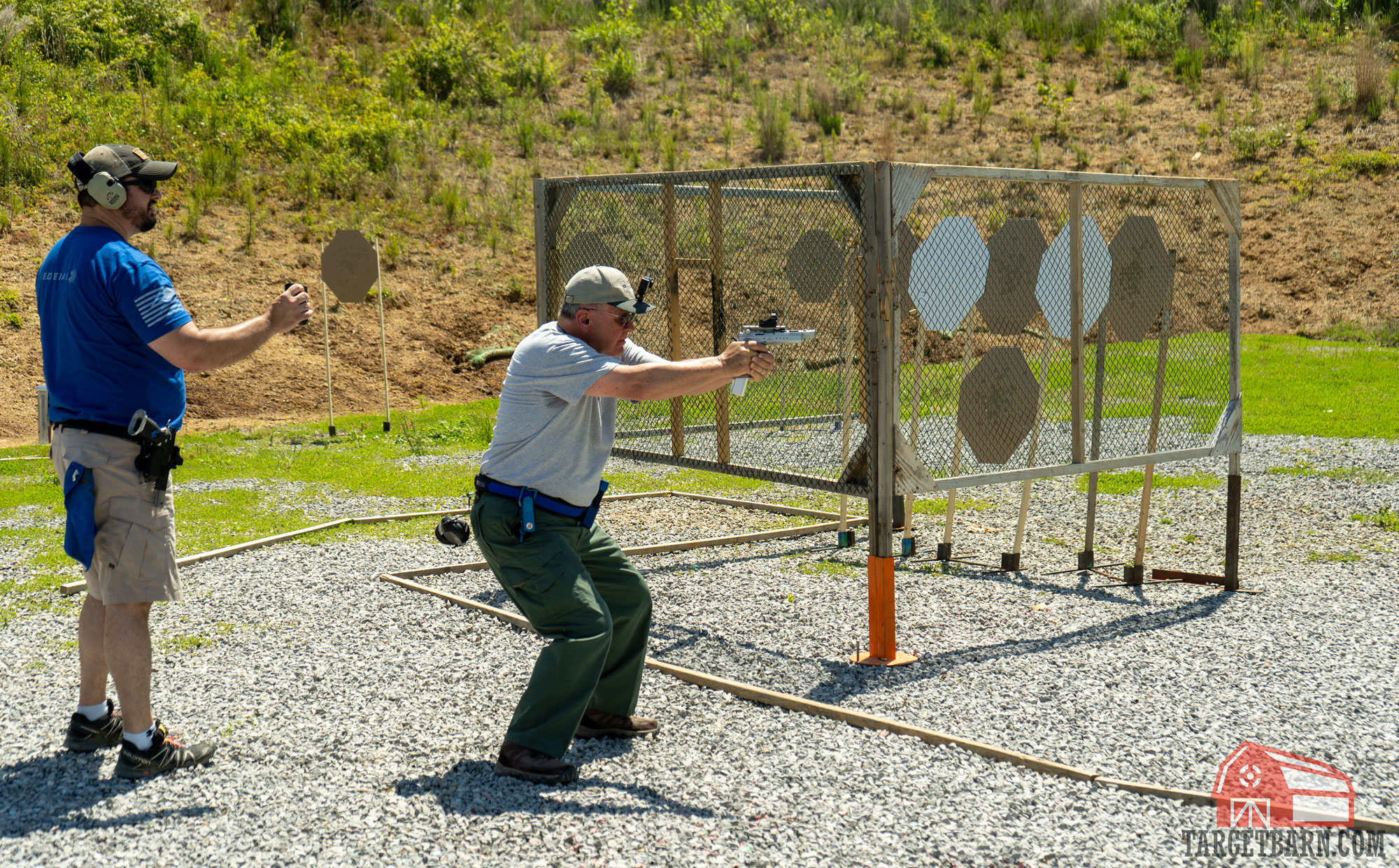
If you’re in North America and interested in competitive shooting, USPSA (United States Practical Shooting Association) is almost impossible to avoid. As the U.S. affiliate of IPSC (International Practical Shooting Confederation), USPSA is the largest and most active practical shooting platform in North America, with hundreds of local matches held across the country every week.
USPSA’s core philosophy is aligned with IPSC — combining Speed, Accuracy, and Power. Shooters move dynamically through stages, engage multiple targets precisely, and complete each course of fire in the shortest time possible. Unlike static range shooting, USPSA requires you to shoot on the move, navigate obstacles, execute rapid magazine changes — every match is a comprehensive test of shooting skill, physical fitness, and decision-making.
Whether you’re a handgun owner looking to try your first match, or an experienced IPSC or IDPA shooter wanting to understand USPSA’s rule differences, this guide provides everything you need to get started.
What This Guide Covers
- Complete introduction to all USPSA divisions with selection advice
- In-depth Hit Factor scoring system breakdown
- Classification system and progression path
- Key rule differences between USPSA and IPSC
- Complete first match preparation checklist
- Shot Timer training methods for USPSA skill development
💡 Further Reading: If you’re more interested in international competition, check out our Complete IPSC Practical Shooting Training Guide. For defense-oriented shooting sports, see our Complete IDPA Defensive Shooting Training Guide.
Complete Guide to USPSA Divisions
USPSA offers multiple divisions so shooters with different equipment and budgets can find the right starting point. Choosing the correct division is your first step in USPSA.
Production — Best Starting Point for Beginners
Production is designed for “out-of-the-box” handguns and is the natural starting point for most new shooters.
Key Rules:
- Only DAO (Double Action Only), DA/SA (Double Action/Single Action), or Striker-Fired pistols allowed
- Iron sights only — no optical sights allowed
- Magazine capacity limit of 15 rounds (updated in 2024)
- Maximum gun weight: 59 ounces
- No compensators or oversized magazine wells
- Scored in Minor Power Factor only
- Holster must cover the slide to 1/2 inch below the ejection port
Recommended Pistols: Glock 34, CZ Shadow 2, S&W M&P 2.0, Canik Rival-S, Walther PDP
💡 Why start with Production? Modification restrictions ensure a level playing field, letting you focus on improving fundamental shooting skills rather than winning through equipment. Plus, equipment costs are the lowest — your everyday handgun can get you on the range.
Carry Optics — The Most Popular Division
Carry Optics (CO) currently has the highest participation of any USPSA division. Think of it as the modernized version of Production.
Key Rules:
- Red dot sights allowed on the slide (mounted between the rear sight and ejection port)
- Same pistol types as Production (DAO, DA/SA, Striker-Fired)
- Magazine length limit of 141.25mm (extended base pads allowed)
- No compensators or oversized magazine wells
- Scored in Minor Power Factor only
Recommended Pistols: Glock 34 MOS, CZ Shadow 2 OR, Walther PDP, SIG P320 X-Five Legion
💡 If your pistol already has a red dot, starting directly in Carry Optics is the smartest choice. Learn more in our Complete Pistol Red Dot Sight Guide.
Limited — Advanced Competition Choice
Limited sits between Production and Open, allowing more modifications but no optical sights.
Key Rules:
- Iron sights only — no optical sights or compensators
- Magazine length limit of 141.25mm
- Major or Minor Power Factor scoring
- Wide-body (Double-Stack 2011) pistols allowed
- Relatively free modification rules
Ideal For: Shooters wanting to use 2011 wide-body pistols and take advantage of Major Power Factor scoring benefits.
Limited Optics — Newly Promoted in 2025
Limited Optics (LO) was officially promoted from provisional to full division status in 2025 — essentially Limited with optical sights.
Key Rules:
- Optical sights allowed on the slide
- Cocked and locked carry allowed
- Double-stack magazines: 141.25mm; single-stack: 171.25mm
- No pistol size or weight limits
- Thumb rests and oversized magazine wells allowed
Ideal For: Shooters wanting to use optically-equipped 2011 wide-body pistols. Currently one of the fastest-growing divisions.
Open — Ultimate Competition
Open is USPSA’s oldest division with the highest modification freedom — and the highest investment.
Key Rules:
- Compensators, red dots (mountable on frame), large magazine wells all allowed
- Nearly unlimited gun modifications
- Major or Minor Power Factor
- 170mm magazine length
Typical Equipment Cost: $3,000-$7,000+ (pistol only)
Single Stack — Dedicated to 1911
Key Rules:
- Designed specifically for 1911-type pistols
- Maximum weight: 43 oz (with empty magazine)
- Magazine capacity: Major 8 rounds, Minor 10 rounds
- No wide-body magazines
- Pistol must pass the box test (8 15/16" x 6" x 1 5/8")
💡 If you’re a 1911 enthusiast, this division lets you compete with your favorite pistol. Learn more in our Complete 1911 Pistol Guide.
PCC (Pistol Caliber Carbine)
Key Rules:
- Pistol-caliber carbines (9mm, .40 S&W, .45 ACP, etc.)
- Must have a shoulder stock (arm braces not legal)
- Maximum velocity: 1,600 fps
- Minor Power Factor scoring only
- Optical sights and compensators allowed
- No magazine capacity restriction
Revolver
- Revolvers only
- Minimum caliber: .38 Special
- Major or Minor Power Factor
USPSA Division Comparison Table
| Division | Optics | Comp | Mag Capacity | Power Factor | Beginner Rating | Budget |
|---|---|---|---|---|---|---|
| Production | ✗ | ✗ | 15 rounds | Minor only | ★★★★★ | $500-800 |
| Carry Optics | ✓ (slide) | ✗ | 141.25mm | Minor only | ★★★★☆ | $700-1,200 |
| Limited | ✗ | ✗ | 141.25mm | Major/Minor | ★★★☆☆ | $1,500-3,000 |
| Limited Optics | ✓ (slide) | ✗ | 141.25mm | Major/Minor | ★★★☆☆ | $2,000-4,000 |
| Open | ✓ (any) | ✓ | 170mm | Major/Minor | ★☆☆☆☆ | $3,000-7,000+ |
| Single Stack | ✗ | ✗ | 8/10 rounds | Major/Minor | ★★☆☆☆ | $1,000-2,500 |
| PCC | ✓ | ✓ | Unlimited | Minor only | ★★★☆☆ | $800-2,000 |
| Revolver | ✗ | ✗ | 6 rounds | Major/Minor | ★★☆☆☆ | $800-1,500 |
USPSA Scoring System In-Depth
Understanding USPSA’s scoring system is key to mastering match strategy. Unlike IDPA’s “time plus penalty” approach, USPSA uses the more nuanced Hit Factor scoring that rewards the optimal balance of speed and accuracy.
Target Zones and Points
USPSA paper targets have three scoring zones: Alpha (A), Charlie (C), and Delta (D). Points depend on your Power Factor:
| Zone | Major PF | Minor PF |
|---|---|---|
| Alpha (A) | 5 pts | 5 pts |
| Charlie (C) | 4 pts | 3 pts |
| Delta (D) | 2 pts | 1 pt |
| Mike (Miss) | -10 pts | -10 pts |
| No-Shoot (Non-target hit) | -10 pts | -10 pts |
| Procedural | -10 pts | -10 pts |
Important Rule: If a bullet hole touches the line between two zones, the higher score is awarded.
What Does This Mean?
Look at the Major vs Minor gap:
- Alpha hit: Both Major and Minor score 5 points — no difference
- Charlie hit: Major scores 4, Minor scores 3 — 1-point gap
- Delta hit: Major scores 2, Minor scores 1 — 1-point gap
This means if every shot is an Alpha, Major and Minor are identical. But in reality, not every shot will be an Alpha, so Major Power Factor has a clear scoring advantage on Charlie and Delta hits. This is why top Limited and Open shooters typically choose Major.
Hit Factor: The Core Formula
Hit Factor = Total Points ÷ Time (seconds)
Example:
- Shooter A: 120 points in 15 seconds → Hit Factor = 8.00
- Shooter B: 115 points in 13 seconds → Hit Factor = 8.85
Shooter B scored fewer points but was faster, resulting in a higher Hit Factor, so Shooter B wins.
This is the essence of USPSA — you need to find the optimal balance between speed and accuracy. All Alphas but too slow won’t necessarily beat a fast shooter with a few Charlies.
Three Scoring Methods
Comstock (Most Common)
- Shooters can fire unlimited rounds
- Best 2 hits per paper target are scored
- Steel targets must fall to score
- The only method that allows steel targets
- Used for all stage types
Virginia Count (Limited Rounds)
- Unlimited time, but round count is specified
- Each extra shot beyond the specified number incurs a Procedural Penalty (-10 points)
- Extra hits on scoring zones also incur additional penalties
- Paper targets only — no steel
- Commonly used for Classifiers and Standards
Fixed Time
- All shooting must be completed within a set time
- Less commonly used
Power Factor Calculation
Power Factor = (Bullet Weight in grains × Velocity in fps) ÷ 1,000
- Minor Power Factor: 125 and above
- Major Power Factor: 165 and above
Example: 124gr 9mm bullet at 1,050 fps → PF = (124 × 1,050) ÷ 1,000 = 130.2 (qualifies as Minor)
💡 Want to learn more about Power Factor and ammunition selection? See our Complete Handgun Ammunition & Caliber Guide.
USPSA Classification System
USPSA uses a percentage-based classification system to measure shooter skill levels, giving you a clear picture of where you stand among shooters in the same division.
Seven Levels
| Class | Code | Percentage Range | Description |
|---|---|---|---|
| Grand Master | GM | 95-100% | National-level elite |
| Master | M | 85-94.99% | High-level competitor |
| A Class | A | 75-84.99% | Experienced competitor |
| B Class | B | 60-74.99% | Intermediate shooter |
| C Class | C | 40-59.99% | Developing shooter |
| D Class | D | Below 40% | Entry-level shooter |
| Unclassified | U | — | Not yet classified |
How to Get Classified
- Complete 4 different Classifier Stages in the same division
- The system calculates your percentage based on your scores
- The system retains your most recent 8 valid scores for averaging
- Classification is independent per division — your B Class in Production doesn’t affect your Carry Optics classification
Realistic Classification Goals
For new shooters, a practical progression might be:
- Year 1: From Unclassified to D Class or C Class
- Year 2: Stable C Class, targeting B Class
- Year 3+: B Class to A Class depending on training commitment
💡 Using a Shot Timer to systematically train Classifier Stage drills is the most effective way to improve your classification. See our Complete Shooting Drills Guide for more.
Key Differences Between USPSA and IPSC
If you’re already familiar with IPSC rules, understanding USPSA’s differences is crucial. Although USPSA is an IPSC affiliate, the two have notable rule differences.
Major Rule Differences
| Aspect | USPSA | IPSC |
|---|---|---|
| Production Modifications | Internal mods allowed (trigger work, parts swap) | Strictly limited modifications |
| Production Magazines | 15-round limit | 15-round limit |
| Production Box Test | Box test required | No box test, but barrel limited to 127mm |
| Magazine Pouch Placement | Free placement on belt in all divisions | Only Open allows free placement; others behind hip bone |
| Race Holsters | Not allowed in Production/CO | Race holsters allowed |
| Scoring Method | Hit Factor (all divisions) | Hit Factor + Stage Factor |
| Classification | Percentage-based (GM/M/A/B/C/D) | Different classification system |
Practical Impact for Shooters
- Equipment Transfer: If switching from IPSC to USPSA Production, your race holster may not be legal — you’ll need a compliant holster
- Magazine Pouch Placement: USPSA allows more freedom in magazine pouch positioning for optimized reloads
- Modification Space: USPSA Production allows more internal modifications like trigger tuning
- Classification: IPSC and USPSA classifications don’t transfer — you’ll need to build your USPSA classification from scratch
💡 Want to know more about IPSC match procedures? Check out our IPSC Match Procedure & Preparation Guide.
Your First USPSA Match: Complete Preparation Guide
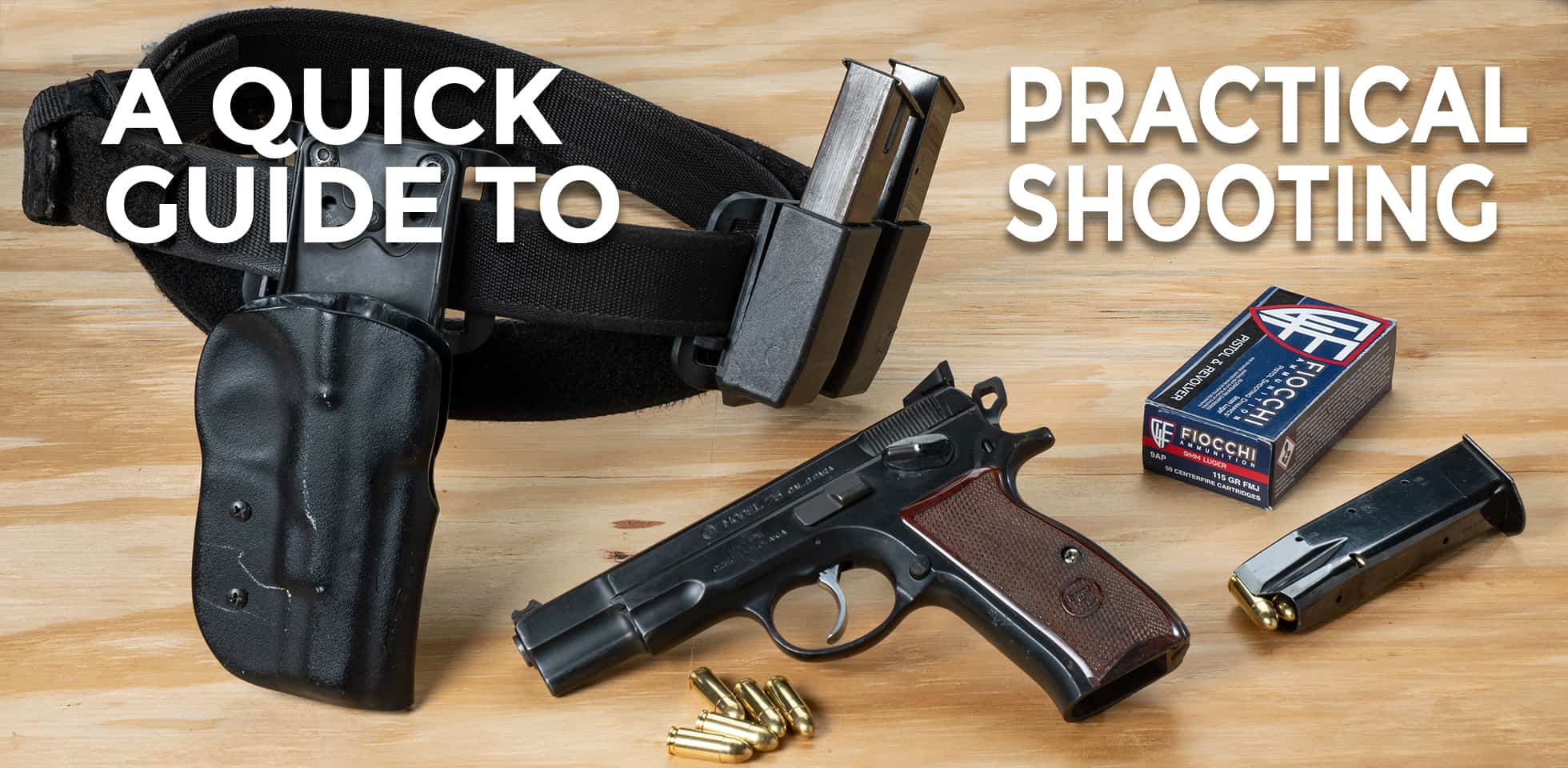
Essential Equipment Checklist
| Equipment | Description | Estimated Cost |
|---|---|---|
| Pistol | 9mm or larger semi-automatic | $400-800 |
| Holster | Kydex belt holster, trigger covered, muzzle down | $40-80 |
| Magazines | At least 3-4 (5+ recommended) | $80-150 |
| Magazine Pouches | At least 2-3 belt-mounted pouches | $40-100 |
| Belt | Daily belt works; competition double-layer belt ideal | $0-120 |
| Ammunition | 200-300 rounds (more is better) | $60-100 |
| Eye Protection | ANSI Z87.1 rated | $15-40 |
| Ear Protection | Electronic earmuffs ideal | $20-80 |
Beginner Budget Estimate (Production): $655-1,470
💡 For more equipment guidance, see: Competition Holster Guide, Competition Magazine Pouch Guide, Competition Belt Guide.
USPSA Membership
- Annual fee: $40 USD/year
- Register at uspsa.org
- Non-members can participate in local matches (most clubs welcome new shooters)
- You’ll need a free Practiscore account to register for matches
Finding Matches
- Register an account at practiscore.com
- Search for USPSA matches in your area
- Many clubs hold 1-2 local matches per month
- Beginners should start with Club Matches / Level 1 Matches
10 Tips for Your First Match
Before the Match:
- Arrive Early: Get there 30 minutes before registration to familiarize yourself with the venue
- Find the Match Director: Let them know you’re new — they’ll arrange a New Shooter Briefing
- Introduce Yourself: The USPSA community is incredibly welcoming; asking questions is encouraged
During the Match:
- Safety First: Remember the 180-degree rule — your muzzle must never break the 180-degree plane on either side. Breaking this rule results in an immediate DQ (Disqualification)
- Finger Off the Trigger: During movement and reloads, your finger must be outside the trigger guard
- Don’t Chase Speed: Time won’t get you DQ’d — unsafe handling will
- Listen to the Stage Briefing: Pay attention to shooting order, mandatory reload positions, Virginia Count round limits, etc.
- Help Out: Competition isn’t just shooting — volunteer to paste targets, reset steel, and record scores
Mindset:
- Ignore the Rankings: Your first match goal is “complete safely,” not winning
- Don’t Be Discouraged by a DQ: Stay and watch other shooters — you’ll gain invaluable experience
💡 Safety rules are critical in competition. Be sure to read our Complete Shooting Safety Rules Guide.
Match Day Timeline
| Time | Activity |
|---|---|
| 30 min before | Arrive, sign in, set up equipment |
| 15 min before | New shooter briefing, safety check |
| Match start | Squad walk-throughs, begin stages |
| Each Stage | Walk-through → Check in → “Make Ready” → Shoot → “Range is Clear” |
| After match | Help tear down, check scores |
Shot Timer and USPSA Training
A Shot Timer is an indispensable training tool for USPSA shooters. In matches, the Range Officer uses a Shot Timer for timing, and you should use one extensively in practice to track your progress.
Key Metrics to Track
1. Draw to First Shot
| Class | Production | Carry Optics |
|---|---|---|
| D Class | 2.0+ sec | 2.0+ sec |
| C Class | 1.5-2.0 sec | 1.5-2.0 sec |
| B Class | 1.2-1.5 sec | 1.2-1.5 sec |
| A Class | 1.0-1.2 sec | 1.0-1.2 sec |
| M/GM | < 1.0 sec | < 1.0 sec |
2. Split Times
| Class | Close Range (7m) | Medium Range (15m) |
|---|---|---|
| D Class | 0.30+ sec | 0.40+ sec |
| C Class | 0.20-0.30 sec | 0.30-0.40 sec |
| B Class | 0.18-0.22 sec | 0.25-0.30 sec |
| A Class | 0.15-0.18 sec | 0.20-0.25 sec |
3. Reload Times
| Class | Standing Reload | Reload on the Move |
|---|---|---|
| D Class | 3.0+ sec | 4.0+ sec |
| C Class | 2.0-3.0 sec | 3.0-4.0 sec |
| B Class | 1.5-2.0 sec | 2.0-2.5 sec |
| A Class | 1.2-1.5 sec | 1.5-2.0 sec |
Core USPSA Training Drills
Bill Drill
- 7 yards, draw and fire 6 rounds
- Target: All Alphas
- D Class goal: < 4.0 seconds
- B Class goal: < 2.5 seconds
- Focus: Draw speed, split time control
El Presidente
- 10 yards, start facing away, turn and engage 3 targets with 2 rounds each, reload, 2 more rounds each
- D Class goal: < 12 seconds
- B Class goal: < 7 seconds
- Focus: Turn, multi-target transitions, reloads
Blake Drill
- 7 yards, draw and fire 1 round at first target, move to another position and engage second target
- Focus: Shooting rhythm during movement
💡 For more drills, see our Complete Shooting Drills Guide. Use a Shot Timer App for dry fire training at home — see our Shot Timer App Complete Guide.
Training Periodization with Shot Timer
Months 1-3: Foundation Building
- Dry fire 3-4 times per week, 15-20 minutes per session
- Focus on draw, sight presentation, trigger control
- Use Shot Timer to establish baseline times
Months 4-6: Speed Development
- Gradually reduce PAR times
- Add reload and multi-target transition training
- Attend 1-2 local matches per month
Months 7-12: Competition Refinement
- Targeted Classifier Stage training
- Analyze match videos to identify weaknesses
- Develop a systematic periodized training plan
💡 Want to create a complete training plan? See our Personal Shooting Training Plan Guide.
Frequently Asked Questions
Q1: I only have a Glock 19 — can I compete in USPSA?
Absolutely! A Glock 19 is perfectly legal in Production division. While a Glock 34 or 17 with its longer slide offers a better sight radius, a Glock 19 works great at local matches. The priority is getting out there and gaining experience — you can upgrade equipment later.
Q2: USPSA or IPSC — which is better for beginners?
If you’re in North America, USPSA is more practical because local matches are far more frequent. USPSA matches happen virtually every week, while IPSC matches in North America are relatively rare. Rule-wise, USPSA Production allows more internal modifications, offering more flexibility.
Q3: How much ammo do I need for a match?
A typical local match has 4-6 stages, each requiring about 20-30 rounds. Bring 200-300 rounds — extra is always welcome, as some stages may require makeup shots.
Q4: What is a DQ? What are common DQ causes?
DQ (Disqualification) means you must immediately stop competing. Common causes include:
- Breaking the 180-degree rule (muzzle past the safety plane)
- Accidental Discharge (AD)
- Firing before the start signal
- Picking up a dropped firearm
- Finger inside the trigger guard during movement
Q5: Should I choose Production or Carry Optics?
- If your pistol doesn’t have a red dot → Production
- If your pistol already has a red dot → Carry Optics
- If you’re planning to buy a new pistol for long-term competition → Carry Optics (it’s the most popular division and the trend in competitive shooting)
Q6: Where will I place in my first match?
Honestly, probably near the bottom — and that’s completely normal. Your real goal for your first match is: complete all stages safely, understand the match flow, and enjoy the experience. Scores will naturally improve with experience and training.
Q7: Do I need special ammunition?
For Production and Carry Optics (Minor Power Factor), standard factory 9mm FMJ ammunition (124gr, 1,050+ fps) is sufficient to meet the 125 Power Factor requirement. No need for expensive match ammo, but avoid aluminum or steel-cased ammunition as some ranges don’t accept them.
Q8: Can I reshoot a target I’ve already hit?
In Comstock-scored stages, yes — the system only counts the best 2 hits per target, so if you think your first shot was off, you can add a makeup shot. In Virginia Count stages, be careful — extra shots will result in penalties.
Conclusion
USPSA is an addictive sport — once you experience the adrenaline rush of your first match, you’ll likely be eager for the next one. It tests not only your shooting skills but also your decision-making and mental composure under pressure.
Remember, every Grand Master was once a nervous beginner. What matters isn’t your current skill level, but your willingness to take that first step. Grab your pistol, bring enough ammo and a learning mindset, and go shoot your first USPSA match.
Related Articles
Competition Shooting Series:
- Complete IPSC Practical Shooting Training Guide
- Complete IDPA Defensive Shooting Training Guide
- IPSC Match Procedure & Preparation Guide
- IPSC Beginner Pistol Selection Guide
- IDPA Beginner Pistol Selection Guide
Shooting Skill Development:
- Complete Pistol Draw Technique Guide
- Complete Magazine Reload Technique Guide
- Complete Shooting Drills Guide
- Complete Shooting Mental Game Guide
Equipment Guides:
- Complete Handgun Ammunition & Caliber Guide
- Complete Pistol Red Dot Sight Guide
- Complete Competition Holster Guide
- Shot Timer App Complete Guide
- USPSA
- Practical Shooting
- Competition Shooting
- USPSA Beginner
- Carry Optics
- Production
- Hit Factor
- Power Factor
- IPSC
- Shooting Match
- Shot Timer